Lantau Island Day Trip Itinerary: A Realistic Hour-by-Hour Plan
A Lantau day trip only works if the sequencing works. This itinerary is built on the operator's own published hours and fares, so every connection in it is real.
Short answer
Take the first cable car at 10:00 on a weekday or 09:00 at a weekend, spend the morning on the Ngong Ping plateau with the Big Buddha and Po Lin Monastery, eat lunch, then catch New Lantao Bus 21 to Tai O. Return by bus 23 or a late cable car. A standard round trip costs HK$295 (about $38).
Most Lantau itineraries you read online are wish lists wearing a clock. They assume instant boarding, skip lunch, and put Tai O at an hour when the buses have thinned out. This one is different: every leg is checked against the operator's own published opening hours, fares and journey times, and it accounts for the one thing that ruins more Lantau days than weather, the boarding queue at Tung Chung.
The shape of the day is simple. Ride up on the first cabins, do the plateau while the crowds are still on the MTR, eat a proper vegetarian lunch at Po Lin Monastery, then drop down to Tai O by bus for the stilt houses and a boat ride in the late afternoon light. The discipline is in the timing, and the timing is in this guide, hour by hour.
One fixed fact frames everything: the cable car runs 10:00 to 18:00 on weekdays and 09:00 to 18:30 on Saturdays, Sundays and public holidays (checked September 2026). Po Lin Monastery opens at 09:00, before the cable car does on a weekday, which tells you the plateau is designed around early arrivals. This site, Hong Kong Ngong Ping Cable Car, exists to make exactly this kind of day work, and the broad island context is covered in our Lantau Island overview guide.
What does the best Lantau day trip itinerary look like?
The core plan is: MTR to Tung Chung by 09:30, first or near-first cable car up, Big Buddha and Po Lin Monastery before noon, vegetarian lunch, New Lantao Bus 21 to Tai O mid-afternoon, boat excursion, then bus or cable car back down before close. Done in that order, with a weekday start, the whole loop fits comfortably inside published operating hours without a single rushed connection.
The order matters more than the pace. The plateau attractions, the Buddha, the monastery, the village, are all within a 10-minute walk of each other at the top, but Tai O is 20 minutes away by bus on a road with no rail backup. If you leave Tai O too late you are dependent on a mountain bus, and if you leave the plateau too late you arrive at Tai O after the boat operators have packed up. Front-load the plateau.
A realistic timetable for a weekday, using verified times:
| Time | What you are doing | Why this slot |
|---|---|---|
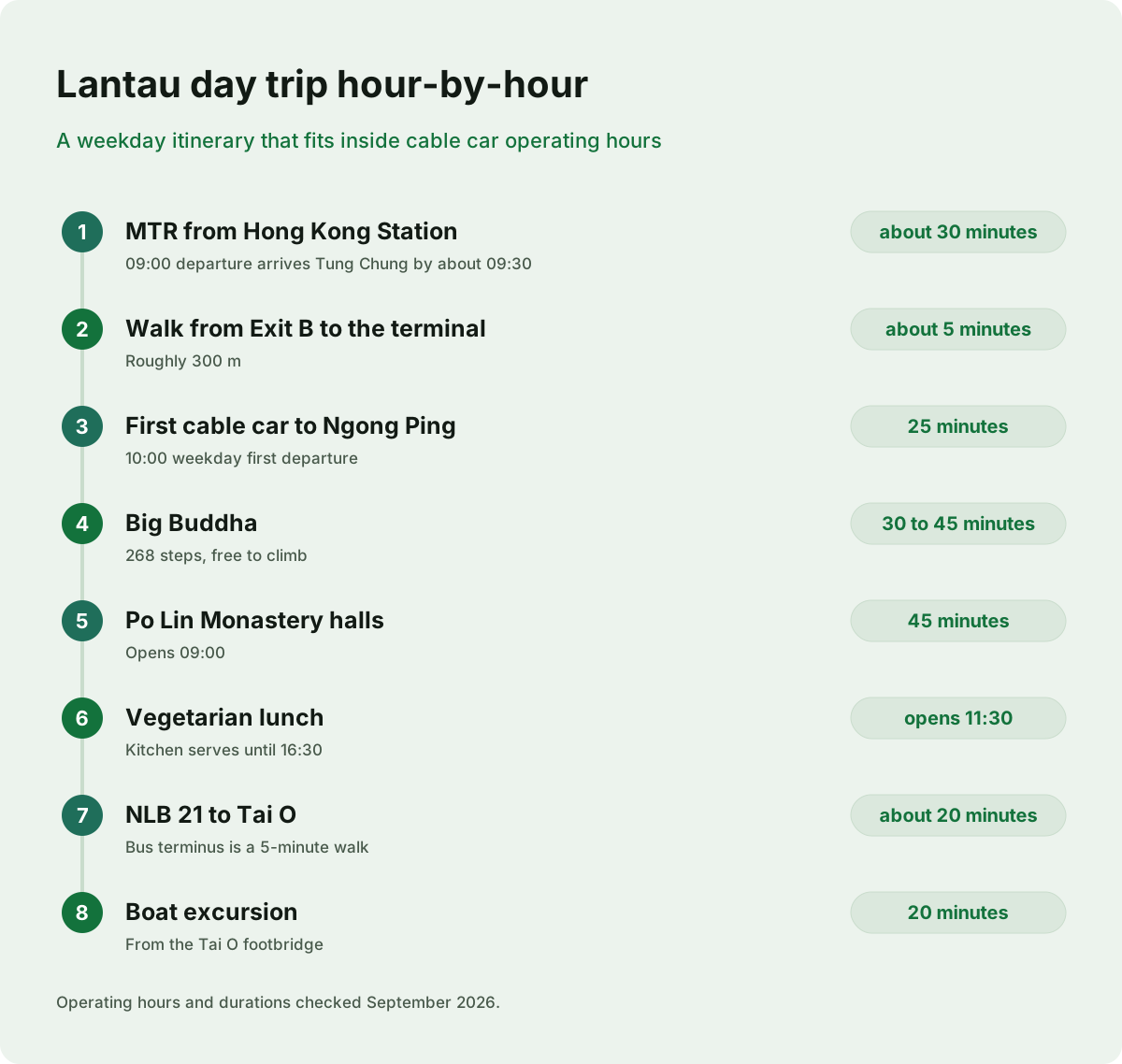
| 09:00 | MTR Tung Chung Line from Hong Kong Station, about 30 minutes | Gets you to Tung Chung before first boarding |
| 09:40 | Walk from Tung Chung Exit B to the terminal, about 5 minutes | The terminal is roughly 300 m from the exit |
| 10:00 | First cable car departs, 25 minutes to Ngong Ping | Earliest possible arrival beats the tour groups |
| 10:30 | Big Buddha, 268 steps, free to climb | Morning light and the thinnest crowds of the day |
| 12:00 | Vegetarian lunch at Po Lin Monastery kitchen, opens 11:30 | Eats before the 13:00 group-tour rush |
| 14:00 | Walk to the Ngong Ping bus terminus, 5 minutes, then NLB 21 to Tai O, about 20 minutes | Afternoon is Tai O's best light for photos |
| 17:00 | Boat excursion from the Tai O footbridge, 20 minutes | Operators run from boats moored on the main street |
| 18:00 | NLB 11 or 23 back toward Tung Chung | Confirms against your own watch and the day's last services |
Two caveats belong up front. The cable car is closed 8 to 18 September 2026 for scheduled maintenance, and it closes several times a year, not once: January, 3 to 5 March, May and June 2026 closures are each verified separately (checked September 2026). Ngong Ping Village stays open during those closures, but this itinerary by cable car does not run. Second, the Wisdom Path has been closed since 5 June 2025 with refurbishment due in the last quarter of 2026, so it appears nowhere in this plan.
What time does the cable car open, and when should you arrive at Tung Chung?
Aim to be standing at the Tung Chung terminal when the doors open: 10:00 on a weekday, 09:00 on a weekend or public holiday. Arriving for first departure means you ride up with locals and early birds, reach the Big Buddha by about 10:30, and stay a full queue-length ahead of the tour groups that land on the plateau from late morning onward.
The MTR arithmetic makes this easy from central Hong Kong. The Tung Chung Line runs from Hong Kong Station to Tung Chung in about 30 minutes and costs HK$24.30 with an Octopus card or HK$28.00 as a single-journey ticket (checked September 2026). From Kowloon or Tsim Sha Tsui it is HK$18.70 by Octopus. So a 09:00 departure from Central puts you at Tung Chung by about 09:30, with a 5-minute, roughly 300 m walk from Exit B to the terminal.
The reason to fight for the first cabin is the queue. Visitors reported Standard Cabin waits of one to three hours through late 2025 and early 2026, including on ordinary weekdays, with individual accounts of two and a half hours on a November Monday. A pre-bought e-ticket skips the ticket-purchase queue but not the boarding queue, and reviewers make that distinction repeatedly. First departure is the cheapest queue strategy there is: it costs you nothing but an alarm clock.
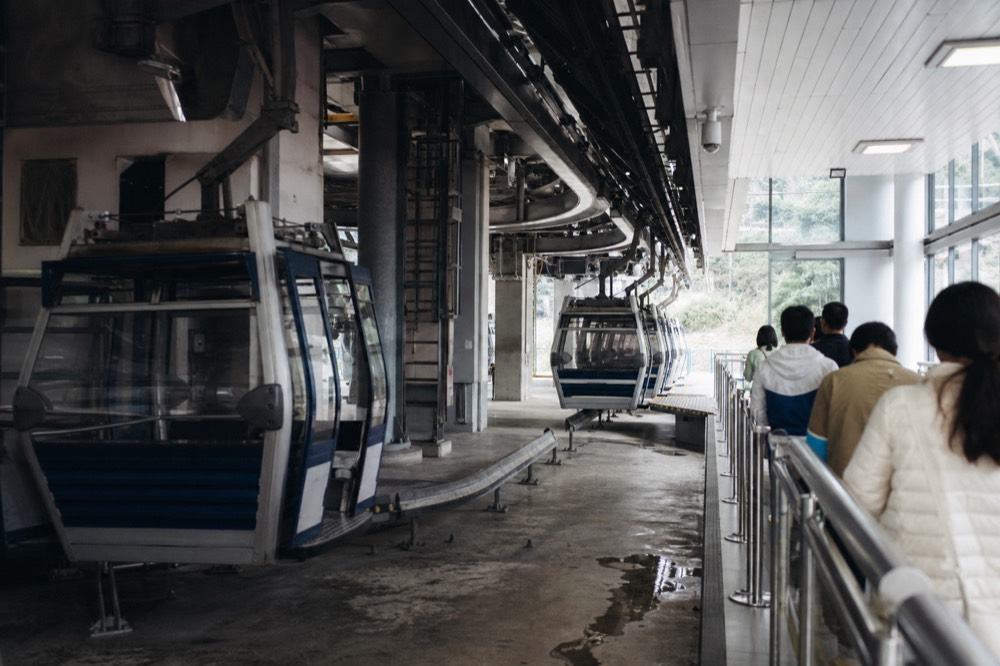
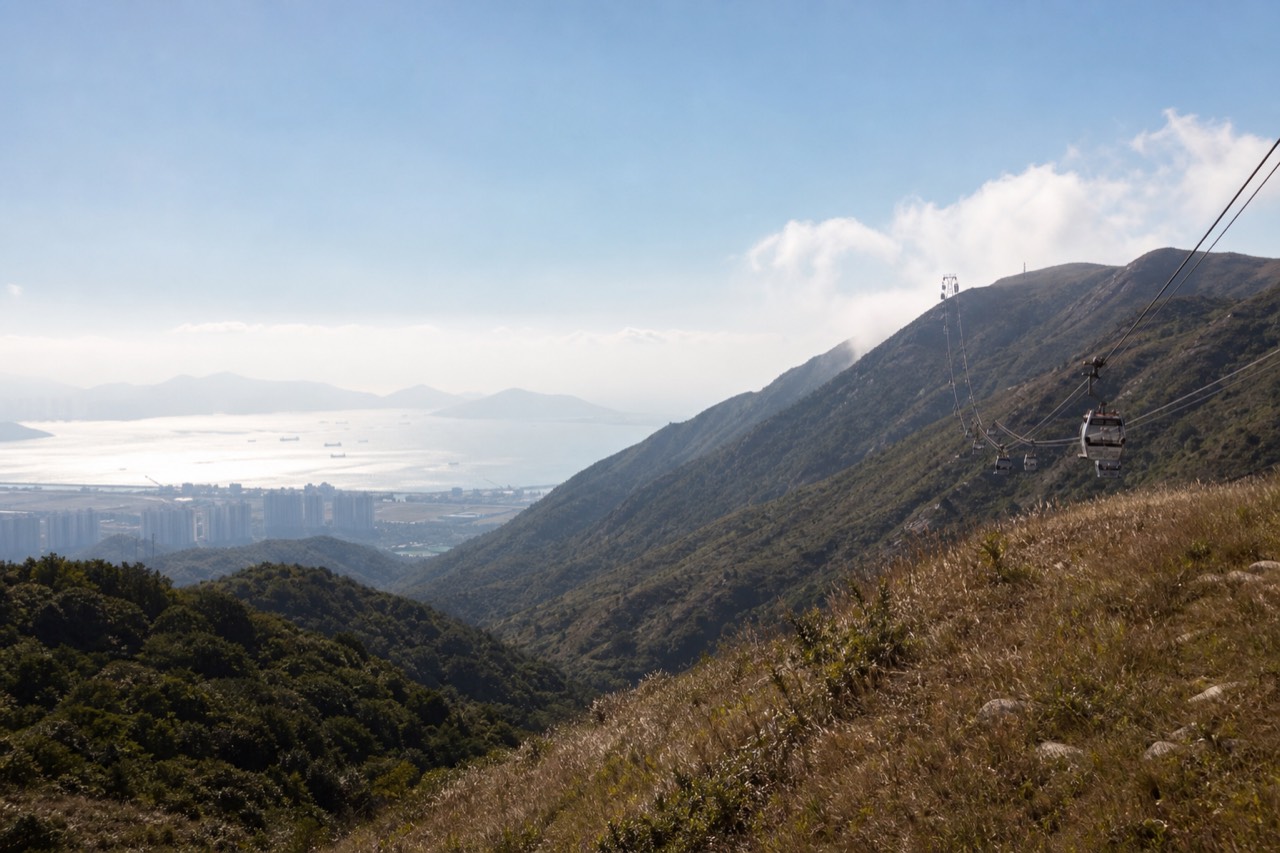
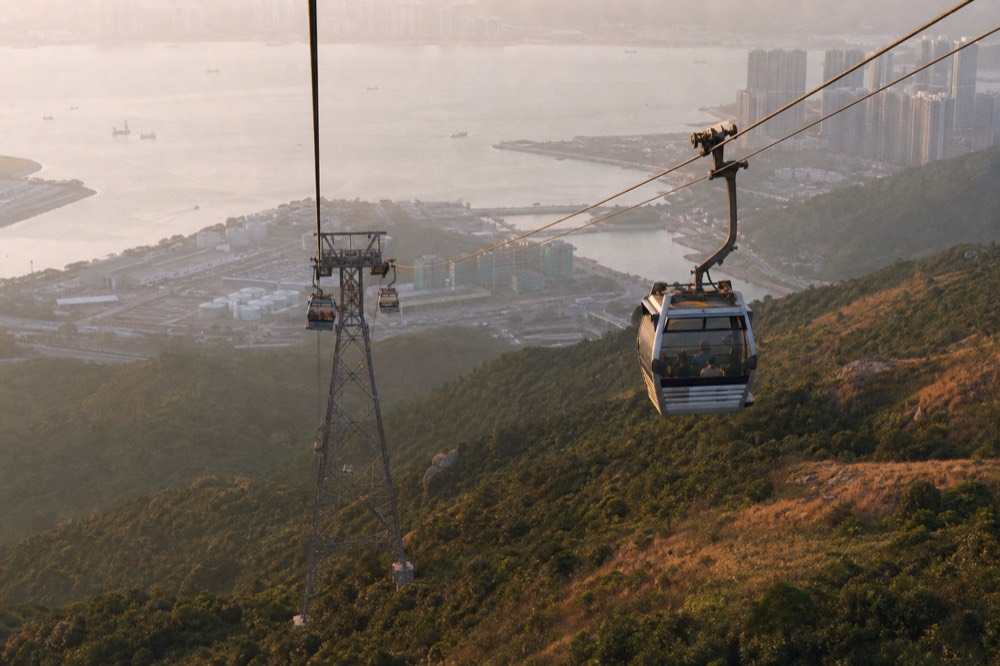
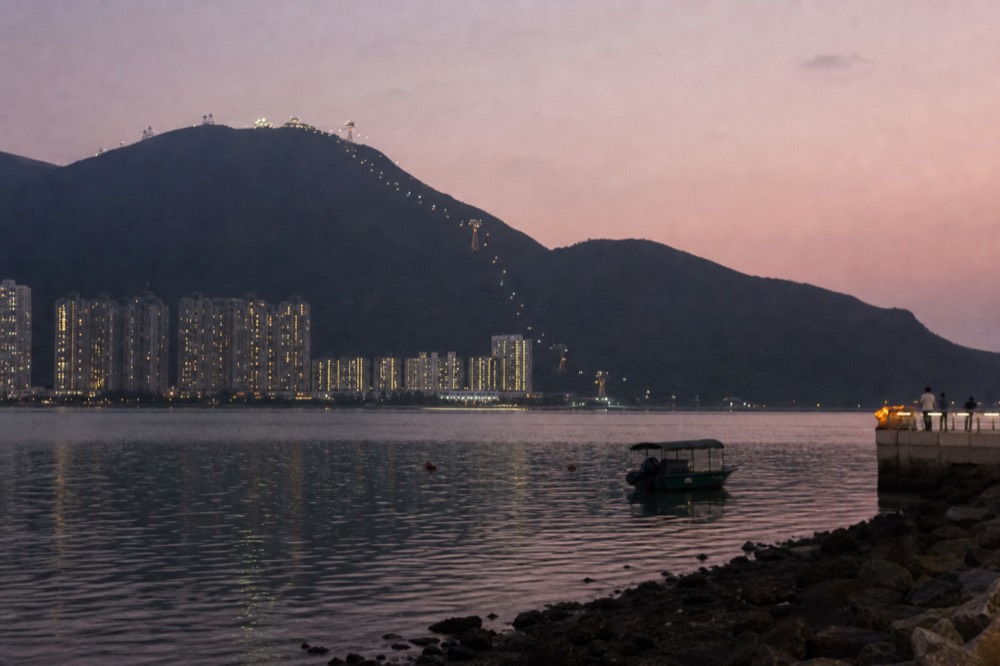
The ride itself is 5.7 km, the longest bi-cable ropeway in Asia, and takes about 25 minutes each way. The route runs Tung Chung Bay, past Hong Kong International Airport and the Hong Kong to Zhuhai Macau Bridge, over Lantau North Country Park and Nei Lak Shan, before the Tian Tan Buddha comes into view ahead of the cabins. Sitting on the right side leaving Tung Chung gives you the airport and the bridge first.
If you are weighing a glass-floor cabin against the standard one, the trade-offs are covered in full elsewhere on this site. The short version for this itinerary: the Crystal upgrade is as much a queue product as a view product, since Crystal and Crystal+ board through their own much shorter line, which on a busy day can protect your whole afternoon in Tai O.
The three options below cover the realistic ways to do this day: the ticket on its own if you want to self-drive the itinerary exactly as written, a guided 5-hour version with the Tai O boat included, and a private-coach budget option if the sequencing appeals but the planning does not. The rest of this guide assumes you are doing it yourself with a ticket.
Morning on the Ngong Ping plateau: Big Buddha, Po Lin and lunch
The plateau block runs about three hours: 30 to 45 minutes for the Big Buddha's 268 steps and the views from the base, 45 minutes for Po Lin Monastery's halls, then lunch at the monastery's vegetarian kitchen, which opens at 11:30 and serves until 16:30. Starting at 10:30 from the cable car terminal, you are eating by noon and free to leave for Tai O by 14:00.
The Tian Tan Buddha is a 10-minute walk from Ngong Ping Village, next to the monastery, and climbing the 268 steps is free. The statue itself rewards a moment of curiosity before you climb: it was built over 12 years from 202 bronze sections, its face cast as a single 5-tonne piece measuring 4.3 by 5.8 metres, and the whole statue was wind-tunnel tested in the Beijing facility built for satellites and rockets. It was inaugurated in December 1993.
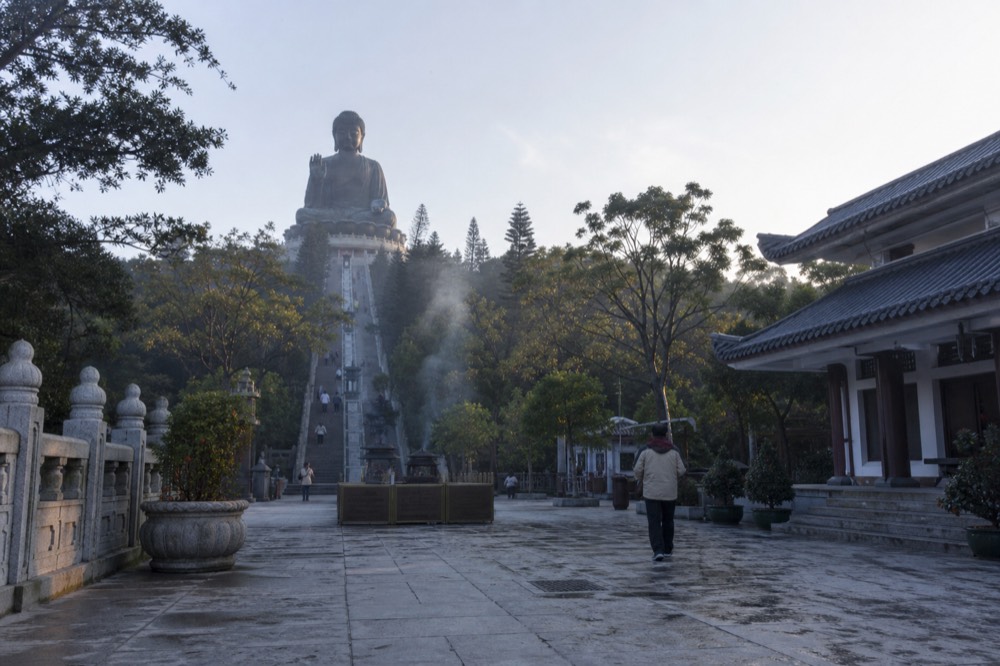
Po Lin Monastery, founded in 1906 and named as such in 1924, opens at 09:00, a full hour before the weekday cable car, which is worth knowing if you ever arrive by bus instead. The halls run in a formal axis from the mountain gate to the Grand Hall of Ten Thousand Buddhas. The vegetarian kitchen sits to the left of the Main Shrine Hall as you face it; the meal is a fixed communal set, generally a soup, a deep-fried dish and a vegetable dish with rice. The monastery does not publish the price, so check at the counter rather than trusting any number quoted online.
Ngong Ping Village itself, the 1.5-hectare strip between the cable car terminal and the monastery path, is where the day absorbs slack. The operator suggests allowing three to four hours for the village and a meal, but on this itinerary the village gets whatever time is left after the Buddha and lunch, which on a weekday is usually a coffee and a look at the Cable Car Discovery Centre. The HK$20-per-attraction upgrade offer, available when you buy any cable car ticket, covers one-time entry to the Discovery Centre and Motion 360 at HK$40 for both (checked September 2026).
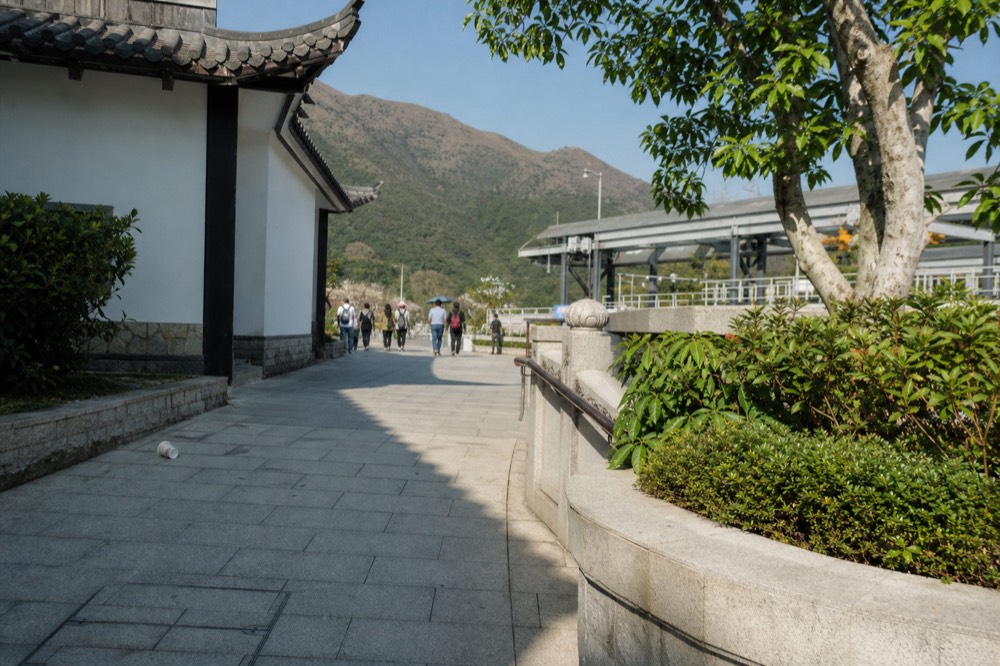
One thing not to plan around: the Wisdom Path. It has been closed since 5 June 2025 for refurbishment, with the government expecting completion in the fourth quarter of 2026. A viewing platform on a nearby section of the Lantau Trail remains open. Do not build the morning around it, and treat any guide that lists it as open with suspicion.
If you would rather have a guide handle the plateau and the onward legs, there is a middle path between full self-planning and a big-bus tour:
The 5-hour guided version covers the cable car, the Big Buddha and Tai O with the boat excursion included, from $67.6 per person, rated 4.7 across 652 reviews on the live listing (checked September 2026). For some visitors that certainty is worth more than the flexibility of doing it alone.
How do you get from Ngong Ping to Tai O?
New Lantao Bus route 21 runs from the Ngong Ping bus terminus to Tai O in about 20 minutes, costing HK$7.90 on a normal day and HK$19.20 on a Sunday or public holiday (checked September 2026). The bus terminus is a 5-minute walk from Ngong Ping Village, and you want to be on a bus by about 14:00 to give Tai O a full afternoon.
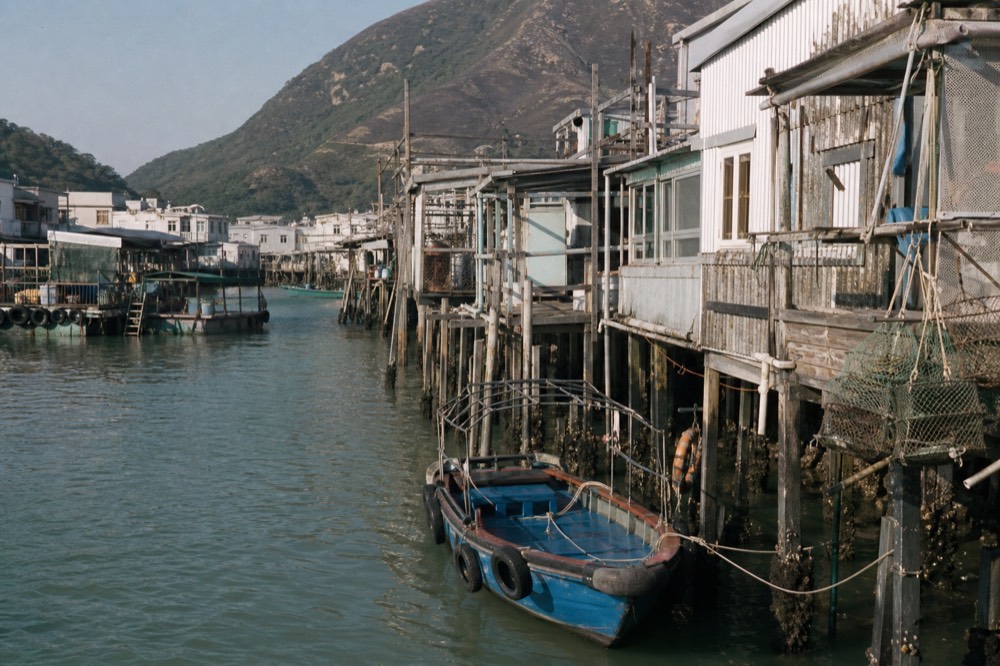
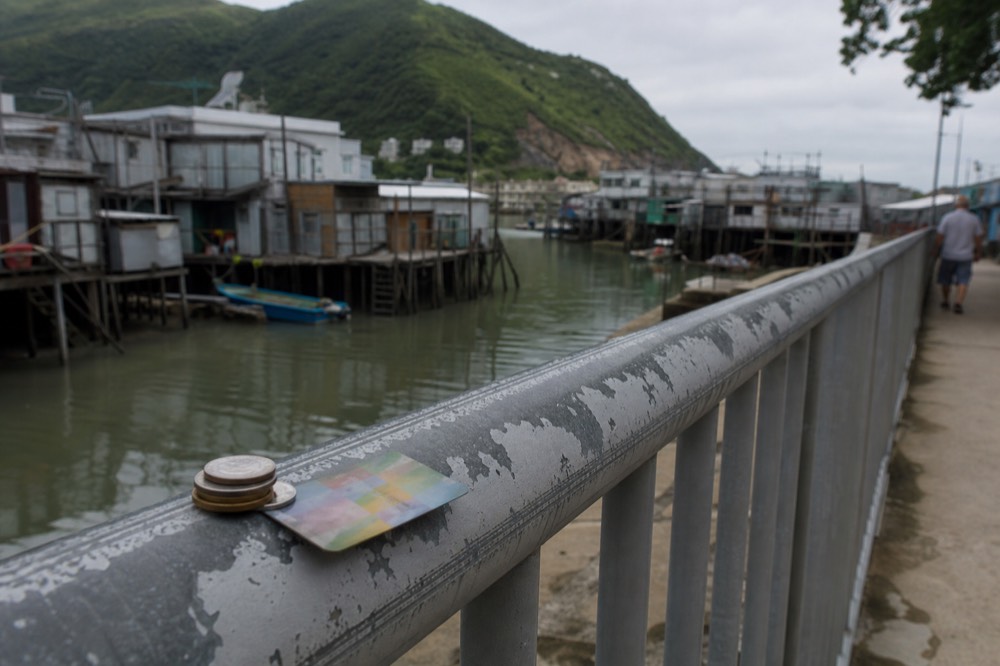
Tai O is Hong Kong's oldest fishing village, known for its stilt houses built over the waterways, and it is the second half of the day for a reason. The afternoon light across the creek is the best of the day, the village is at its most photogenic as the tour crowds drain away, and eating there, dried seafood, the famous shrimp paste, a late bowl of noodles, feels earned after the monastery lunch.
The boat excursion is the headline activity. Boats moor under the iron footbridge on the main street and run a 20-minute ride past the stilt houses, General's Rock, and the Tai O Heritage Hotel, which occupies the former police station. It is the single most efficient way to see the village's layout. If your appetite runs to a deeper look, our Tai O fishing village guide covers the village street by street.
The bus fares deserve a moment of attention because they carry a trap. Route 21 nearly doubles on Sundays and public holidays, and the same pattern hits route 23 back to Tung Chung, which costs HK$20.40 on a weekday and HK$37.00 on a Sunday or holiday (checked September 2026). On a normal day, the bus legs of this itinerary cost almost nothing; on a holiday they cost more than you might expect for a 20-minute ride. Frequencies and last departures for these routes are not published in the official open data, so confirm timings on the day.
A note for the ambitious: some walkers do the stretch between the plateau and Tai O on foot via the Lantau Trail, a serious commitment that replaces this itinerary's relaxed afternoon. Treat it as a separate day's plan, not a bolt-on.
Getting back down: bus or cable car?
You have two ways down: the cable car back from Ngong Ping, or the bus from Tai O. From Tai O, route 11 runs direct to Tung Chung Station for HK$14.00 on a normal day and HK$23.30 on Sundays and holidays. From the plateau, the last full ride needs to start well before the 18:00 weekday or 18:30 weekend close (checked September 2026).
The cable car down is the choice if your day is ending on the plateau or if you want the ride in evening light, and it buys you the airport-and-bridge view in the opposite direction. The honest complication is that a round trip's two legs are valid on the same day only, and you cannot stay in your cabin at Ngong Ping: you alight, and rejoin the boarding queue for the return. On a busy day that return queue is real, which is another argument for the Crystal tiers with their shorter line, or for simply not cutting the descent fine.
From Tai O, the bus is the only public option, and the winding mountain road is the reason some passengers prefer the cable-car-out, bus-back combination in one direction only. The road climbs over the island's spine; if anyone in your party gets motion sick easily, plan the medication before you board, not after.
One luggage rule matters if you are doing this on an airport layover, which is a genuinely common pattern given the terminal's position 20 minutes from Hong Kong International Airport. Anything larger than 48 by 34 by 23 cm or heavier than 4 kg is barred from the cabins under the Tung Chung Cable Car Bylaw. Left luggage is HK$100 per piece at the Tung Chung terminal, no booking needed, and must be collected before the cable car closes the same day (checked September 2026). Our airport to Big Buddha guide covers that stopover pattern in detail.
What does a Lantau day trip actually cost?
Self-planned on a weekday, the core costs are HK$295 (checked September 2026) for a standard round-trip cable car ticket (about $38), HK$24.30 each way on the MTR from Central by Octopus, HK$7.90 for the bus to Tai O, and free entry to the Big Buddha, so the transport skeleton of the day runs to roughly HK$360 to HK$400 per adult before food and the Tai O boat (checked September 2026).
The full fare picture for the choices you will actually face:
| Item | Normal day | Sunday / public holiday |
|---|---|---|
| Cable car, standard round trip, adult | HK$295 (≈$38) | HK$295 (≈$38) |
| Cable car, Crystal round trip, adult | HK$365 (≈$47) | HK$365 (checked September 2026) (≈$47) |
| MTR Hong Kong Station to Tung Chung, Octopus | HK$24.30 each way | HK$24.30 each way |
| NLB 21, Ngong Ping to Tai O | HK$7.90 (checked September 2026) | HK$19.20 |
| NLB 11, Tai O to Tung Chung Station | HK$14.00 | HK$23.30 |
| Big Buddha steps | Free | Free |
| Left luggage, per piece | HK$100 | HK$100 |
(All figures checked September 2026; USD approximations at 7.8403 HKD to the dollar.)
Two savings worth knowing. Children aged 3 to 11 pay reduced fares on every tier, infants under 3 travel free on the cable car, and seniors holding a Hong Kong JoyYou or Senior Citizen Card pay less, but that concession is for residents only, there is no general visitor discount. And if you are travelling with a group or want the whole cabin to yourselves, a private standard cabin for up to 10 people is HK$4,200 round trip (checked September 2026), which starts to make arithmetic sense at seven or eight people.
The comparison with a guided day is closer than you might think. The budget private-coach tour runs $45.92, the 5-hour guided tour with the boat $67.6 (checked September 2026), and the 6-hour version $70.15, against a self-planned transport skeleton of roughly the HK$360 to HK$400 totalled above. What the ticket-only approach buys you is time control: you decide when the morning ends.
Which season and which day of the week should you pick?
October and November are the statistical sweet spot: the year's highest sunshine, lowest humidity, almost no fog and falling typhoon risk, while February to April concentrates nearly all of Hong Kong's 3.70 annual fog days and August averages the most tropical cyclone signal days. On the week, a weekday gives you an earlier start, shorter queues and cheaper buses; avoid National Day Golden Week, 1 to 7 October, entirely.
The fog point is the one most visitors get wrong, because intuition says summer haze is the visibility problem. The Hong Kong Observatory's 1991 to 2020 normals say otherwise: February, March and April account for about 3.40 of the year's 3.70 fog days, and those same months have the year's lowest sunshine totals. A ride in March can be a ride inside a cloud. These are urban, sea-level figures, and the Ngong Ping plateau sits higher and cloudier still, so treat them as a floor, not a ceiling.
The typhoon point is a summer and autumn point. Cyclone warning signals average 15.87 days a year, concentrated June to October and peaking in August at 4.17 days. The 2006 design specification for the system suspends operation at Typhoon Signal No. 8 or above, black rainstorm, lightning, or sustained winds of 90 km/h or gusts of 135 km/h, and the operator publishes no current numeric threshold on its live site, so check the hotline on the day if a signal is up. The same official record shows those wind conditions occurred on an average of just 7 days a year within operating hours, so the odds are strongly in your favour even in summer.
Crowd-wise, the days to avoid are the whole cluster around mainland holidays: Golden Week from 1 to 7 October and the Labour Day block from 1 to 5 May, when the operator itself records record daily visitor numbers. Buddha's Birthday, 25 May 2026, is the single busiest day at Po Lin Monastery. A plain Tuesday in late October is the mirror image: full hours of daylight, thin queues, and the plateau to yourself by 10:30.
Planning the day for families and slower-paced groups
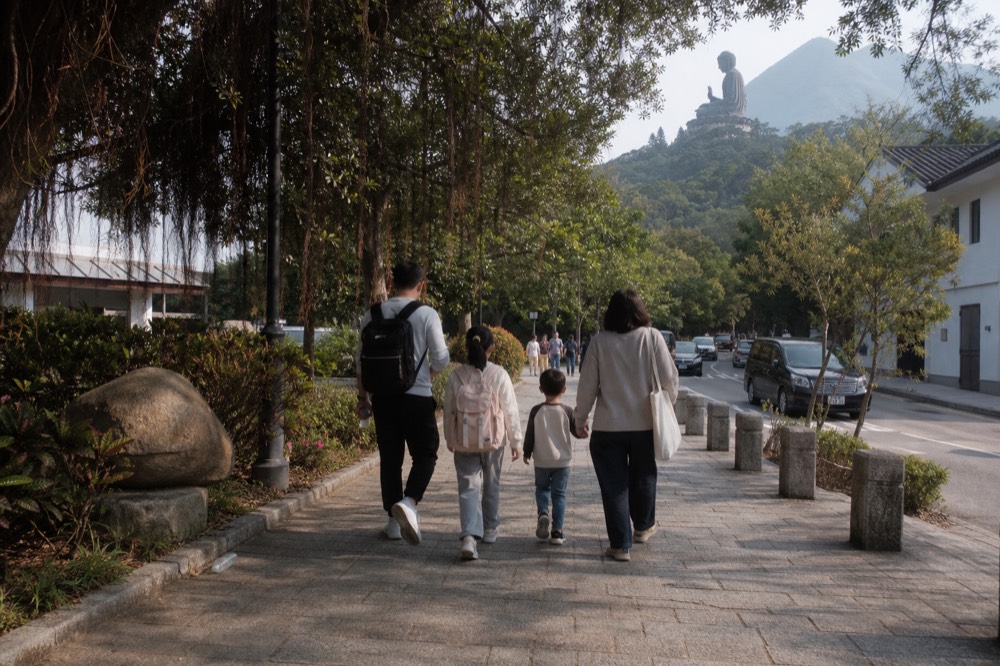
Families and slower-paced groups should keep the skeleton but stretch the timings: the plateau block grows to about four hours, Tai O becomes the flexible end of the day, and the cable car ride down is replaced by bus route 11 from Tai O so nobody faces the return boarding queue when energy is lowest. Children under 3 ride the cable car free, and children 3 to 11 pay the child fare on every tier (checked September 2026).
The 268 steps to the Buddha are the day's one unavoidable physical demand, and there is no lift or alternative route. Young children manage it with stops, and the views from the base platform are the reward. Under the Tung Chung Cable Car Bylaw, children under 12 must ride the cable car accompanied by someone aged 15 or over. Wheelchair users can ride: the boarding platform is level with the cabin floor and the bench lifts out of the way, though every wheelchair user must travel with an able-bodied companion, and disabled guests get 30% off at either ticket office with valid proof (checked September 2026).
For a slower day, cut one thing rather than compressing everything. The usual casualty should be the village attractions, which are weather-proof add-ons rather than the reason you came, and the thing never to cut is the Tai O boat, since it is 20 minutes long and delivers the village's signature sight. Our Ngong Ping Village guide helps you decide what to keep.
Groups who want the day without any of its logistics can also skip the self-planning entirely and still follow essentially this route:
The private-coach tour covers the Big Buddha, Tai O and a coach transfer in 5 hours from $45.92, rated 4.8 across 61 reviews on the live listing (checked September 2026). And if the priority is simply to skip every queue on the mountain, the VIP priority boarding version at $100.76 puts you first onto the cabins.
However you assemble the day, the ticket is the piece worth settling before you leave home: the standard round trip at $21.15 (checked September 2026) for a single or the tiers above it all scan straight from an e-ticket at the turnstile, and the standard tiers can be cancelled before redemption.
The day in one glance
This is the whole itinerary compressed into one table: eight legs, about nine hours door to door, and a transport cost of roughly HK$360 (checked September 2026) to HK$400 per adult on a weekday before food and the boat. Every figure in it is sourced above, and nothing is an estimate beyond the walking allowances. Use it as the morning checklist, and read back up the page if any leg needs adjusting.
| Leg | Time needed | Cost per adult | Notes |
|---|---|---|---|
| Hong Kong Station to Tung Chung, MTR | ~30 min | HK$24.30 (checked September 2026) Octopus | Tung Chung Line, no change |
| Walk, Tung Chung Exit B to terminal | ~5 min | Free | Roughly 300 m |
| Cable car to Ngong Ping | ~25 min | From HK$205 (checked September 2026) single, HK$295 round trip | First cabin 10:00 weekday, 09:00 weekend |
| Big Buddha steps | 30-45 min | Free | 268 steps, no alternative route |
| Po Lin Monastery and lunch | ~90 min | Meal price not published | Kitchen serves 11:30-16:30 |
| NLB 21 to Tai O | ~20 min | HK$7.90 (checked September 2026) / HK$19.20 | Bus stop 5 min from village |
| Tai O boat excursion | ~20 min | Paid at the boat | Runs from the iron footbridge |
| Return, NLB 11 or cable car | ~30-60 min | HK$14.00-23.30 bus | Cable car closes 18:00 / 18:30 |
(Transport fares checked September 2026.)
Build in one buffer you do not plan to spend, usually an hour somewhere between the Buddha and the bus. Lantau rewards the unhurried, and every connection in this itinerary still holds if the morning runs 45 minutes late, which, on the one day you visit, it might.
The short answers: yes, the Big Buddha and Tai O fit in one day with room to spare; the cable car opens at 10:00 on weekdays and 09:00 at weekends; the day costs roughly HK$360 (checked September 2026) to HK$400 per adult in transport; October and November are the best months; and the bus is a genuine alternative if the cable car is closed. Each question below unpacks one of those points in full.
Common questions about a Lantau Island day trip
Can you do the Big Buddha and Tai O in one day?
Yes, comfortably. The cable car reaches Ngong Ping in about 25 minutes, the Big Buddha and Po Lin Monastery need roughly three hours including lunch, and New Lantao Bus 21 covers Ngong Ping to Tai O in about 20 minutes. Starting on the first weekday cabin at 10:00, you reach Tai O by early afternoon with time for the boat excursion before heading back down.
What time does the cable car open?
10:00 on weekdays and 09:00 on Saturdays, Sundays and public holidays, closing at 18:00 and 18:30 respectively (checked September 2026). The operator does not publish a last-boarding time for normal days, so do not plan the return leg against an unpublished cutoff.
How much does a Lantau day trip cost?
Roughly HK$360 (checked September 2026) to HK$400 per adult for the transport skeleton on a weekday: a HK$295 standard round-trip cable car ticket, the MTR at HK$24.30 each way from Central by Octopus, and the Tai O buses at HK$7.90 and HK$14.00. The Big Buddha is free to climb. Food and the Tai O boat are extra (checked September 2026).
Is the cable car the only way up to Ngong Ping?
No. New Lantao Bus 23 runs from Tung Chung Tat Tung Road, beside the terminal, to Ngong Ping for HK$20.40 on a normal day and HK$37.00 on Sundays and public holidays (checked September 2026). It is the standard fallback during maintenance closures, of which there are several a year, including 8 to 18 September 2026.
What is the best month to do this itinerary?
October or November. Hong Kong's fog days fall almost entirely between February and April, typhoon warning signals peak in August, and the autumn months combine the year's highest sunshine with its lowest humidity. Avoid Golden Week, 1 to 7 October, despite the good weather, because of crowds.
How long do you need at the top?
About three hours for the Big Buddha, Po Lin Monastery and a vegetarian lunch, plus whatever you want in Ngong Ping Village. The operator suggests three to four hours for the village and a meal combined, so a generous plateau allowance is half a day, which is exactly what this itinerary gives it.