Ngong Ping Village: What Is Actually at the Top of the Cable Car
Ngong Ping Village is the purpose-built plaza at the top of the cable car. The honest way to enjoy it is as the gateway to a plateau whose real draws, the Tian Tan Buddha and Po Lin Monastery, sit a short walk beyond the shops.
Short answer
Ngong Ping Village is a purpose-built 1.5-hectare visitor village at the cable car's upper terminal, opened with the ride in 2006. The cable car runs 10:00-18:00 weekdays and 09:00-18:30 weekends (checked September 2026). A standard round trip costs HK$295 at the gate, and the ride carried about 4,843 guests a day in 2024.
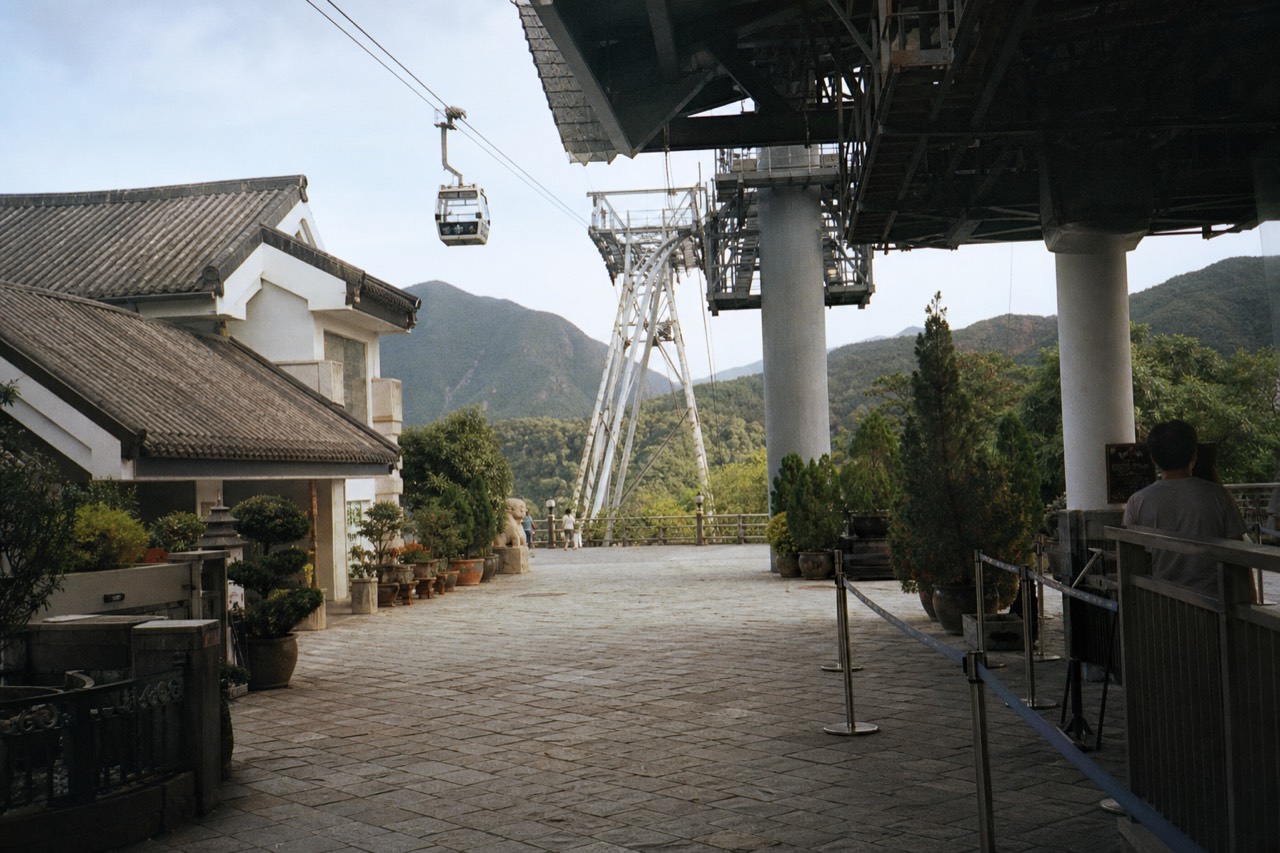
Ngong Ping Village occupies a 1.5-hectare site at the top of the 5.7-kilometre Ngong Ping 360 ropeway, and it was built as part of the cable car project, opening with the ride on 18 September 2006. It is not an old settlement. It is a designed visitor village of shops, food outlets and paid attractions, and the honest way to plan a visit is to treat it as the plaza, food court and ticket hub of a plateau whose real draws, the Tian Tan Buddha and Po Lin Monastery, sit a ten-minute walk beyond it.
This guide, published by Hong Kong Ngong Ping Cable Car, covers what is genuinely up there: the village itself, the Buddha and monastery next door, the hours that bound your day, the fog season that can swallow the views, the crowds the ride actually carries, and what changes when the cable car closes for maintenance.
What is Ngong Ping Village, exactly?
Ngong Ping Village is a purpose-built, 1.5-hectare visitor village at the cable car's upper terminal, opened together with the ride on 18 September 2006. It is not a historic settlement: it is a planned plaza of shops, restaurants and paid attractions, operated by Ngong Ping 360, a subsidiary of the MTR Corporation.
That framing matters, because a lot of coverage implies you are stepping into an old mountain community. You are not. The operator is a subsidiary of the MTR Corporation, the same company that runs the metro line most visitors arrive on, and the village was engineered alongside the ropeway as its commercial upper station. The plateau's genuine antiquity sits elsewhere: Po Lin Monastery has been on this site since 1906, when it was a thatched hermitage called "the Big Thatched Hut", long before any cable was strung.
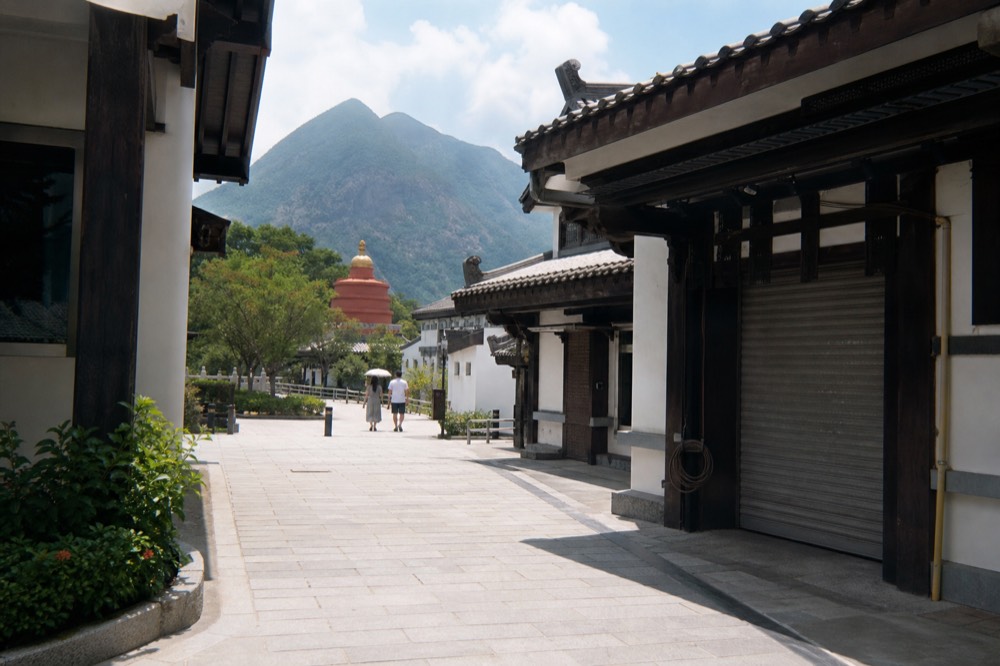
What the village does well is the practical layer of a plateau day. There are glass-fronted food outlets and shops, including Starbucks, Subway, Mountain Cafe, Honeymoon Dessert, Ebeneezer's and Imperial Patisserie, plus themed features such as the Blessing Drums, Stupa Square, the Bodhi Tree, a Ngong Ping viewing platform, a Hong Kong Nostalgia mural and a 3D mural. The operator suggests allowing at least three to four hours to explore the village and eat, and that figure is realistic once the Buddha and monastery are added.
Treat the village as base camp. It is where you arrive, eat, buy water and regroup, and the plateau's serious sights are a flat, signposted walk away.
How do you get to Ngong Ping Village?
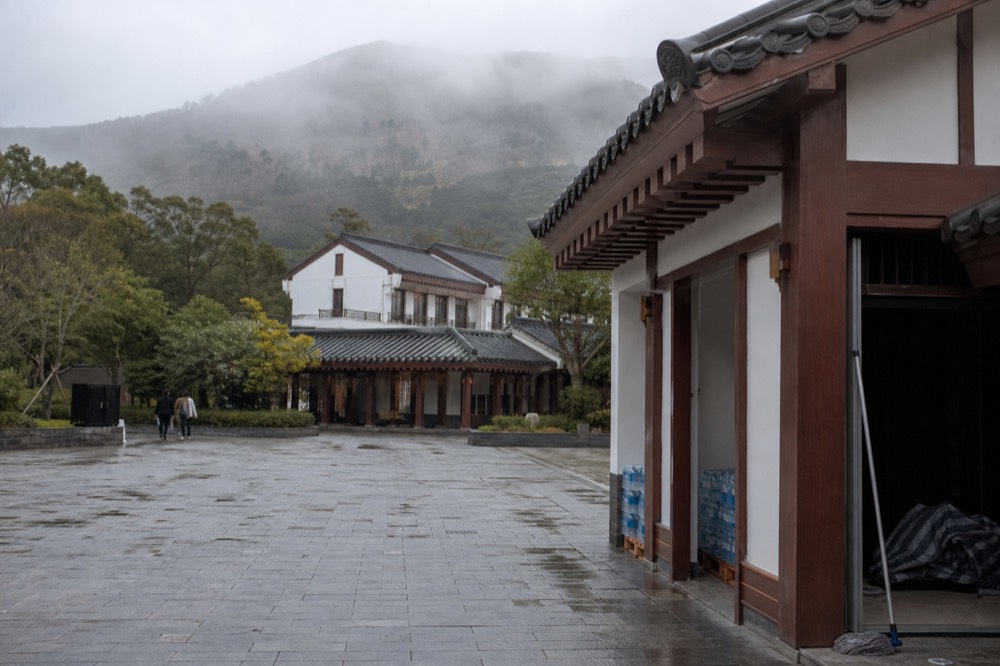
There are two practical ways up: the cable car from Tung Chung, a 5.7-kilometre, roughly 25-minute ride, or New Lantao Bus 23 along the winding Tung Chung Road, at HK$20.40 on a weekday and HK$37.00 on Sundays and public holidays (checked September 2026). Most visitors take the MTR Tung Chung Line from Hong Kong Station, about 30 minutes and HK$24.30 with an Octopus card, then walk five minutes from Exit B.
The default arrival is the metro plus the ropeway. The Tung Chung Line runs direct from Hong Kong Station with no change, and the cable car terminal sits beside Tung Chung Station: a five-minute, roughly 300-metre walk from Exit B, much of it through or past the Citygate Outlets mall. From Kowloon or Tsim Sha Tsui the MTR fare is HK$18.70 with an Octopus card (checked September 2026).
The bus is the alternative people underrate. New Lantao Bus 23 leaves from the Tat Tung Road terminus, which sits beside the cable car terminal, and climbs the winding Tung Chung Road over the mountain to Ngong Ping. It costs a fraction of the cable car, and its Sunday and public-holiday fare is 81% higher than its weekday fare, a real quirk of timing worth knowing before you budget. The trade-off is the road itself: it is steep and serpentine, and passengers prone to motion sickness should plan accordingly. On Sundays and public holidays only, route 1R also runs direct from Hung Hom Ferry Pier to Ngong Ping.
| Leg | Cost | Time | Notes |
|---|---|---|---|
| MTR, Hong Kong Station to Tung Chung | HK$24.30 Octopus, HK$28.00 single ticket (checked September 2026) | about 30 minutes | Tung Chung Line, direct |
| MTR, Kowloon or Tsim Sha Tsui to Tung Chung | HK$18.70 Octopus (checked September 2026) | similar | same line, direct |
| Walk, Tung Chung Exit B to cable car terminal | free | about 5 minutes, roughly 300 m | signposted, adjacent to Citygate Outlets |
| Cable car, Tung Chung to Ngong Ping | from HK$205 single, HK$295 round trip at the gate (checked September 2026) | about 25 minutes each way | 5.7 km, 108-cabin fleet |
| NLB bus 23, Tat Tung Road to Ngong Ping | HK$20.40 weekday, HK$37.00 Sunday and public holiday (checked September 2026) | journey time not published in the open-data feed | winding Tung Chung Road; the closure fallback |
| NLB bus 1R, Hung Hom to Ngong Ping | check with the operator | Sundays and public holidays only | direct to the plateau |
One planning note: the bus is also the standing way up whenever the ropeway is suspended, for weather or for the maintenance closures covered later in this guide. If you would rather not assemble the day yourself, guided options bundle the ride with the Buddha and the fishing village, and the three below are the formats worth comparing first.
How much does the cable car cost, and how long is the ride?
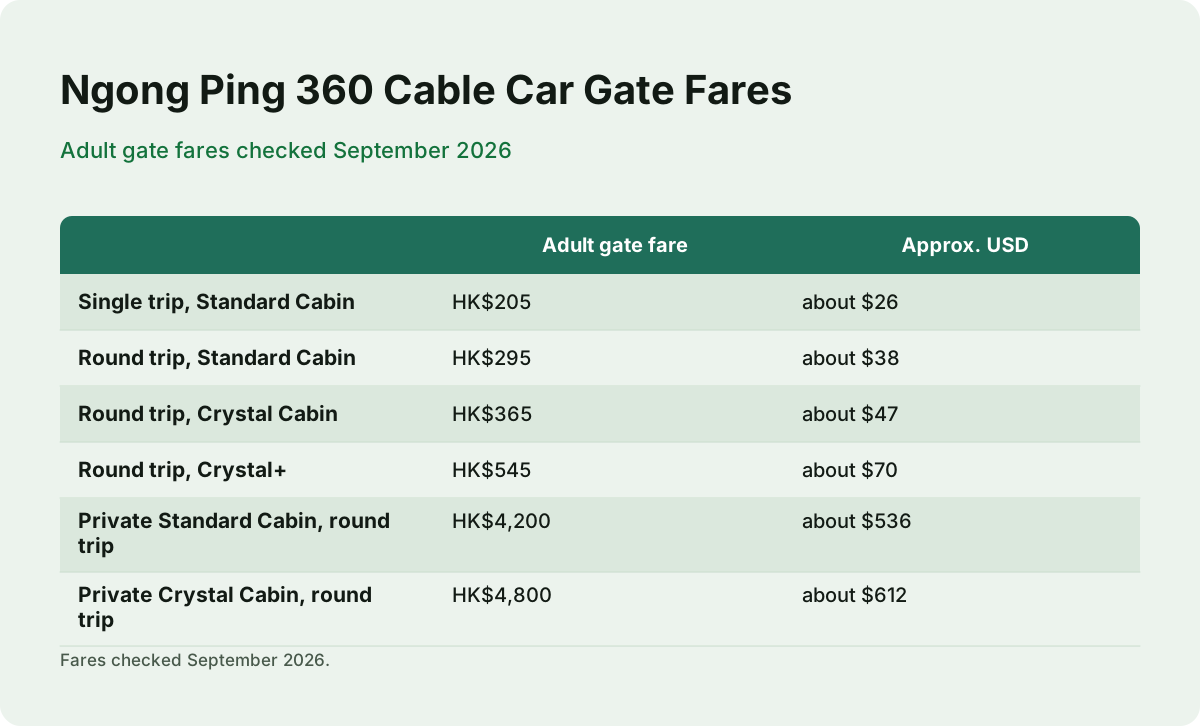
The ride covers 5.7 kilometres in about 25 minutes each way in a fleet of 108 cabins. Gate fares are HK$295 for a standard round trip, HK$365 for a Crystal round trip and HK$545 for Crystal+ (checked September 2026); a single standard trip is HK$205. The ticket sold through the operator's live listing starts at $21.15 with free cancellation before redemption on the standard tiers.
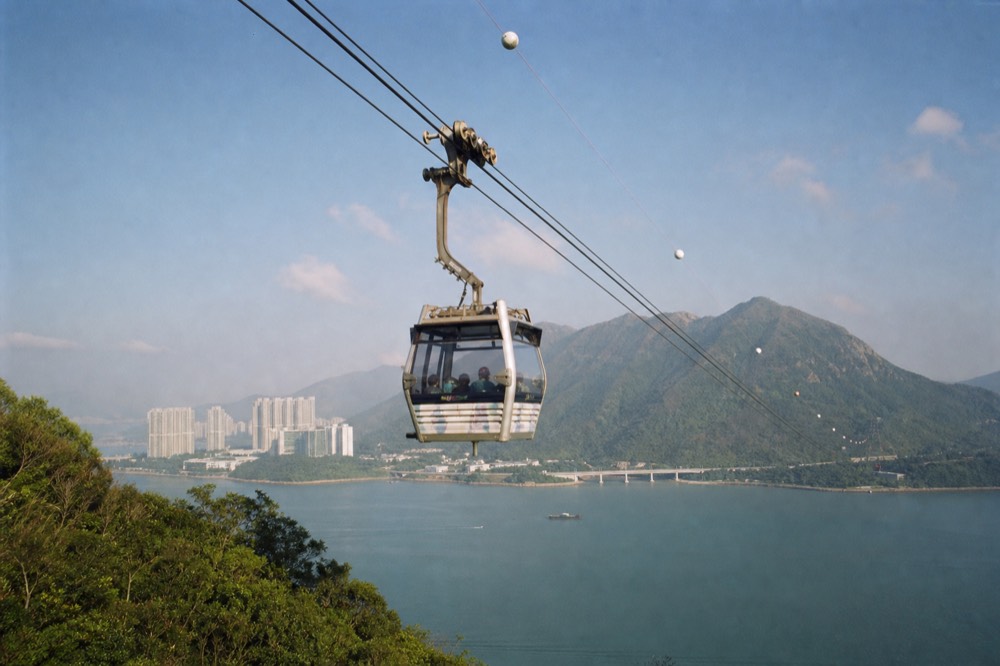
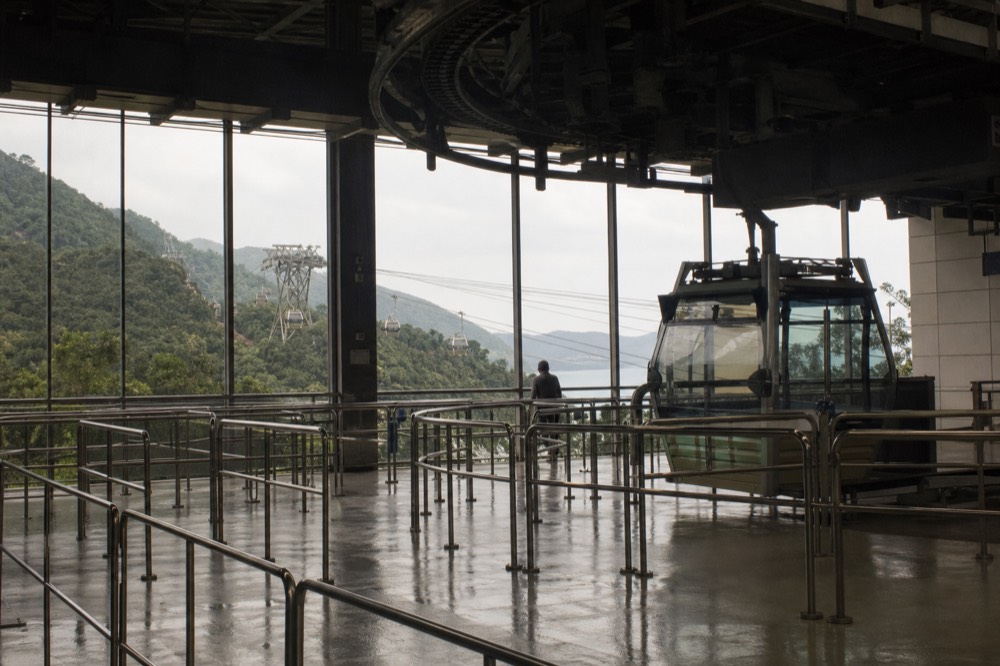
The journey is the attraction as much as the destination. Cabins leave continuously and cross Tung Chung Bay, pass beside Hong Kong International Airport and the Hong Kong-Zhuhai-Macau Bridge, then climb through Lantau North Country Park toward Nei Lak Shan before the Buddha comes into view. At the Airport Island Angle Station the line turns a full 60 degrees; nobody boards or alights there. The full fare ladder, including the deliberately mixed Crystal one way and Standard the other, is on the operator's ticket page, and the table below shows the headline tiers. USD figures are approximate, converted at 7.8403.
| Product | Adult gate fare | Approx. USD | Notes |
|---|---|---|---|
| Single trip, Standard Cabin | HK$205 | about $26 | either direction |
| Round trip, Standard Cabin | HK$295 | about $38 (checked September 2026) | both legs valid the same day only |
| Round trip, Crystal Cabin | HK$365 | about $47 | glass floor, up to 10 guests |
| Round trip, Crystal+ | HK$545 | about $70 | glass floor plus glass walls, over 80% transparency |
| Private Standard Cabin, round trip | HK$4,200 (checked September 2026) | about $536 | whole cabin, up to 10 guests |
| Private Crystal Cabin, round trip | HK$4,800 | about $612 | whole cabin, up to 10 guests |
The simplest way to buy is the standard-cabin e-ticket sold through the operator's live listing: the Ngong Ping 360 Cable Car Ticket in Hong Kong is rated 4.7 from 61,490 reviews and starts at $21.15 (checked September 2026), with free cancellation before redemption on the standard tiers. Plain single and round-trip e-tickets need no physical redemption; you scan the QR code at the turnstile.
A detail worth knowing before you queue: a pre-bought e-ticket removes the ticket-purchase line, not the boarding line. Visitors report that the standard-cabin boarding queue is a separate wait, and the Crystal and Crystal+ tiers have their own much shorter line. The full queue picture, with the reported numbers, sits later in this guide. For readers deciding between cabin types, our Crystal Cabin versus Standard Cabin comparison works through the trade-offs in detail.
What is at Ngong Ping Village itself?
The village's listed entertainment is the Cable Car Discovery Centre, Motion 360, the Ngong Ping Nature Centre and the Fengyun Pavilion of Chinese Dynasty The Three Kingdoms. The published way in is a HK$20-per-attraction upgrade bought with any cable car ticket, HK$40 for two (checked September 2026); standalone attraction prices are not published.
The upgrade offer is the only pricing the operator actually puts on the table: top up HK$20 per attraction, the same for adults and children, when buying any cable car ticket or guided tour at the Tung Chung ticket office or the official webstore, and HK$40 (checked September 2026) buys two one-time entries. The two eligible attractions are the Cable Car Discovery Centre, which covers the ropeway's construction and operation, and Motion 360, the motion-seated immersive theatre. The offer has run since 5 July 2021 and is listed until further notice, excluding servicing days, with the details on the official promotions page.
| Attraction | What it is | How to get in |
|---|---|---|
| Cable Car Discovery Centre | exhibits on the ropeway's construction and operation | HK$20 upgrade with any cable car ticket (checked September 2026) |
| Motion 360 | immersive theatre with motion seats | same HK$20 upgrade |
| Ngong Ping Nature Centre | displays on the surrounding country park | listed by the operator; no standalone price published |
| Fengyun Pavilion of Chinese Dynasty The Three Kingdoms | themed experience | listed by the operator; no standalone price published |
Two honest cautions. First, standalone admission prices for the village attractions are not published anywhere the operator controls, so this guide will not quote one; the HK$20 (checked September 2026) upgrade is the only verified figure. Second, "Walking with Buddha", the attraction older guides still recommend, survives only as a souvenir-shop name in the operator's own directory. Treat it as gone.
Beyond the paid attractions, the village's free layer is pleasant rather than essential: the Blessing Drums, Stupa Square, the viewing platform and the murals fill a spare half-hour comfortably. The village's real function is logistics, and it does that well.
What about the Big Buddha and Po Lin Monastery?
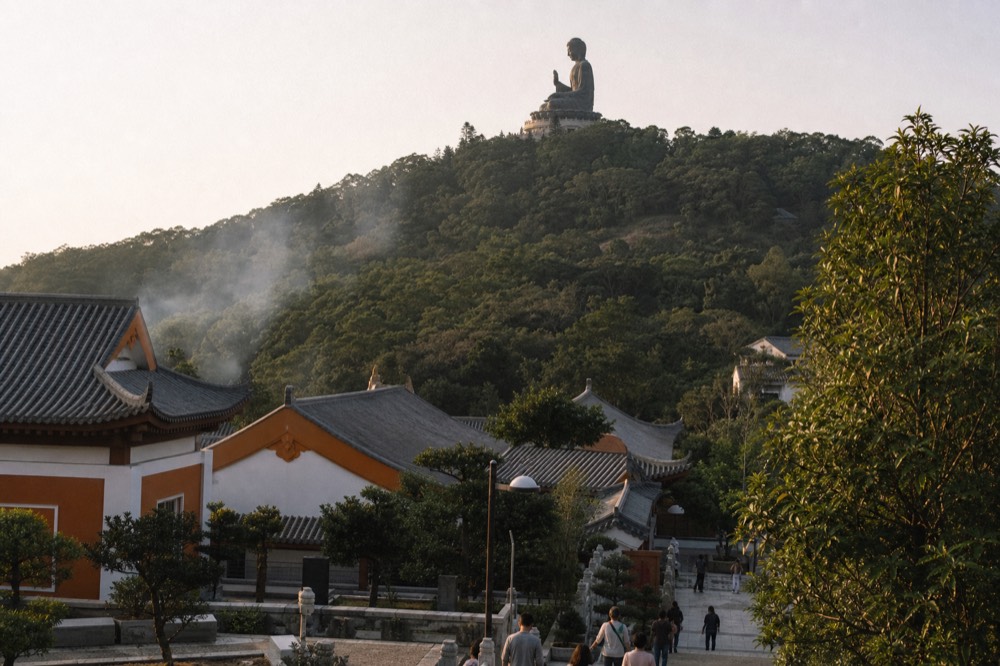
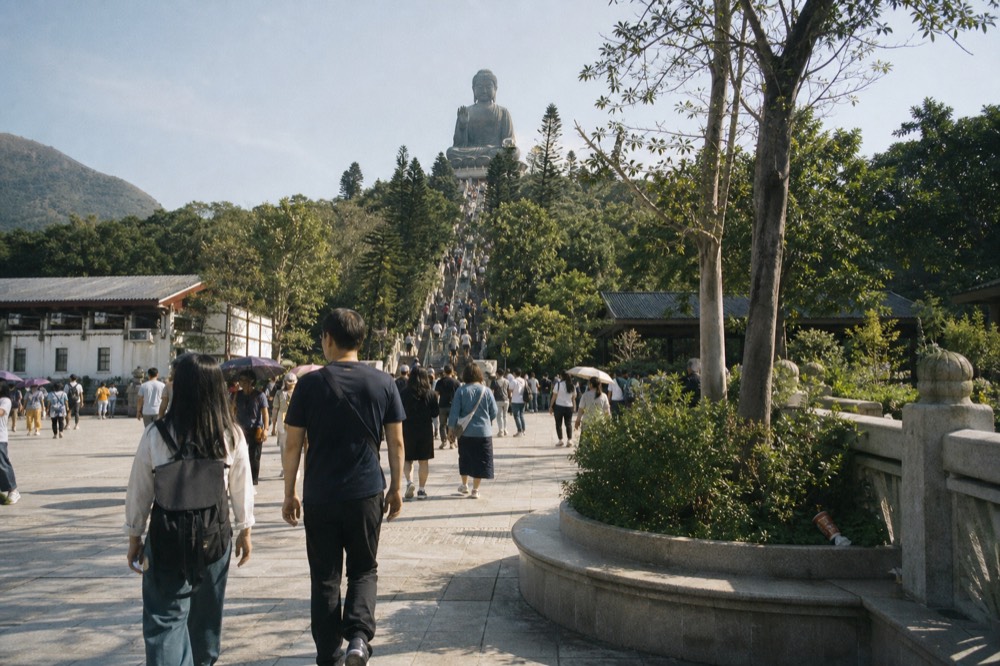
The Tian Tan Buddha is a ten-minute walk from the village, up 268 steps that are free to climb. The statue stands 26.4 metres tall, 34 metres with its base, and was built over twelve years from 202 bronze pieces. Po Lin Monastery next door opens 09:00-18:00, and its vegetarian kitchen serves 11:30-16:30 daily (checked September 2026). The monastery's meal price is not published.
The 268-step count is the Hong Kong Tourism Board's own figure, on its Big Buddha page, and the climb costs nothing. The statue's engineering is the plateau's best story: the face was cast as a single 5-tonne bronze piece, 4.3 by 5.8 metres, so large that a lorry sandwiched between two cranes was needed to get it up Lantau's narrow roads. The whole statue, 202 bronze sections cast to a tolerance under 3 mm, was wind-tunnel tested at the Beijing Institute of Aerodynamics, in the facility built for satellites and rockets. It sits facing north towards Beijing, and the inaugural ceremony was held on 29 December 1993. Po Lin Monastery's own history page carries the full construction record.
The monastery predates the Buddha by decades: construction began in 1906, and the site was officially named Po Lin Monastery in 1924. Its vegetarian kitchen serves a fixed communal set, generally a soup, a deep-fried dish and a vegetable dish with rice, portioned by table size, from 11:30 to 16:30 daily per the monastery's food page. The price is not published on any official source, so check in the dining hall rather than trusting a figure copied around the internet. The snack shop beside the kitchen is known for the monastery's daily-made bean curd dessert and small-batch mango glutinous rice dumplings.
For the plateau's context in full, our guide to the Tian Tan Buddha and our Po Lin Monastery visitor guide cover both in depth. Readers who prefer a structured day can also take the six-hour guided format, Hong Kong: Cable Car, Big Buddha, Fishing Village and Beyond, rated 4.8 from 490 reviews and priced from $70.15 (checked September 2026), which strings the ride, the Buddha and Tai O together with the planning removed.
Is the Wisdom Path open?
No. The Wisdom Path, the 38-column Heart Sutra installation at the foot of Lantau Peak, has been closed since 5 June 2025 for refurbishment, with completion expected in the last quarter of 2026. A viewing platform on a nearby Lantau Trail section stays open. Do not plan around it.
This is the single most out-of-date fact still circulating about the plateau. Most generic guides describe the Wisdom Path as an open, free attraction, and for years it was: 38 timber columns, 8 to 10 metres tall, arranged in a figure-of-eight on the natural slope, each carved with the Heart Sutra in calligraphy donated by Professor Jao Tsung-I, the highest column deliberately left blank to express emptiness. The Tourism Commission's official page now states the closure plainly, and the reopening will be gradual and in stages, announced through the Commission's channels.
If your heart was set on it, the honest advice is to leave it out of a 2026 itinerary and check the Commission's page closer to your travel date. The Buddha, the monastery and the village itself are unaffected.
How long do you actually have on the plateau?
Your time is bounded by the cable car's clock: 10:00-18:00 on weekdays and 09:00-18:30 on Saturdays, Sundays and public holidays (checked September 2026), with the village keeping the same hours. Po Lin Monastery opens at 09:00, an hour before the cable car on weekdays. Ngong Ping 360 suggests allowing three to four hours for the village and a meal.
The weekday-versus-weekend gap is the detail people miss. On a Monday the first cabin leaves Tung Chung at 10:00; on a Saturday it leaves at 09:00, and everything closes half an hour later. The operator opens earlier on weekends precisely because they are busier. The monastery, meanwhile, opens at 09:00 every day, so bus arrivals can start earlier than cable car arrivals on weekdays.
Two structural rules bound a round trip. Both legs must be used the same day, and you cannot stay in your cabin for the return: everyone alights at Ngong Ping and rejoins the boarding queue to come back down. There is no published last-boarding time for normal operating days; the operator publishes opening hours and nothing more, so plan to be back in the queue well before close rather than trusting a copied figure. The current hours are on the operator's tourist guide page.
| What | Weekdays | Weekends and public holidays |
|---|---|---|
| Cable car and Ngong Ping Village | 10:00-18:00 (checked September 2026) | 09:00-18:30 (checked September 2026) |
| Po Lin Monastery grounds | 09:00-18:00 | 09:00-18:00 |
| Vegetarian kitchen | 11:30-16:30 | 11:30-16:30 |
| Big Buddha steps | free to climb, no ticket | free to climb, no ticket |
| Last boarding | not published for normal days | not published for normal days |
In practice, a weekday arrival at opening gives you a comfortable seven-plus hours before close, which is ample for the village, the steps, the monastery and a long lunch. A late weekday start is where the arithmetic gets tight.
What does the weather do to a visit?
Fog is a late-winter problem: 3.40 of Hong Kong's 3.70 annual fog days fall in February, March and April, the months with the year's lowest sunshine. Typhoon signals peak in August, averaging 4.17 days, and September, 3.83. October and November combine high sunshine, low rainfall and no recorded fog days, the statistical sweet spot.
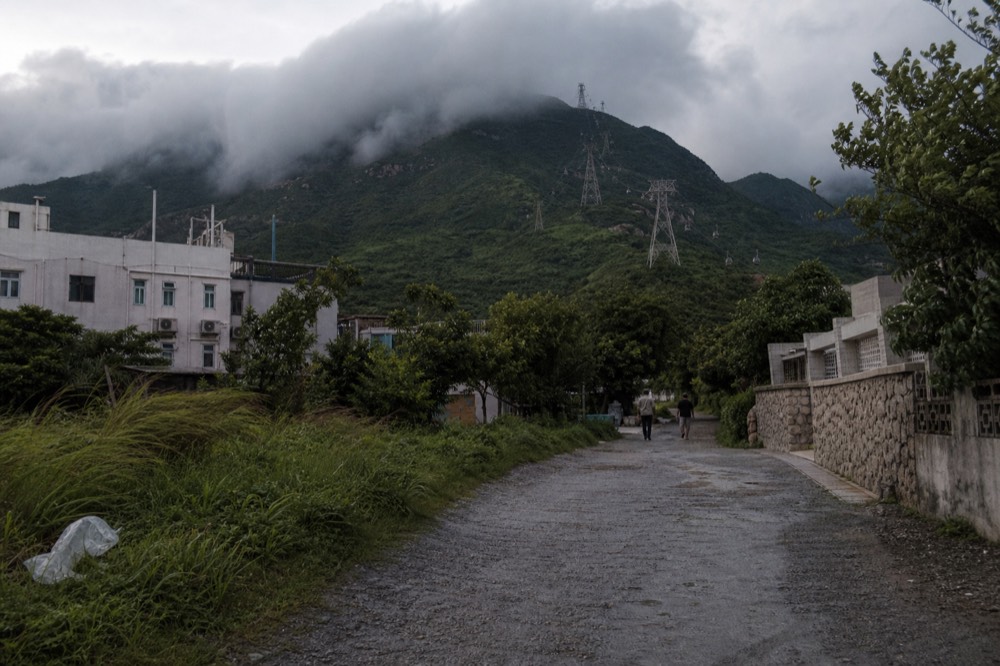
Those numbers come from the Hong Kong Observatory's 1991-2020 climatological normals, published on its normals page, and they describe the urban headquarters site near sea level. The Ngong Ping plateau sits high on Lantau and runs cooler, wetter and cloudier than the city below, so treat the city figures as a floor for the risk, not a description of the summit. The pattern still holds: a February or March morning can put the whole plateau inside cloud, and no glass floor fixes that.
Wind has its own published history. A 2006 Legislative Council reply, still the only primary source stating thresholds, records that the system was designed to suspend in Typhoon Signal No. 8 or above, black rainstorm, lightning, or winds of 90 km/h persistent or 135 km/h gust, with persistent defined as the 30-second average. Observatory data collected at Ngong Ping found those wind conditions existed on an average of 7 days a year, totalling 23 hours, within operating hours. The operator publishes no current numeric threshold on its live site, so the 2006 figures should be read as design specification, not as today's policy. The full government reply is worth reading.
If the service suspends while you hold a ticket, the operator's stated remedy is an exchange for another date or a refund at either terminal's ticket office, with one exception: annual pass holders get no refund for weather or technical suspension. In typhoon season, June through October, check the operator's hotline or site on the morning itself.
How busy does the village get?
The cable car carried 1.56 million guests in 2024, an average of about 4,843 a day, and Ngong Ping 360's own numbers show Crystal+ cabins over 90% full at peak. Visitors report standard-cabin waits of one to three hours, including on ordinary weekdays; a pre-bought e-ticket skips the ticket queue but not the boarding queue.
The operator's own 2024 results release is the source: record revenue of about HK$413 million (checked September 2026), 1.56 million guests, up 13% on the year before, and Crystal+ utilisation above 90% on average across summer, Golden Week and Christmas. The National Day Golden Week, 1 to 7 October, is explicitly called out for record Mainland visitor days. The guest mix was 37% short-haul markets, 29% Mainland China, 20% Hong Kong and 14% long-haul.
The queue reality, from visitor reports dated late 2025 through March 2026 rather than operator data: standard-cabin waits of one to three hours, including 2.5 hours reported on an ordinary November Monday and roughly 90 minutes for tickets alone on a January weekday. The consistent distinction in those reports is that pre-purchased e-tickets save the ticket-counter wait, while the boarding queue remains. Crystal and Crystal+ passengers report a separate, much shorter line, on the order of ten minutes, which makes the premium tiers as much a queue product as a view product.
For visitors who want the queue question handled entirely, the VIP format exists: Hong Kong: Lantau VIP Priority Cable Car, Big Buddha & Tai O, a seven-hour tour rated 4.5 from 362 reviews, from $100.76 (checked September 2026), with priority boarding built into the day.
What happens when the cable car closes for maintenance?
The cable car stops but the village does not: during the scheduled maintenance closure from 8 to 18 September 2026, Ngong Ping Village, its food outlets and the indoor attractions, including the Cable Car Discovery Centre, stay open. Closures happen several times a year, not once, and New Lantao Bus 23 at the fares set out above is the standing way up while the ropeway is suspended.
The 2026 annual overhaul is confirmed in the operator's press release: eleven days, 8 to 18 September inclusive, with the village and its indoor attractions explicitly remaining open. There is a coincidence worth knowing inside those dates: the cable car opened on 18 September 2006, so its exact 20th birthday falls on the final day of the shutdown.
The pattern is several closures a year, one long and a few short, and the table below is the verified record. Nothing is announced for 2027 yet, so check the operator's site before any 2027 trip.
| Year | Verified closures | Status |
|---|---|---|
| 2026 | 8-18 September (the long annual overhaul) | announced in press release CA14/2026 |
| 2026 | January; 3-5 March; May; June | each resumed on the announced date |
| 2025 | 4-24 March; 14-17 May; 2-16 September; 25 November | all resumed |
| 2024 | 28 October-1 November among others | resumed 2 November |
| 2027 | nothing announced | check the operator's site |
If your travel dates collide with a closure, the plateau is still reachable and still worth it: bus 23 runs the mountain road, the Buddha's steps and the monastery are unaffected, and the village's kitchens keep their hours. What you lose is the 25-minute aerial approach, and on a foggy morning that is sometimes a small loss.
Can you go on to Tai O from the village?
Yes, and it is a short hop: New Lantao Bus 21 runs from the Ngong Ping bus terminus, a five-minute walk from the village, to Tai O in about 20 minutes, at HK$7.90 on a normal day and HK$19.20 on Sundays and public holidays (checked September 2026). Tai O is Hong Kong's oldest fishing village, known for its stilt houses.
The operator's own Tai O page gives the 20-minute bus time and describes the village as a 15-minute drive. Once there, the boat excursion is a 20-minute ride from boats moored under the iron footbridge on the main street, passing the stilt houses, "General's Rock" and the Tai O Heritage Hotel, which occupies the former police station. The Dragon Boat Water Parade, in which villagers parade deity statues through the waterways at the festival, was inscribed on China's third national list of intangible cultural heritage in 2011.
Our Tai O fishing village guide covers the village in full. In itinerary terms, the plateau plus Tai O is a full day, and the bus fares' Sunday surcharge applies here too, so a weekday visit stretches the budget further.
The plateau rewards a slow plan: arrive at opening, do the steps before the crowds thicken, eat at the monastery or in the village, and leave room for Tai O if the day is long. However you build it, the pieces below are the three formats most visitors end up choosing between.
These are the questions visitors ask most about the village at the top of the cable car, answered with the verified figures used throughout this guide: entry costs, timing, closures, food and the road-only alternative. Each answer carries the checked tag where a price or schedule is involved, and every figure traces back to the operator or an official Hong Kong source.
Common questions about Ngong Ping Village
Is Ngong Ping Village free to enter?
Yes. Walking through the village, the murals, the Blessing Drums and the viewing platform cost nothing. You pay for the cable car to arrive by air, or the bus fare to arrive by road, and the paid attractions inside the village are extra, most cheaply through the HK$20-per-attraction upgrade (checked September 2026).
How long should I spend at Ngong Ping Village?
The operator suggests three to four hours for the village and a meal. Add the Big Buddha's 268 steps and Po Lin Monastery and a half-day is realistic; add Tai O and it becomes a full day.
Is Ngong Ping Village open when the cable car is closed?
Yes. During maintenance closures, including the 8 to 18 September 2026 suspension, the village, its food outlets and its indoor attractions stay open. You reach the plateau by New Lantao Bus 23 instead.
What is there to eat at Ngong Ping Village?
The village has Starbucks, Subway, Mountain Cafe, Honeymoon Dessert, Ebeneezer's and Imperial Patisserie among others. Po Lin Monastery's vegetarian kitchen serves a fixed communal set from 11:30 to 16:30 daily (checked September 2026); its price is not published, so ask in the dining hall.
Can you get to Ngong Ping Village without riding the cable car?
Yes. New Lantao Bus 23 runs from the Tat Tung Road terminus beside Tung Chung Station to Ngong Ping at HK$20.40 on a weekday and HK$37.00 on Sundays and public holidays (checked September 2026), and route 1R runs direct from Hung Hom on Sundays and public holidays only.