Lantau Island Hong Kong: A Complete Guide to the Island's Sights, Transport and Costs
Lantau Island is where Hong Kong's airport, Disneyland, the Tian Tan Buddha and the stilt houses of Tai O all sit, and the Ngong Ping cable car is the ride that ties the interior together.
Short answer
Lantau Island holds Hong Kong's airport, Disneyland, the 934 m Lantau Peak, the Tian Tan Buddha and the stilt-house village of Tai O. The Ngong Ping cable car covers 5.7 km from Tung Chung to the Buddha's plateau in about 25 minutes each way, from $21.15 one way, and the MTR reaches Tung Chung from Hong Kong Station in about 30 minutes.
Roughly 1,100 flights a day land at Hong Kong International Airport, and every one of them touches down on Lantau Island. The same island carries a 934 m peak, a 34 m bronze Buddha, a stilt-house fishing village and a theme park, all stitched together by one 5.7 km cable car and a metro line. Most visitors experience Lantau as a day trip squeezed between city stops, which is a shame, because the island rewards a slower look.
This guide is the island overview: what is actually on Lantau, how the pieces connect, what the transport and tickets cost, and which weeks to avoid. The day-by-day sequencing lives in the Lantau Island day trip itinerary, and the town detail is in the Tung Chung guide, so those are not repeated here.
Where is Lantau Island and what is actually on it?
Lantau Island is the island where Hong Kong International Airport and Hong Kong Disneyland sit, along with the 934 m Lantau Peak, the Tian Tan Buddha and the stilt-house village of Tai O. The airport alone connects to over 220 destinations on roughly 1,100 flights a day, yet most of the interior is protected country park rather than city.
Lantau Peak, also called Fung Wong Shan, is Hong Kong's second-highest summit at 934 m, and it is a known sunrise hike from the Ngong Ping plateau. Nei Lak Shan, at 751 m, ranks as the territory's sixth-tallest peak; the operator's own pages note that Macau is visible from it on a clear day. Between and around them sits Lantau North Country Park, established in 1978 and covering 22 square kilometres, taking in Sunset Peak, Yi Tung Shan, Lin Fa Shan, the north slope of Lantau Peak and Nei Lak Shan.
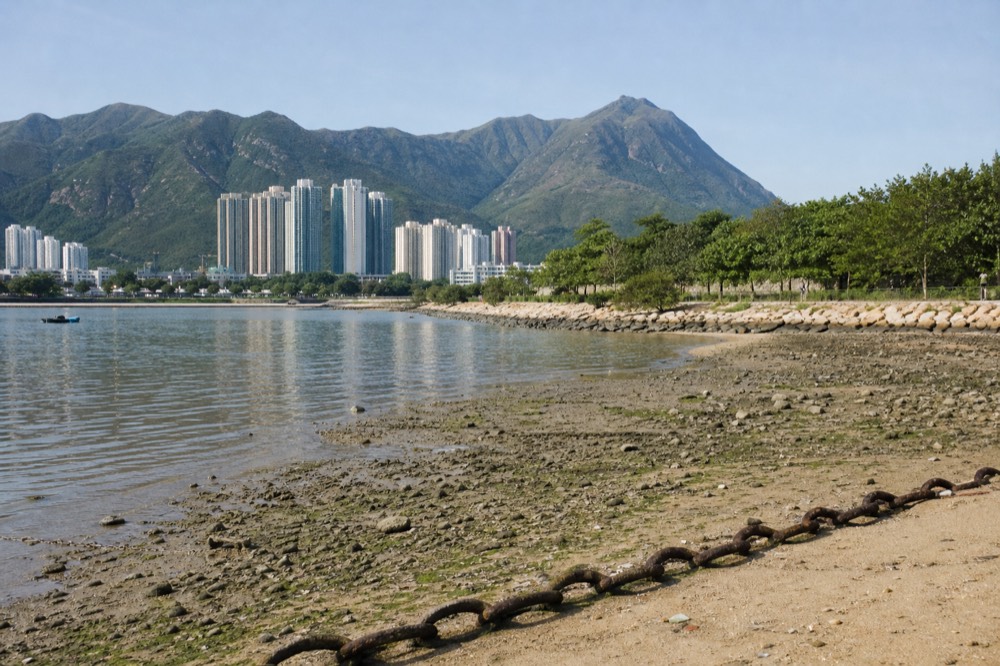
The airport side of the island is the built-up half. Hong Kong International Airport connects to over 220 destinations on roughly 1,100 flights a day, and np360's own pages point out it has been named the world's best airport more than 60 times. The Hong Kong-Zhuhai-Macau Bridge also lands here: 50 km long, including the world's longest six-lane undersea tunnel. Tung Chung, the new town at the cable car's base, sits on the north coast beside Tung Chung Bay, whose Shan Tau wetlands are a listed Site of Special Scientific Interest, a rare wetland-plus-seagrass combination in Hong Kong.
Disneyland occupies its own corner on the northeast of the island, close enough to the airport that some visitors manage Disneyland and the Big Buddha on the same day. That density is the island's odd character: an aviation hub, a theme park and a working monastery plateau all within a 30-minute drive of each other, with empty ridge lines in between.
What are the main things to see on Lantau Island?
The headline sights are the Tian Tan Buddha with its 268 steps, Po Lin Monastery, the Ngong Ping Village entertainment quarter and the Tai O stilt houses, plus the beaches around Mui Wo. The Buddha is free to climb, the monastery opens 09:00 to 18:00 (checked September 2026), and the Wisdom Path has been closed since 5 June 2025.
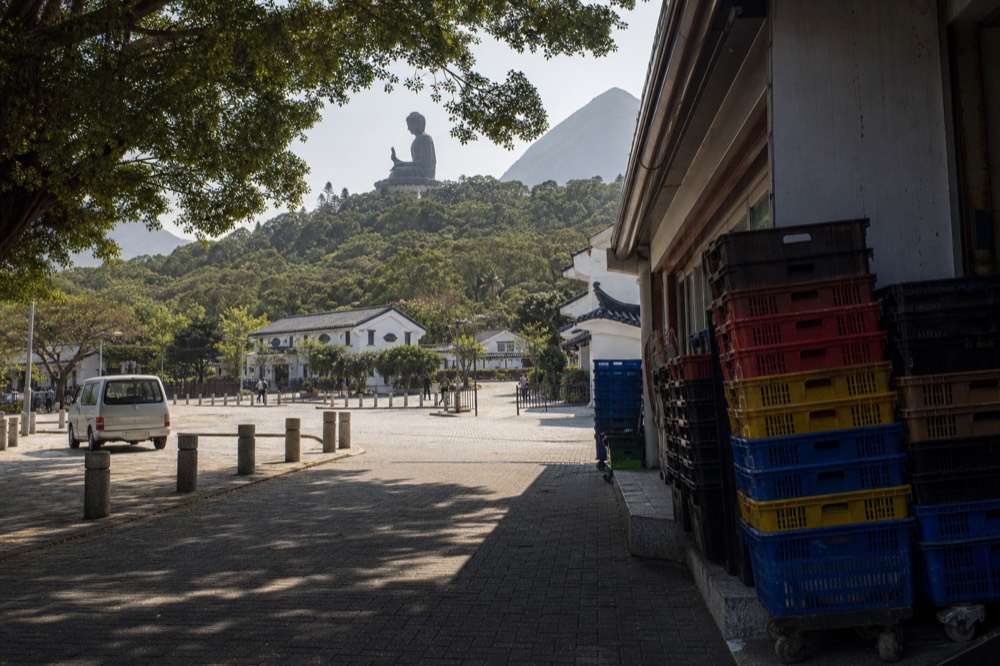
The Tian Tan Buddha, the Big Buddha, stands on Mount Muk Yue a 10-minute walk from Ngong Ping Village. Visitors must ascend 268 steps to reach the statue, a figure confirmed on the Hong Kong Tourism Board's own page, and climbing them is free. The statue's body is 26.4 m, 34 m in total measured from the lotus throne and base, cast from 250 tonnes of bronze over 12 years, seated facing north towards Beijing.
The construction detail worth knowing, because almost no guide carries it: the face was cast as a single piece, 4.3 m by 5.8 m and 5 metric tonnes, and moving it up Lantau's narrow roads needed a lorry sandwiched between two cranes. The whole statue is 202 separate bronze pieces, 10 to 13 mm thick, cast to a tolerance under 3 mm, and it was wind-tunnel tested by the Beijing Institute of Aerodynamics in the facility built for satellites and rockets. It was inaugurated on 29 December 1993.
| Sight | What it is | Key facts | Practical note |
|---|---|---|---|
| Tian Tan Buddha | 34 m bronze statue on Mount Muk Yue | 268 steps, free to climb | 10 minutes on foot from Ngong Ping Village |
| Po Lin Monastery | Working Buddhist monastery, founded 1906 | Opens 09:00 to 18:00 | Vegetarian kitchen serves 11:30 to 16:30 daily |
| Ngong Ping Village | 1.5-hectare entertainment quarter beside the terminal | Cable Car Discovery Centre, Motion 360 | HK$20 (checked September 2026)-per-attraction upgrade offer with any ticket |
| Tai O | Hong Kong's oldest fishing village | Stilt houses, 20-minute boat excursion | Bus 21 from Ngong Ping, about 20 minutes |
| Wisdom Path | 38 timber columns carved with the Heart Sutra | Closed since 5 June 2025 | Refurbishment due to finish in Q4 2026 |
Po Lin Monastery began construction in 1906 on a site originally called "the Big Thatched Hut" and took its current name in 1924. Its vegetarian kitchen serves a fixed communal set meal from 11:30 to 16:30 daily; the monastery does not publish the price, so expect to ask on the day. One correction that matters for 2026 planning: the Wisdom Path, the figure-of-eight arrangement of 38 timber columns carved with the Heart Sutra, has been closed since 5 June 2025 for refurbishment, with completion expected in the last quarter of 2026 and a staged reopening. A viewing platform on a nearby section of the Lantau Trail stays open. Any guide still listing the Wisdom Path as a stop is out of date.
The deeper detail on each sight, including the monastery's layout and the Buddha's mudras, is in the Big Buddha Hong Kong guide. For the island's beaches and the ferry town of Mui Wo, see the beaches guide; the south coast is a different, flatter Lantau that most cable car visitors never reach.
How does the Ngong Ping cable car connect Lantau's sights?
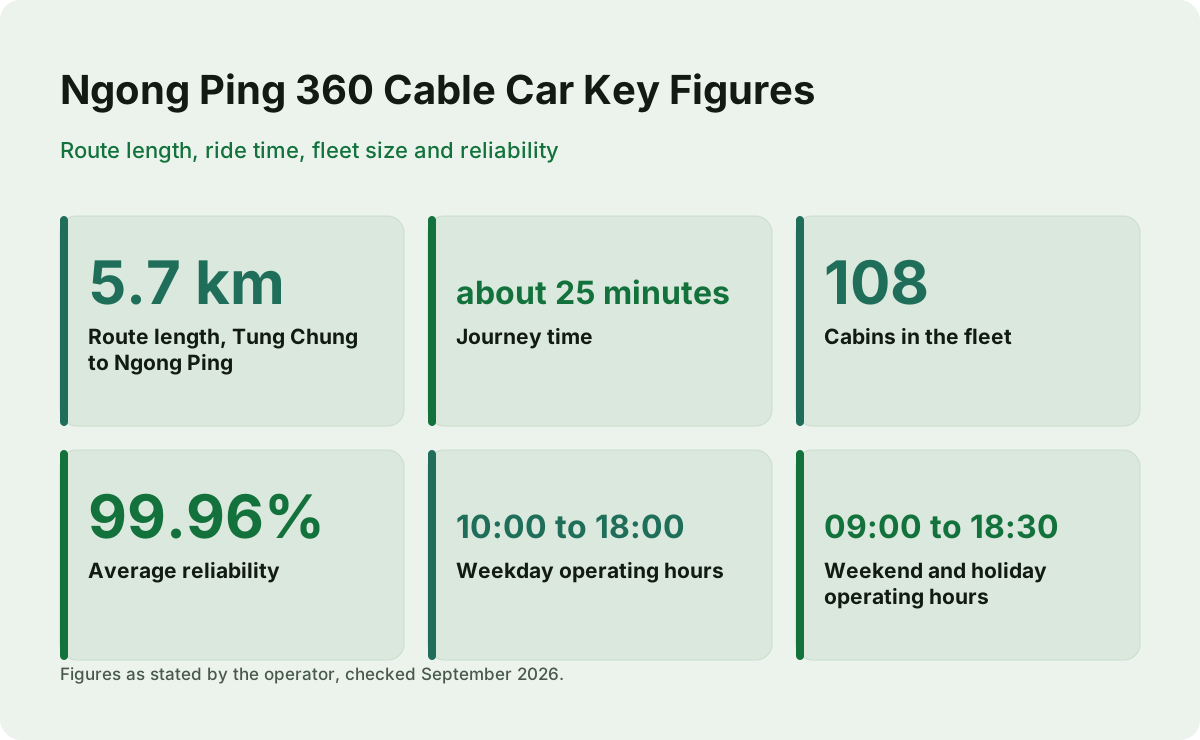
The Ngong Ping 360 cable car runs 5.7 km from Tung Chung, next to the MTR station, up to the Ngong Ping plateau beside the Big Buddha, taking about 25 minutes in a 108-cabin fleet. It is the practical way most visitors see Lantau's interior, because the alternative is a winding mountain road. Its operator is an MTR Corporation subsidiary.
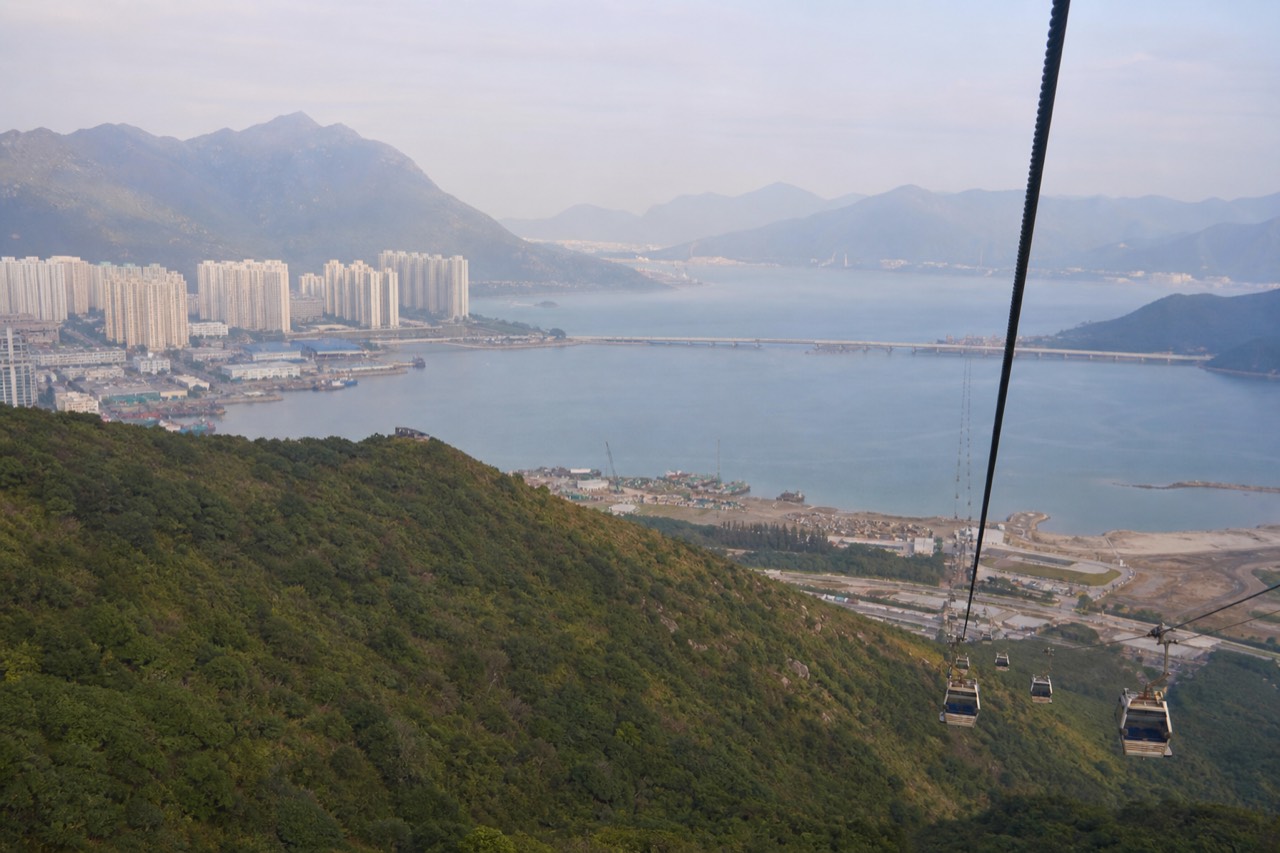
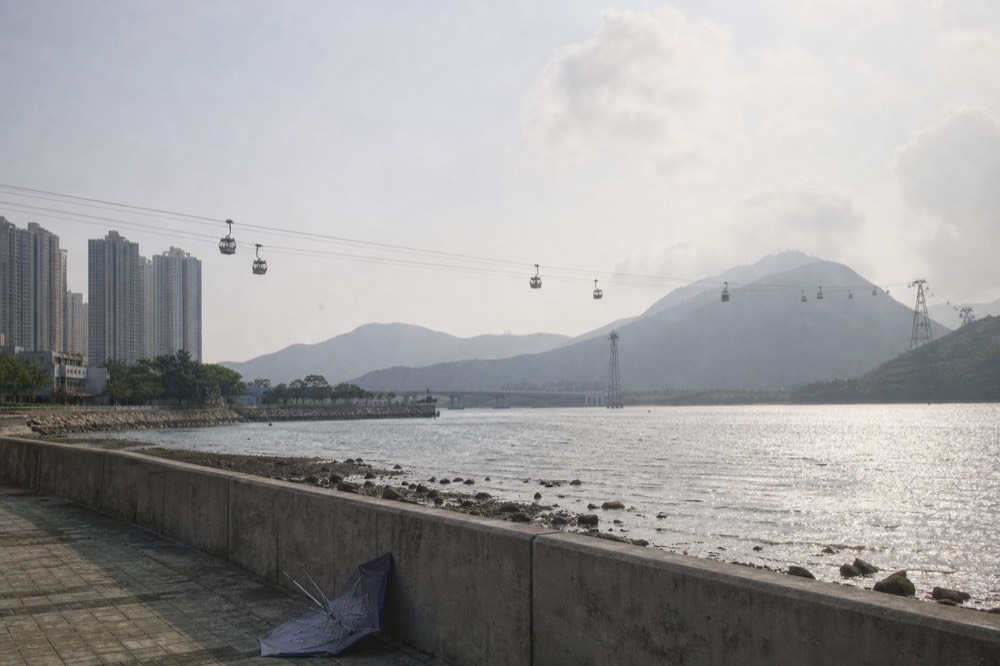
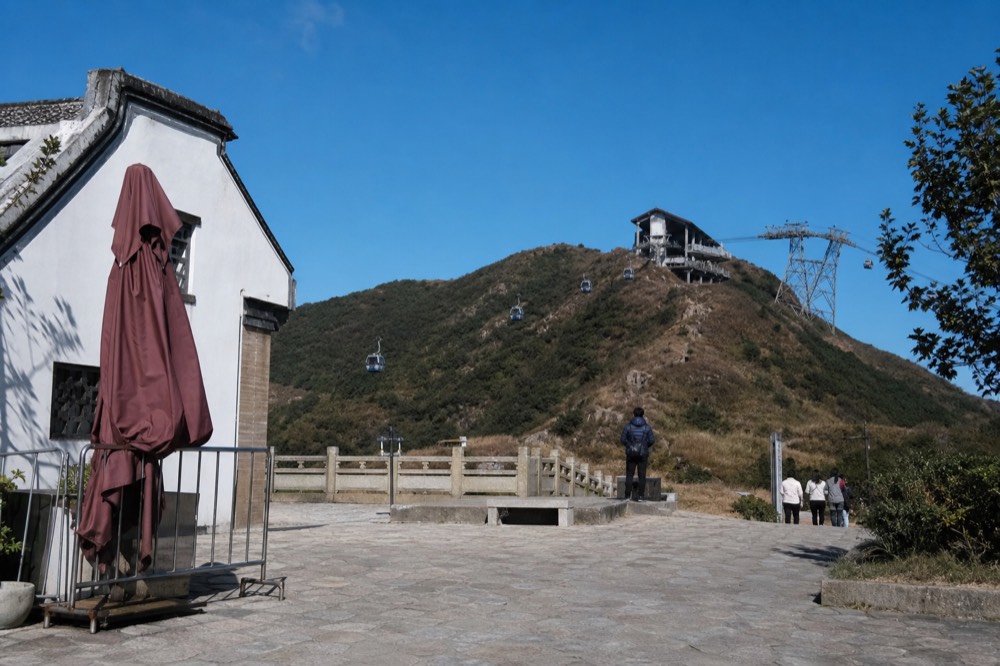
The ride is the longest bi-cable ropeway in Asia, and the route runs in the operator's own order: Tung Chung, Tung Chung Bay, Hong Kong International Airport, the Hong Kong-Zhuhai-Macau Bridge, Lantau North Country Park, Nei Lak Shan, the Tian Tan Buddha and finally Ngong Ping Village. There are two angle stations along the way. At the Airport Island Angle Station the cable turns a full 60 degrees before resuming, but passengers cannot board or alight at either station, and nobody can drop off into the country park.
Operating hours are 10:00 to 18:00 on weekdays and 09:00 to 18:30 on Saturdays, Sundays and public holidays (checked September 2026), with festive-season variations posted on the operator's site. The weekend day starts earlier precisely because weekends are busier. The system's average reliability is 99.96%, which the operator glosses as less than one minute of delay for every eight hours of operation. In 2024 the cable car carried 1.56 million guests, a record HK$413 million (checked September 2026) in revenue, an average of 4,843 guests a day, with Crystal+ cabins running above 90% utilisation during peak periods.
The 25-minute crossing is also the reason this site, Hong Kong Ngong Ping Cable Car, exists: nearly every Lantau plan swings on that one ride. The simplest product is the standard cabin ticket itself, which carries a 4.7 rating across 61,490 reviews on the live listing, with a from-price of $21.15 for the 25-minute ride each way (checked September 2026). The standard tiers cancel free before redemption, and a plain e-ticket scans at the turnstile with no counter stop.
If the point of the day is the plateau rather than the queue, the same listing covers the full fare ladder, from one-way standard tickets to glass-floor Crystal cabins and whole-cabin private bookings, so it is worth checking the live listing against your date before committing to a cabin type.
How do you get to Lantau Island and around it?
The MTR Tung Chung Line runs from Hong Kong Station to Tung Chung in about 30 minutes for HK$24.30 with an Octopus card, and the cable car terminal is a five-minute 300 m walk from Exit B. New Lantao Bus 23 reaches Ngong Ping by road for HK$20.40 on a weekday, rising to HK$37.00 on Sundays and holidays (checked September 2026).
The Tung Chung Line is the spine of every Lantau trip. From Hong Kong Station the journey is about 30 minutes with no change of train; from Kowloon or Tsim Sha Tsui the adult Octopus fare is HK$18.70. The cable car terminal sits adjacent to Tung Chung Station, and the operator's own directions use the phrase "Exit B" for the five-minute, roughly 300 m walk, much of it through covered walkways near Citygate Outlets.
The road alternative is New Lantao Bus route 23 from Tat Tung Road Bus Terminus, beside the cable car terminal, up the winding Tung Chung Road to Ngong Ping. It is the standard fallback whenever the cable car is shut, and the cheap option generally, but note the fare structure: the Sunday and public holiday fare is 81% higher than the weekday fare, on exactly the days most visitors need the bus. Taxis are another option; the operator quotes roughly HK$290 from Central and HK$220 from Tsim Sha Tsui to Tung Chung (checked September 2026).
| Option | Route | Adult fare | Notes |
|---|---|---|---|
| MTR Tung Chung Line | Hong Kong Station to Tung Chung | HK$24.30 (checked September 2026) Octopus, HK$28.00 single | About 30 minutes, no change |
| MTR Tung Chung Line | Kowloon or Tsim Sha Tsui to Tung Chung | HK$18.70 Octopus, HK$21.00 single | Same line, shorter hop |
| NLB route 23 | Tung Chung Tat Tung Road to Ngong Ping | HK$20.40 (checked September 2026), HK$37.00 Sunday/holiday | Winding mountain road |
| NLB route 21 | Ngong Ping to Tai O | HK$7.90, HK$19.20 Sunday/holiday | About 20 minutes |
| NLB route 11 | Tung Chung Station to Tai O | HK$14.00 (checked September 2026), HK$23.30 Sunday/holiday | Skips the plateau |
| Taxi | Central to Tung Chung | Roughly HK$290 | About 30 minutes |
Frequencies, journey times and first and last departures for the New Lantao Bus routes are not published in the official open-data feed, so check the operator's own channels for the day you travel. One curiosity worth knowing: the bus and the metro answer to the same parent, since Ngong Ping 360 is a subsidiary of the MTR Corporation, the company running the line that brought you there.
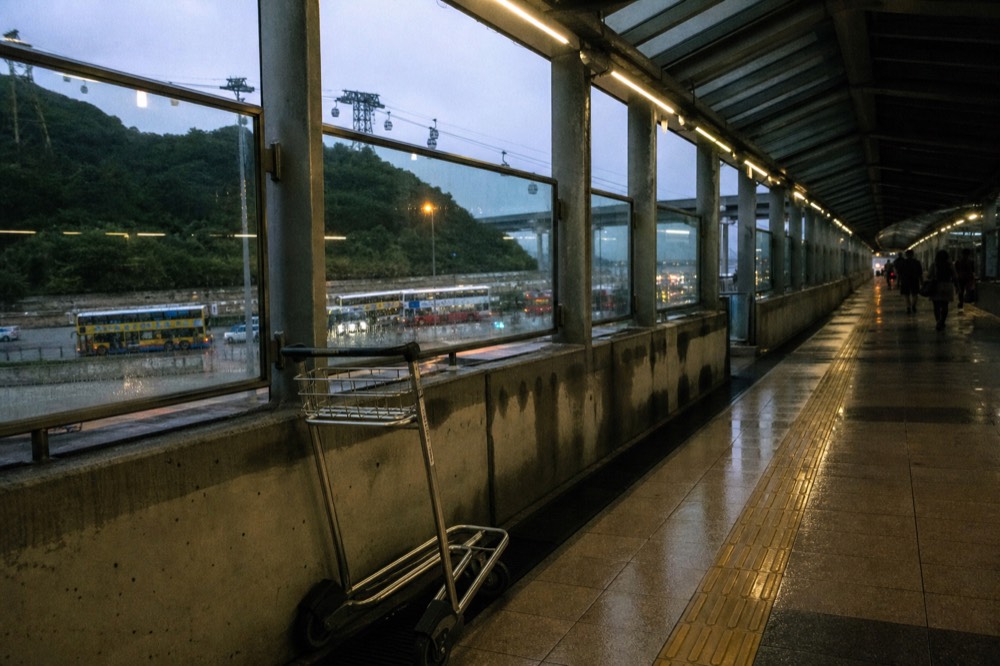
For visitors who would rather not assemble this puzzle themselves, a guided coach product bundles the island's stops into one five-hour loop. The budget option in that family is a private-coach tour taking in the Big Buddha and Tai O, listed at $45.92 with a 4.8 rating from 61 reviews (checked September 2026), which suits travellers who want the plateau and the village without the logistics.
Driving yourself is possible but awkward: the terminal's own car park is reserved for coach pick-up and drop-off, so private drivers use the Citygate Outlets car park or the Fu Tung Estate car park nearby. There is also a Sunday-and-holiday-only bus, route 1R, running direct from Hung Hom Ferry Pier to Ngong Ping.
Is Tai O worth visiting on a Lantau day?
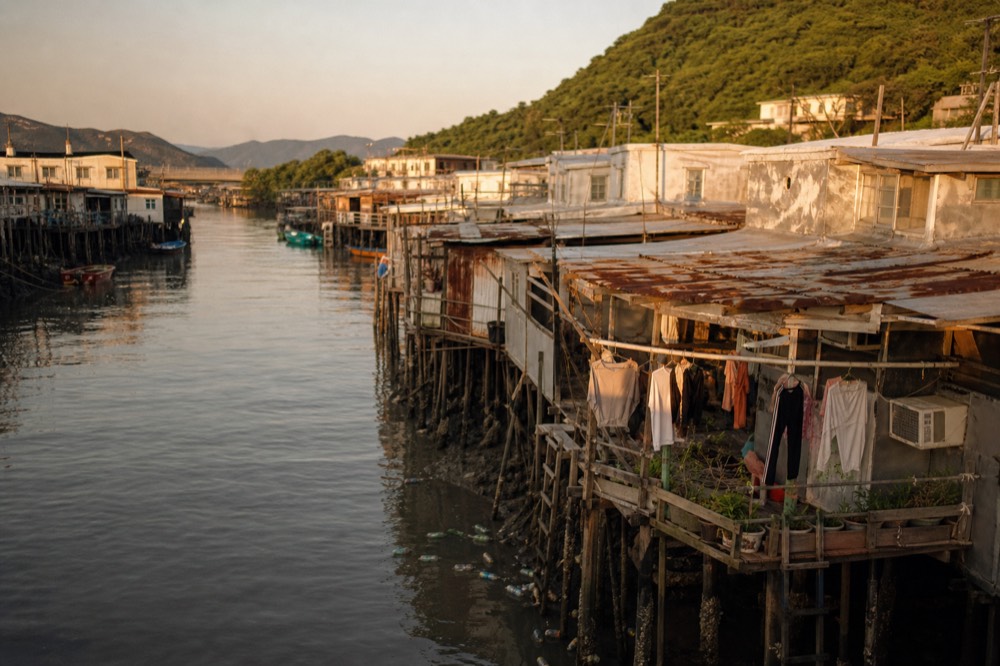
Tai O is Hong Kong's oldest fishing village, built around stilt houses standing over the water. A 20-minute boat excursion runs from the footbridge on the main street past the houses and the former police station, now the Tai O Heritage Hotel, and bus 21 connects Ngong Ping to the village in about 20 minutes.
Tai O is the counterweight to the plateau's monumentality. Where Ngong Ping is granite, bronze and incense, Tai O is timber, salt fish and shallow water, and the two sit about 15 driving minutes apart. The boat excursion leaves from boats moored under the iron footbridge on the main street and takes 20 minutes, passing the stilt houses, a rock formation locals call General's Rock, and the Tai O Heritage Hotel, which occupies the former Tai O police station.
The village holds one piece of intangible heritage most visitors have never heard of: the Dragon Boat Water Parade, in which villagers parade deity statues through the waterways at the Dragon Boat Festival, was inscribed on China's third national list of intangible cultural heritage in 2011. There is even an official pedestrian-information platform with real-time crowd data for the village, linked from the operator's Tai O page, which is genuinely useful on a busy Sunday.
The full village walkthrough, including where the boat tickets are sold and what to eat, is in the Tai O fishing village guide. The practical link for this page is that Tai O is the most common second stop after the Buddha, and the cheapest way to string them together is bus 21 from the Ngong Ping bus terminus, a five-minute walk from the village.
Combining the cable car, the Buddha and Tai O in a single guided loop is also possible. The five-hour tour that does exactly that carries a 4.7 rating from 652 reviews on the live listing, priced from $67.6 (checked September 2026), and it removes the bus-timetable guesswork that otherwise sits between the plateau and the village.
When is the best time of year to visit Lantau Island?
October and November are the statistical sweet spot: the year's lowest humidity, 197.8 and 172.3 sunshine hours, almost no rain and no recorded fog days. Fog is concentrated from February to April, when 3.40 of Hong Kong's 3.70 annual fog days occur, while tropical cyclone signals peak in August at 4.17 days a month on average.
The numbers come from the Hong Kong Observatory's 1991 to 2020 climatological normals, and they split Lantau's year into three distinct seasons for visitors. Late winter and early spring is the fog season: Hong Kong averages only 3.7 fog days a year, and essentially all of them fall in February, March and April, which also post the year's lowest sunshine hours and highest humidity. That is the low-cloud season on the Ngong Ping plateau, the one stretch where a cable car ride can genuinely deliver a white view.
Summer and early autumn is the typhoon season. Tropical cyclone warning signals average 15.87 days a year, concentrated from June to October and peaking in August at 4.17 days, with September close behind at 3.83. June to August is also the wettest stretch by far, with July bringing 385.8 mm of rain and August 453.2 mm. October and November then deliver the payoff: sunshine of 197.8 and 172.3 hours, rainfall collapsing to 120.3 and 39.3 mm, humidity at its annual low, and no recorded fog days at all.
| Month | Mean temperature | Rainfall (mm) | Fog days | Cyclone-signal days | Sunshine (hours) |
|---|---|---|---|---|---|
| February | 17.1 °C | 38.9 | 1.10 | 0 | 101.7 |
| March | 19.5 °C | 75.3 | 1.47 | 0 | 100.0 |
| April | 23.0 °C | 153.0 | 0.83 | 0.20 | 113.2 |
| August | 28.7 °C | 453.2 | 0 | 4.17 | 182.1 |
| September | 27.9 °C | 321.4 | 0 | 3.83 | 174.4 |
| October | 25.7 °C | 120.3 | 0 | 1.70 | 197.8 |
| November | 22.2 °C | 39.3 | 0 | 0.57 | 172.3 |
One caveat the data deserves: these are Observatory headquarters figures, recorded urban and near sea level. Ngong Ping sits high on Lantau and runs measurably cooler, wetter and cloudier, so treat the table as Hong Kong's baseline, not the plateau's forecast.
Crowd timing matters as much as weather. Mainland China's National Day Golden Week runs 1 to 7 October 2026 and its Labour Day holiday 1 to 5 May 2026, and the operator itself recorded record daily Mainland guest numbers during the National Day period, with Crystal+ cabins above 90% utilisation across summer, Golden Week and Christmas. Hong Kong's own gazetted holidays are listed at gov.hk; note that the Birthday of the Buddha, 13 May in 2027, is the single busiest day of the year at Po Lin Monastery.
What does a Lantau Island trip actually cost?
The official adult round-trip cable car fare is HK$295, about $38, in a Standard Cabin, with Crystal at HK$365 and Crystal+ at HK$545; single trips start at HK$205 (checked September 2026). A pre-booked e-ticket lists from $21.15 one way, the Big Buddha is free to climb, and bus 23 costs HK$20.40 on a weekday.
The operator quotes its fares in Hong Kong dollars, and the adult gate prices are the real ones to plan around. Converted at 7.8403 HKD to the dollar, the standard round trip is about $38, (checked September 2026) so treat any dollar figure as approximate. Children aged 3 to 11 pay roughly half, infants aged 0 to 2 travel free, and the only resident-versus-visitor difference is the senior fare, which requires a Hong Kong JoyYou Card or Senior Citizen Card. Guests with a disability get 30% off at either ticket office on valid proof, a policy in place since 1 April 2026.
| Product | Adult | Child (3 to 11) | Senior |
|---|---|---|---|
| Round trip, Standard Cabin | HK$295 | HK$150 | HK$155 |
| Round trip, Crystal Cabin | HK$365 | HK$220 | HK$235 |
| Round trip, Crystal+ | HK$545 (checked September 2026) | HK$400 | HK$405 |
| Single trip, Standard Cabin | HK$205 | HK$100 | HK$105 |
| Single trip, Crystal Cabin | HK$240 | HK$135 | HK$145 |
| Single trip, Crystal+ | HK$330 | HK$225 | HK$230 |
On the resale side, the live listing ladder runs from $21.15 (checked September 2026) for a one-way standard cabin to $25.30 for a limited-offer round trip, non-refundable, $29.39 for a standard round trip, $31.55 for a Crystal round trip, and $494.75 for a private cabin holding up to 10 people, priced per cabin (checked September 2026). Free cancellation before redemption applies on the standard tiers. For context on where those numbers came from: fares rose 6.2% on 10 June 2025, lifting the standard adult round trip from HK$270 to HK$295, the first increase in about two years, with senior fares left untouched.
Two more figures frame the whole island budget. The 2006 opening fare was HK$88 (checked September 2026) for an adult round trip, against HK$295 today, a 235% rise over 20 years; the operator is marking its anniversary by selling HK$88 round trips to Hong Kong residents on designated dates through December 2026, resident ID required. And the plateau itself costs nothing beyond transport: the Buddha's steps are free, the monastery grounds are free, and the village is free to walk, with the HK$20 (checked September 2026)-per-attraction upgrade offer covering the Discovery Centre and Motion 360.
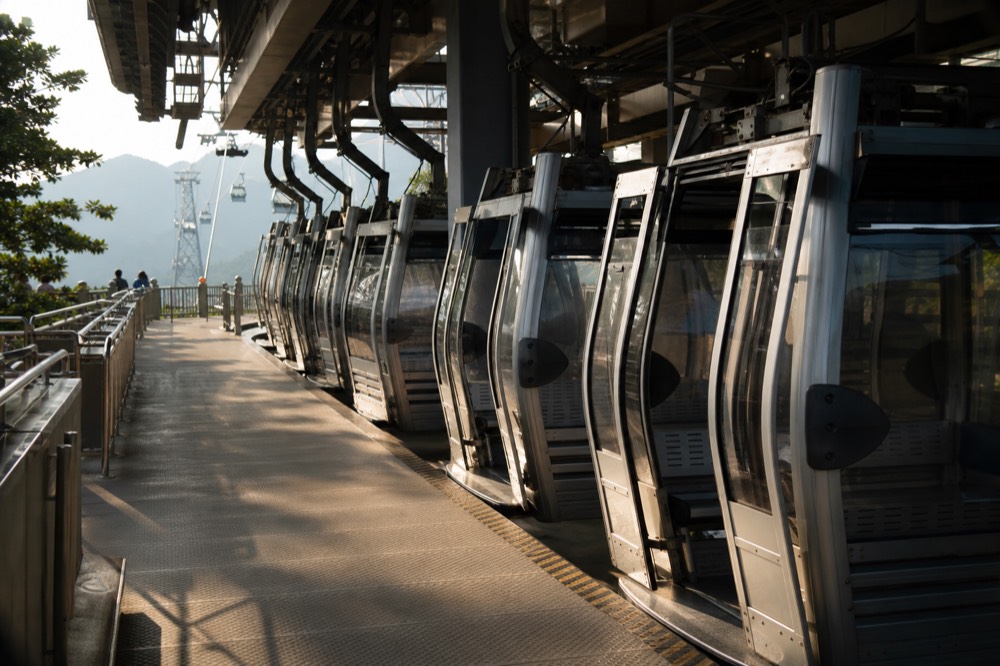
The Po Lin vegetarian meal is the one cost nobody can quote you in advance: the monastery publishes its menu and hours but no price, so budget flexibly and ask on the day. Transport costs are covered in the getting-around section above, and they are minor next to the cable car itself.
What closures and rules should you plan around?
The cable car closes for scheduled maintenance several times a year, not once: 2026 shutdowns include 3 to 5 March, May, June and the annual overhaul from 8 to 18 September 2026, during which Ngong Ping Village stays open (checked September 2026). Weather suspensions happen as well, and the design wind thresholds are 90 km/h sustained or 135 km/h gusts.
The maintenance calendar is the single most useful planning fact on this page, because most guides treat the closure as an annual event and it is not. The pattern is one long overhaul of 10 to 20 days, in March or September, plus three or four short closures through the year. Nothing has been announced for 2027 yet. During every closure Ngong Ping Village and its indoor attractions stay open, and the operator publicises suspensions through notices at 21 MTR stations.
| 2026 closure | Status |
|---|---|
| January | Resumed 23 January at 10:00 |
| 3 to 5 March | Short closure |
| May | Resumed 21 May at 10:00 |
| June | Resumed 22 June at 10:00 |
| 8 to 18 September | Annual overhaul; village stays open |
Weather is the second risk. The design thresholds, sustained wind of 90 km/h or gusts of 135 km/h, come from a 2006 Legislative Council reply describing the system's specification; the operator's current site publishes no numeric threshold, only that the service may be suspended in rainstorms, thunderstorms or other inclement weather. The same 2006 reply cites Observatory data collected at Ngong Ping showing those wind conditions existed on an average of 7 days a year, totalling 23 hours, inside operating hours. Guests holding tickets for a suspended service can exchange for another date or claim a refund at either terminal.
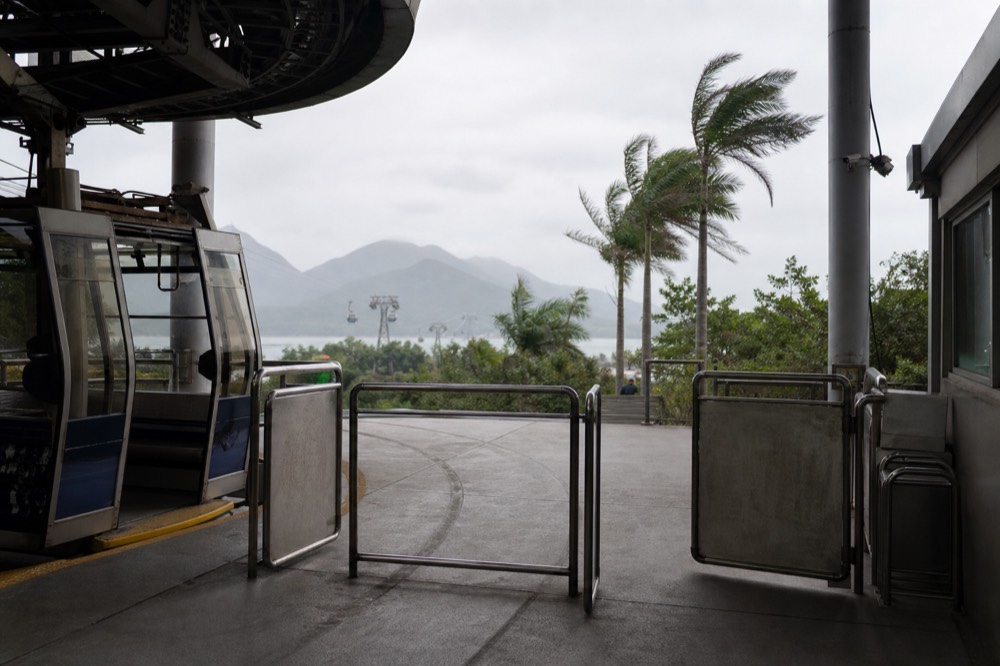
Two final rules catch out airport-day visitors and bargain hunters. Luggage larger than 48 by 34 by 23 cm or heavier than 4 kg is barred from the cabins under the Tung Chung Cable Car Bylaw, with left luggage at HK$100 per piece (checked September 2026) at the terminal and in Ngong Ping Village, collectable before close the same day. And since 29 May 2026 the operator refuses boarding to anyone holding a ticket bought from unauthorised street sellers, a response to touts in staff-lookalike uniforms outside Tung Chung selling already-used tickets. Buy from the official channels or the live listing, not from anyone on the walk from the station.
With closures checked, weather understood and tickets from a real channel, Lantau is one of the most manageable big-island days in Asia: a metro ride, a cable car, a bronze giant and a fishing village, all inside about six hours if you start early.
Most Lantau planning questions come down to four things: the maintenance calendar, the weather thresholds, the ticket channel and the budget. The cable car suspends service several times a year, high wind and typhoon signals stop it without much notice, and touted tickets are refused at the gate, so the answers below cover the closure dates, refund rules and fare questions visitors ask most before booking the ride.
Common questions about Lantau Island
Can you see Lantau Island in one day?
Yes, comfortably. The MTR reaches Tung Chung in about 30 minutes, the cable car takes about 25 minutes to the plateau, and the Buddha, monastery and village sit within a 10-minute walk of each other. Adding Tai O via bus 21, about 20 minutes each way, still fits inside a full day.
Is the Ngong Ping cable car the only way to reach the Big Buddha?
No. New Lantao Bus 23 runs from Tung Chung to Ngong Ping by road for HK$20.40 (checked September 2026) on a weekday, HK$37.00 on Sundays and public holidays, and guided coach tours include the plateau. The cable car is the scenic way; the bus is the fallback during closures and suspensions.
When is the Lantau cable car closed in 2026?
The 2026 closures are January, 3 to 5 March, May, June and the annual overhaul from 8 to 18 September 2026. Ngong Ping Village and its indoor attractions stay open during every closure. Check the operator's announcements before any 2027 trip, since next year's dates have not been announced.
Is the Wisdom Path on Lantau Island open?
No. The Wisdom Path has been closed since 5 June 2025 for refurbishment, with completion expected in the last quarter of 2026 and a staged reopening after that. A viewing platform on a nearby Lantau Trail section remains open.
How much does the Ngong Ping cable car cost?
The official adult round trip is HK$295, (checked September 2026) about $38, in a Standard Cabin, with Crystal at HK$365 and Crystal+ at HK$545; single trips start at HK$205. Pre-booked e-tickets list from $21.15 one way. Children aged 3 to 11 pay reduced fares and infants under 3 travel free.
Which is better on Lantau, the cable car or the bus?
The cable car for the view and the experience, the bus for the price and the reliability. The bus also runs when the cable car does not, which matters in maintenance weeks and typhoon weather, though its Sunday and holiday fare is 81% higher than the weekday fare.