Big Buddha Hong Kong: The Complete Guide to the Tian Tan Buddha
The Tian Tan Buddha is a 34-metre bronze statue assembled from 202 separate castings, finished in 1993 after a twelve-year build. Climbing its 268 steps is free. This guide covers the statue itself: its engineering, its cost, and the three realistic ways to reach it.
Short answer
The Big Buddha, formally the Tian Tan Buddha, is a 34-metre bronze statue at Ngong Ping on Lantau Island, a 10-minute walk from the cable car terminal. Climbing the 268 steps is free. The cable car from Tung Chung costs HK$295 round trip in a Standard Cabin (checked September 2026), and the statue is open daily.
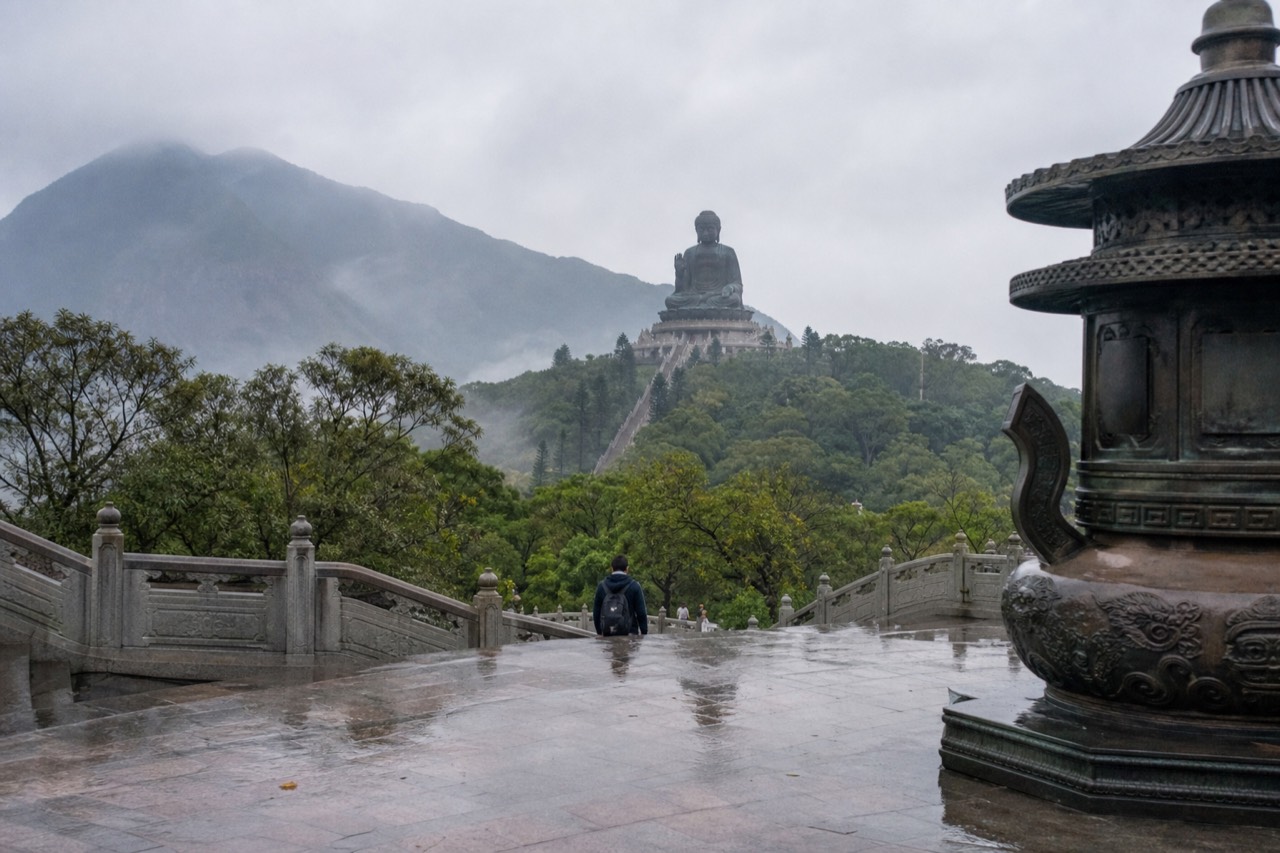
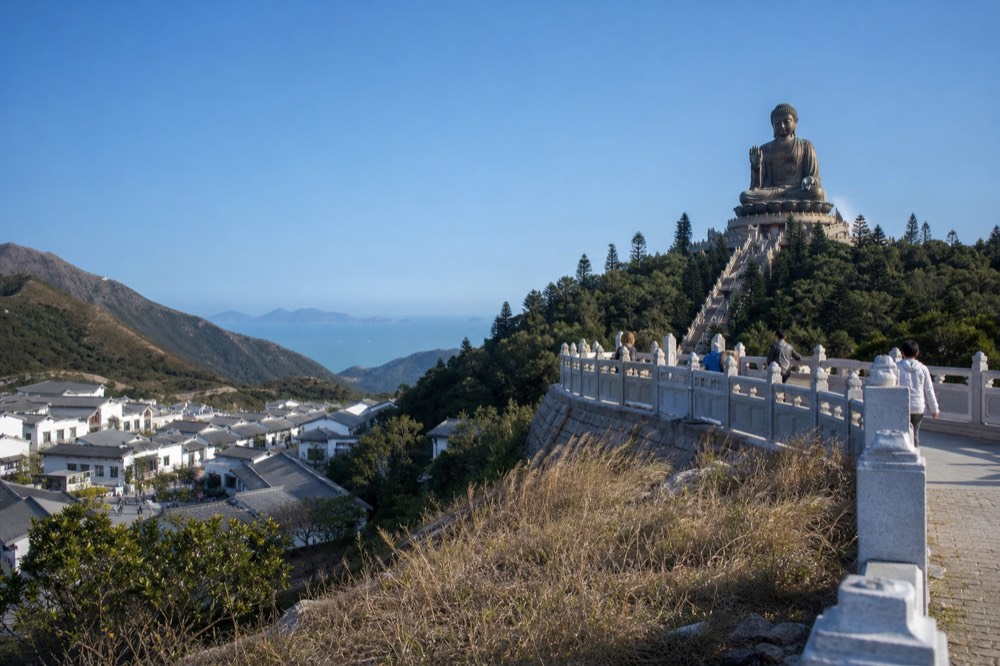
The Tian Tan Buddha is the largest seated outdoor bronze Buddha statue in Hong Kong, and it was built the way an aircraft is built: cast in 202 separate bronze pieces, assembled to a tolerance of under 3 mm, and wind-tunnel tested in a Beijing facility originally constructed for satellites and rockets. It sits on Mount Muk Yue at Ngong Ping, 10 minutes on foot from the upper cable car terminal, facing north towards Beijing. Climbing the 268 steps to reach it costs nothing.
That combination, a free monument at the end of a 5.7 km gondola ride, is why the Big Buddha anchors most Lantau itineraries. This page covers the statue itself in full: what it is, how to reach it, what it costs, and the construction story that most guides skip. For the monastery next door and its religious life, see our separate Po Lin Monastery guide.
What is the Big Buddha in Hong Kong?
The Big Buddha, formally the Tian Tan Buddha, is a 34-metre seated bronze statue on Mount Muk Yue at Ngong Ping on Lantau Island, completed in 1993 after a twelve-year build. Its body alone is 26.4 m, it was cast from 250 tonnes of bronze, and climbing the 268 steps to its base is free. It faces north, towards Beijing.
The name "Tian Tan" comes from the base platform, which is modelled on the Altar of Heaven (Tian Tan) in Beijing. The statue's right hand is raised in the mudra of imparting fearlessness; the left rests on the lap in the gesture of fulfilling wishes. It is not an ancient monument. The construction committee was formally established on 26 December 1981, the last bronze piece was placed on 13 October 1989, and the inaugural ceremony was held on 29 December 1993.
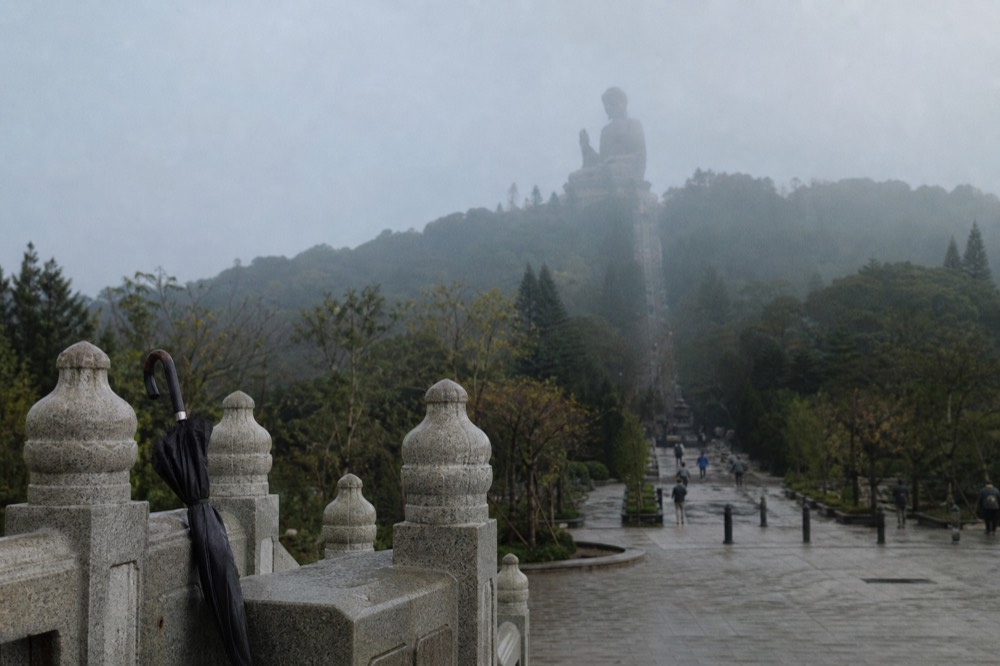
The land beneath it was granted by the Hong Kong Government in 1974: 6,567 square metres on Mount Muk Yue, at a nominal premium, to Po Lin Monastery. The statue is a private religious project, not a government one, and it was voted one of Hong Kong's top ten engineering wonders as the leading private-sector entry.
Two design details are worth knowing before you climb. The face was modelled on the Vairocana Buddha of the Longmen Caves, and the robes on the Sakyamuni of Cave 360 at Dunhuang. The statue sits next to Po Lin Monastery, which opens 09:00 to 18:00 (checked September 2026), an hour before the cable car starts on a weekday.
How do you get to the Big Buddha?
There are three realistic routes: the Ngong Ping 360 cable car from Tung Chung, about 25 minutes each way over 5.7 km; New Lantao Bus 23 up Tung Chung Road, HK$20.40 on a weekday and HK$37.00 on a Sunday or public holiday (checked September 2026); or a guided day tour with transport included. The MTR Tung Chung Line from Hong Kong Station takes about 30 minutes and costs HK$24.30 with an Octopus card.
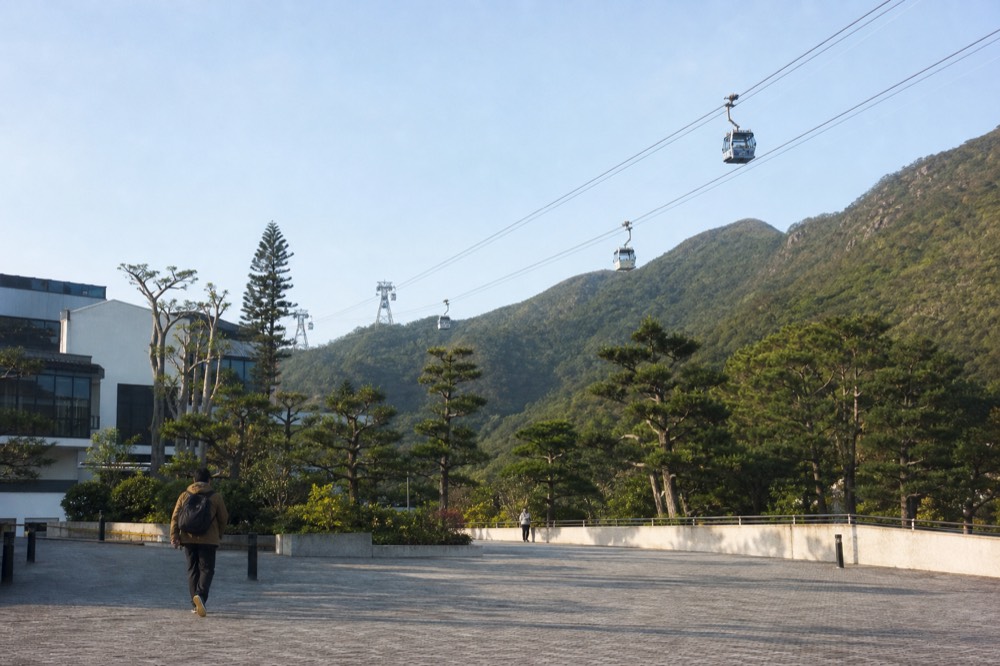
The Hong Kong Ngong Ping Cable Car is the way most visitors arrive, and the ride is part of the attraction: the line crosses Tung Chung Bay, passes over Hong Kong International Airport and the Hong Kong-Zhuhai-Macau Bridge, and turns a full 60 degrees at the Airport Island Angle Station before climbing through Lantau North Country Park towards Nei Lak Shan. The terminal at Tung Chung is a 5-minute walk from MTR Exit B. Cable car hours are 10:00 to 18:00 on weekdays and 09:00 to 18:30 on weekends and public holidays (checked September 2026).
Bus 23 is the fallback and the budget option. It departs from Tat Tung Road Bus Terminus, beside the cable car terminal and Citygate Outlets, and climbs the winding Tung Chung Road over the mountain. Note the fare structure: the Sunday and public-holiday price is 81% higher than the weekday price, on exactly the days most people need the bus. If the cable car is suspended for weather, this is the road everyone shifts to.
One timing fact that catches people out: the last boarding time for the cable car on a normal day is not published by the operator. Do not plan a late-afternoon descent assuming you can ride until 18:00 sharp. Build in margin, or take the bus down.
| Route | Cost (adult) | Time | Notes |
|---|---|---|---|
| MTR Tung Chung Line, Hong Kong Station to Tung Chung | HK$24.30 Octopus, HK$28.00 single (checked September 2026) | about 30 min | then a 5-minute walk from Exit B to the terminal |
| Ngong Ping 360 cable car, Standard round trip | HK$295 (checked September 2026) | about 25 min each way | glass-floor Crystal and Crystal+ tiers cost more |
| New Lantao Bus 23, Tung Chung to Ngong Ping | HK$20.40 weekday, HK$37.00 Sunday/holiday (checked September 2026) | not published by the operator | winding mountain road; motion-sickness risk |
| Guided day tour with transport | from $45.92 per person on the live listing (checked September 2026) | 5-7 hours | coach or cable car included depending on the tour |
If you would rather not assemble the train, cable car and statue visit yourself, three products cover the whole day:
The ticket-only product is the cable car fare plus booking convenience; the two tours bundle the Big Buddha with Tai O or a private coach. Our guide to reaching the statue breaks the transport options down in more detail.
How much does it cost to visit the Big Buddha?
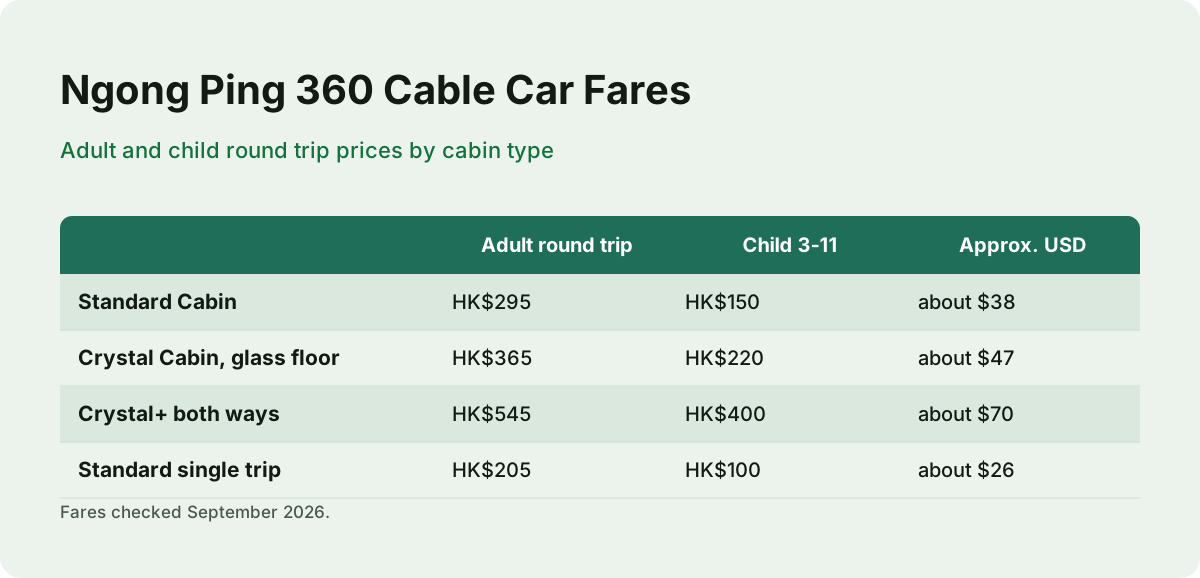
Climbing the 268 steps to the Big Buddha is free, and there is no entrance fee for the statue or the surrounding plaza. The real cost is getting there: the cable car is HK$295 adult round trip in a Standard Cabin, HK$365 in a Crystal Cabin with a glass floor, or HK$545 in a Crystal+ cabin (all checked September 2026). Bus 23 costs HK$20.40 on a weekday.
The statue itself charges nothing. What you pay for is the ride up the mountain, and the cable car's tier structure matters more than most first-time visitors expect. The Standard Cabin is the cheapest and the busiest: recent visitors report boarding waits of one to three hours for Standard, even on non-holiday weekdays, while a pre-bought e-ticket skips the ticket-purchase queue but not the boarding queue. Crystal and Crystal+ cabins use their own, much shorter boarding line, which makes the glass floor as much a queue product as a view product.
| Cable car product | Adult round trip | Child 3-11 | Approx. USD |
|---|---|---|---|
| Standard Cabin | HK$295 (checked September 2026) | HK$150 | about $38 |
| Crystal Cabin, glass floor | HK$365 (checked September 2026) | HK$220 | about $47 |
| Crystal+ both ways | HK$545 (checked September 2026) | HK$400 | about $70 |
| Standard single trip | HK$205 (checked September 2026) | HK$100 | about $26 |
Infants aged 0 to 2 travel free, and the only resident-versus-visitor price difference is the senior fare, which requires a Hong Kong JoyYou Card or Senior Citizen Card. There is no surcharge for overseas visitors on adult or child fares.
Two costs beyond the ticket are worth flagging. Luggage larger than 48 x 34 x 23 cm or heavier than 4 kg is barred from cabins under the Tung Chung Cable Car Bylaw, a real constraint for airport-stopover visitors since the terminal is about 20 minutes from the airport; left luggage costs HK$100 per piece (checked September 2026). And since 29 May 2026 the operator refuses boarding to anyone holding a ticket bought from street touts, after people in staff-lookalike uniforms near Tung Chung sold already-used tickets. Buy from the official ticket office or a reputable reseller.
How many steps is it to the Big Buddha?
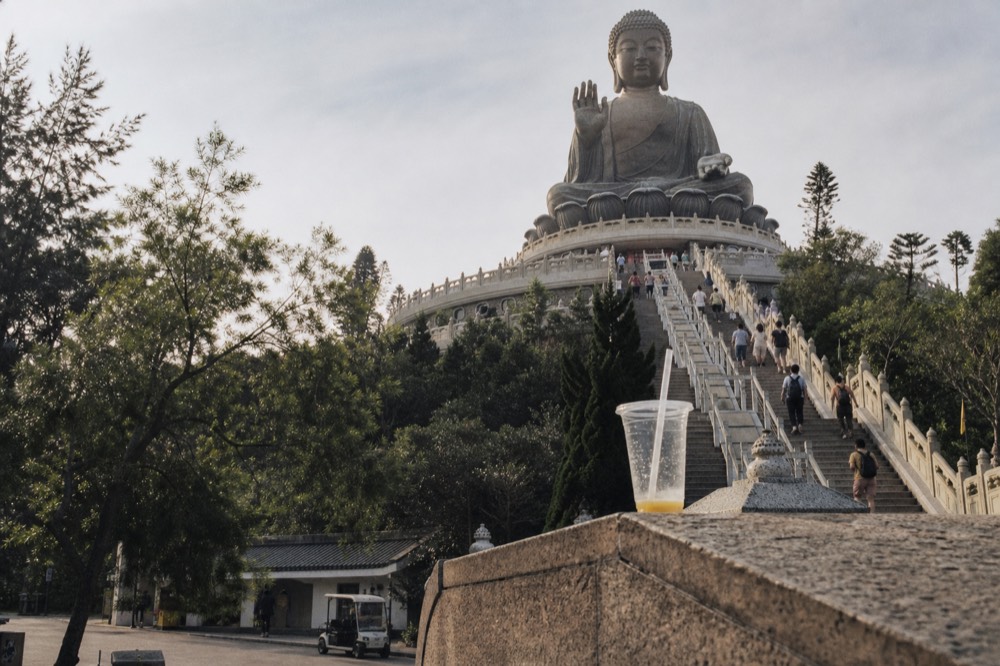
There are 268 steps from the plaza up to the statue, a figure verified by the Hong Kong Tourism Board, and the climb is free and untimed. The steps are wide and stepped in short flights with landings, but there is no shade on the staircase itself, so in summer the ascent is hotter than it looks. Allow 10 to 15 minutes at an easy pace.
The staircase is the main physical gate on the experience, and it is honest about what it asks: a steady, exposed climb with the statue growing above you the whole way. Most visitors manage it without trouble. Take water in warm months, and note that the plaza below has shade and seating if anyone in your group would rather wait below.
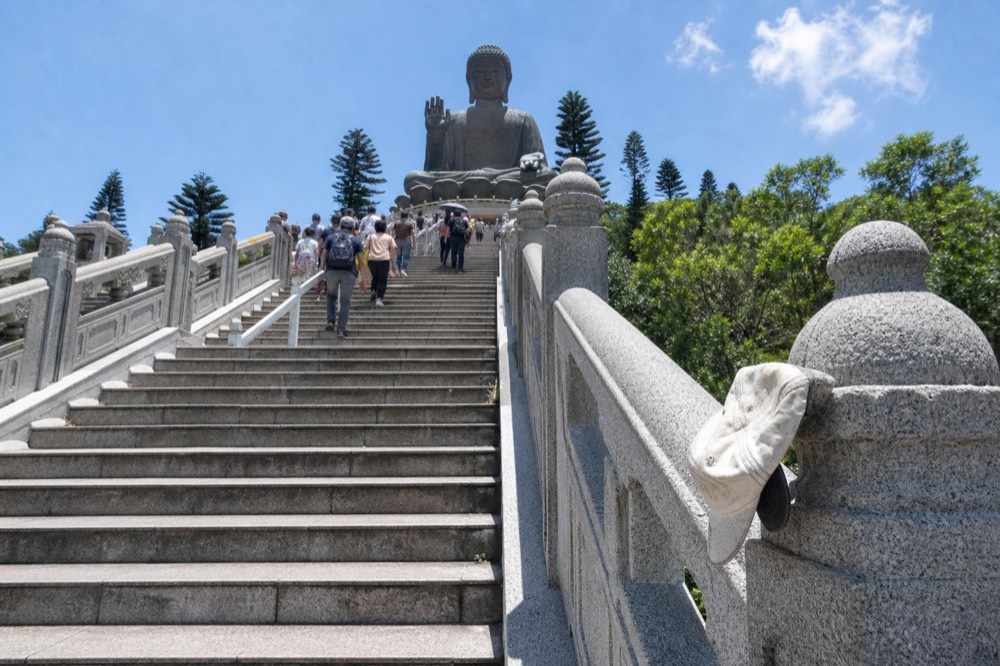
The number itself is worth a fact-check because guides disagree: the Hong Kong Tourism Board's own page states plainly that visitors must ascend 268 steps to reach the statue, and that is the figure to trust. One Tourism Board page mentions 256 steps to the hall inside the base, a different measurement for a different destination. We cover the count, and the arguments about it, in more detail in how many steps to the Tian Tan Buddha.
What is the Big Buddha actually made of?
The statue is 202 separate bronze pieces, each 10 to 13 mm thick, cast to a tolerance of under 3 mm, totalling about 250 tonnes of bronze. The face is a single casting, 4.3 m by 5.8 m, 13 mm thick and weighing 5 tonnes. The whole statue was wind-tunnel tested at the Beijing Institute of Aerodynamics, in a facility built for satellites and rockets.
This is the part of the story almost every generic guide skips, and it is the best part. The plaster model was made by Ms Hou Jinhui of the Guangzhou Institute of Fine Arts, begun in April 1982 and finished in February 1984 after eight redrafts. Casting was done at the Nanjing Chengguang Machinery Plant; the model shipped there in September 1986. The 5-tonne face was so large that getting it up Lantau's narrow winding roads required a large lorry sandwiched between two cranes.
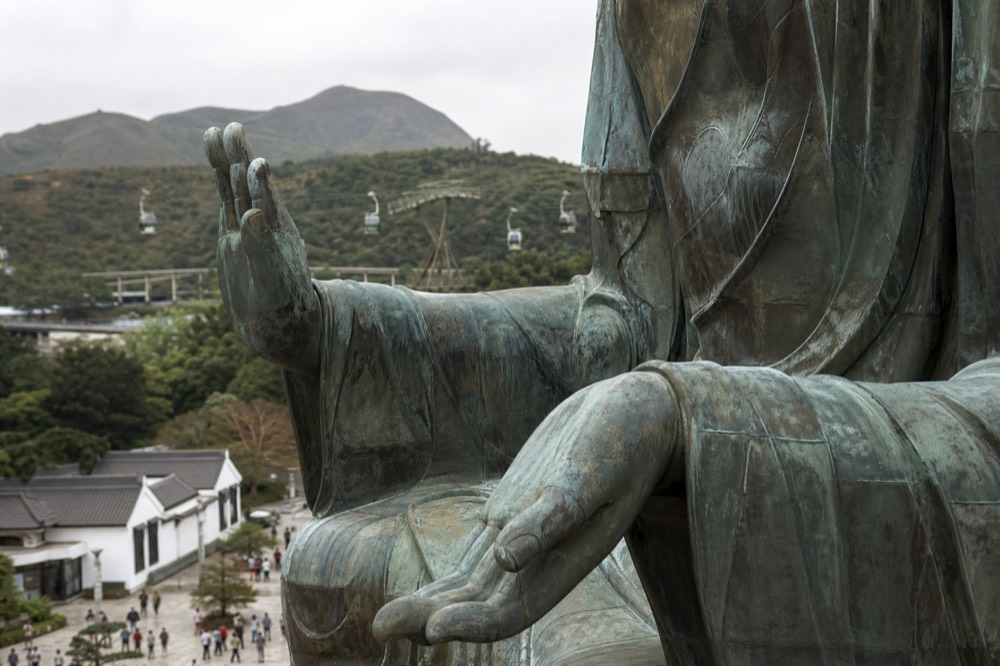
The wind-tunnel programme tested the statue unidirectionally and multidirectionally, whole and in parts, in the Beijing facility originally built to test satellites and rockets. The concern was real: the statue stands high on an exposed plateau where the cable car's own design documentation defines strong-wind suspension at 90 km/h persistent wind or 135 km/h gusts, figures from the 2006 Legislative Council reply describing the system's design specification. Po Lin Monastery's own construction history is the primary source for all of this, and it is worth reading in full.
When is the best time to visit the Big Buddha?
October and November are the statistical sweet spot: the highest sunshine hours of the year around Ngong Ping's autumn, low rainfall, the year's lowest humidity, no fog days and falling typhoon risk. Fog is a February-to-April problem in Hong Kong, and typhoon signals peak in August, so late winter and high summer each carry a specific, different risk.
Hong Kong Observatory normals put essentially all of the territory's 3.7 annual fog days in February, March and April, which is exactly the low-cloud season on the Ngong Ping plateau. A fogged-in summit still lets you climb the steps, but the panoramic view over the airport and the South China Sea, half the point of the plateau, can disappear. In summer the risk flips to tropical cyclones: warning signals average 15.87 days a year, concentrated June to October and peaking in August at 4.17 days.
Crowds follow the calendar too. The cable car opens an hour earlier on weekends precisely because weekends are busier, and the operator's own 2024 numbers show peak-period utilisation above 90% on premium cabins during summer, Golden Week and Christmas. Mainland Golden Week runs 1 to 7 October 2026, and the Labour Day holiday ran 1 to 5 May 2026; both flood Hong Kong attractions. A weekday outside those windows, arriving close to opening time, is the quietest realistic combination.
| Period | Visibility risk | Crowd level | Verdict |
|---|---|---|---|
| February-April | high: nearly all of Hong Kong's fog days | moderate | climb is fine, views are a gamble |
| May-July | low fog, rising rain | high on weekends and holidays | go early, watch the weather |
| August-September | typhoon signals peak (4.17 days avg in August) | high | check the forecast and the closure calendar |
| October-November | lowest of the year | high during Golden Week, then easing | best overall window |
Whatever the season, book the ride before you travel. The standard ticket product, a pre-purchased cable car ticket from $21.15 on the live listing (checked September 2026), carries free cancellation before redemption, and it removes the ticket-counter queue even though the boarding queue remains.
What else is at the top besides the statue?
Within a 10-minute walk of the Big Buddha you have Po Lin Monastery, with a vegetarian kitchen serving 11:30 to 16:30 daily (checked September 2026), and Ngong Ping Village, a 1.5-hectare cultural village with paid indoor attractions and an HK$20-per-attraction upgrade offer. The Wisdom Path, however, has been closed since 5 June 2025 for refurbishment and should not be on your 2026 itinerary.
Po Lin Monastery predates the statue by decades: construction began in 1906 on a site nicknamed "the Big Thatched Hut", and it took its current name in 1924. The monastery's religious life and dining hall are covered in depth in our Po Lin Monastery guide, linked earlier on this page; the short version is that the vegetarian kitchen serves a fixed communal set meal, and the monastery does not publish the price, so expect to pay at the door.
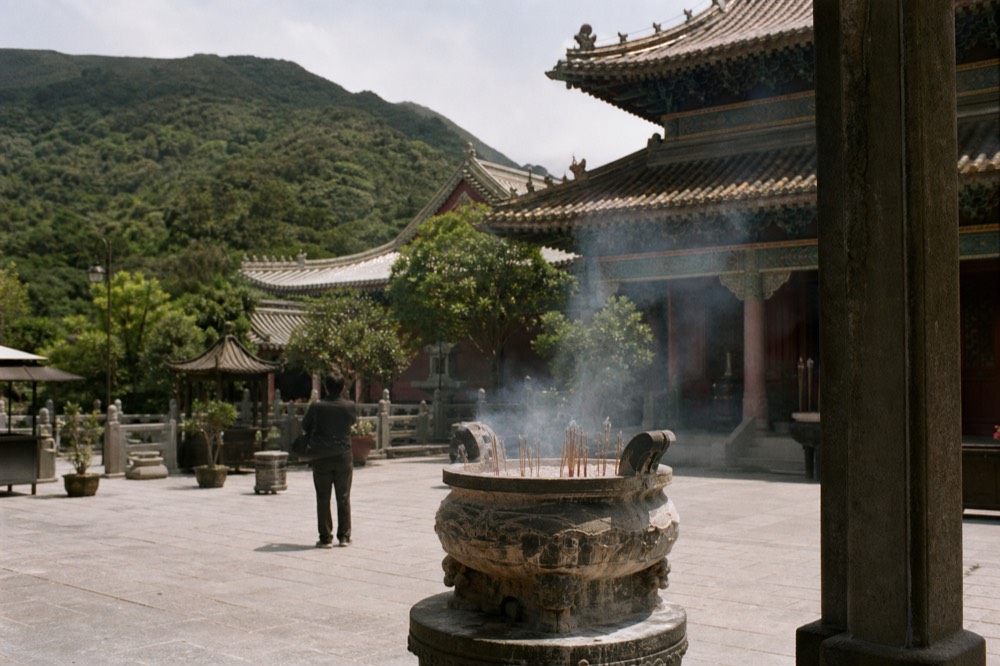
Ngong Ping Village is the commercial strip between the cable car terminal and the monastery. Its HK$20 upgrade offer (checked September 2026) adds one-time entry to the Cable Car Discovery Centre or Motion 360 when bought with any cable car ticket; standalone attraction prices are not published. The operator suggests allowing three to four hours for the village and a meal, which is a realistic minimum once you add the steps.
Beyond the plateau, Tai O fishing village is about 20 minutes away by New Lantao Bus 21, at HK$7.90 on a normal day and HK$19.20 on Sundays and public holidays (checked September 2026). Tai O is Hong Kong's oldest fishing village, known for its stilt houses, and the 20-minute boat excursion there pairs naturally with the statue. The Tai O guide covers it in full, and a guided tour is the simplest way to chain both in one day: the 5-hour cable car, Tai O and Big Buddha tour is rated 4.7 across 652 reviews, with the price on the live listing (checked September 2026).
What should you know before you go?
Check the maintenance calendar before you commit to a date, because the cable car closes several times a year, not once: the long 2026 overhaul runs 8 to 18 September, after shorter closures in January, March, May and June. When the cable car shuts, the Big Buddha stays open and bus 23 becomes the route up. Bring water for the steps, and skip any ticket sold to you on the street.
The closure pattern is the single most useful planning fact on this page. The operator's press releases verify four separate 2026 closures before the September overhaul, and the same pattern held in 2024 and 2025: one long annual overhaul of ten to twenty days plus three or four short closures. Nothing is announced for 2027 yet. The operator's tourist guide page carries the current schedule, and the Hong Kong Tourism Board's Big Buddha page confirms the step count and access basics.
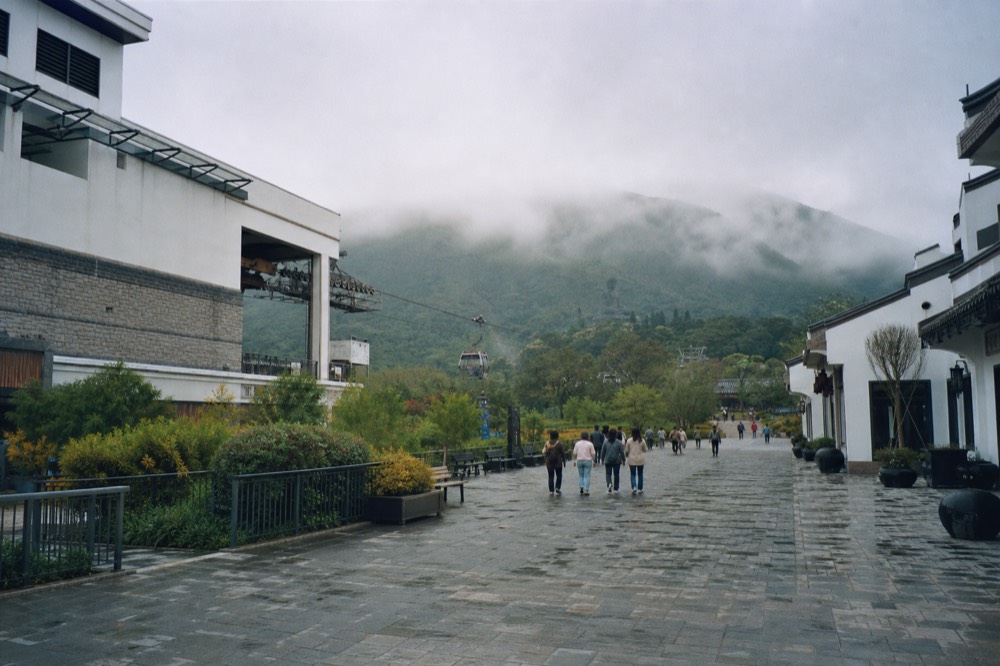
Weather suspensions are a separate risk from maintenance. The cable car's design documentation, from a 2006 Legislative Council reply, defines suspension at Typhoon Signal No. 8 or above, black rainstorm, lightning, and sustained 90 km/h winds or 135 km/h gusts; Observatory data collected at Ngong Ping found such conditions during operating hours on an average of 7 days a year. The operator publishes no current numeric threshold, so treat those as design figures and check the hotline on the day. Ticket holders grounded by weather can exchange or claim a refund at either terminal.
If assembling all of this, train plus cable car plus steps plus monastery plus buses, sounds like more planning than you want, a guided day tour is the honest alternative. The budget option, a 5-hour Lantau tour with the Big Buddha, Tai O and a private coach, runs $45.92 from, rated 4.8 across 61 reviews (checked September 2026), and it handles the closure-and-transport problem for you.
However you get up the mountain, the statue at the top costs nothing and closes for nothing short of the weather. That is the deal the builders struck in 1993, and it still holds.
The essentials are these: the Big Buddha is free to climb, via 268 steps, and it is open daily; the cable car that most visitors ride costs HK$295 round trip in a Standard Cabin (checked September 2026); the cable car closes 8 to 18 September 2026 for maintenance while the statue stays open; and the Wisdom Path remains shut until late 2026.
Common questions about the Big Buddha in Hong Kong
Is the Big Buddha free to visit?
Yes. Climbing the 268 steps to the statue and standing on the plaza cost nothing. You pay only for transport to Ngong Ping: the cable car is HK$295 adult round trip in a Standard Cabin (checked September 2026), or HK$20.40 on bus 23 on a weekday.
How many steps does the Big Buddha have?
268 steps from the plaza to the statue, the figure stated on the Hong Kong Tourism Board's own page. The climb is free, exposed to sun, and takes most visitors 10 to 15 minutes.
Is the Big Buddha open when the cable car is closed?
Yes. During cable car maintenance closures, including 8 to 18 September 2026, the statue, Po Lin Monastery and Ngong Ping Village all stay open. New Lantao Bus 23 from Tung Chung is the standard route up, at HK$20.40 on a weekday and HK$37.00 on Sundays and public holidays (checked September 2026).
How tall is the Big Buddha?
The statue's body is 26.4 m, and 34 m in total measured from the lotus throne and base. It was cast from about 250 tonnes of bronze in 202 separate pieces and inaugurated on 29 December 1993.
Is the Wisdom Path open?
No. The Wisdom Path, the 38-column Heart Sutra installation near the Buddha, has been closed since 5 June 2025 for refurbishment, with completion expected in the last quarter of 2026. A viewing platform on the nearby Lantau Trail section remains open.
How long should I allow for the Big Buddha?
Plan on two to three hours at the top: the steps, time at the statue, and Po Lin Monastery, whose vegetarian kitchen serves 11:30 to 16:30 daily (checked September 2026). Add the cable car ride, about 25 minutes each way, plus boarding queues that can exceed an hour for Standard Cabins at busy times.