Cheung Sha Beach and Mui Wo: Lantau's South Coast Guide
Most cable car visitors see one thin strip of Lantau: the ropeway, the Buddha, the village, the bus back. The island's south coast, Cheung Sha beach chief among it, is the part they never see, and it rewards a second day rather than a rushed add-on.
Short answer
Cheung Sha beach is the longest beach on Lantau's south coast, about 20 minutes from Ngong Ping by New Lantao Bus, with a weekday fare of HK$7.90 (checked September 2026). Mui Wo is the island's main ferry town. Both work best as a second Lantau day after the cable car and Big Buddha.
What is Cheung Sha beach?
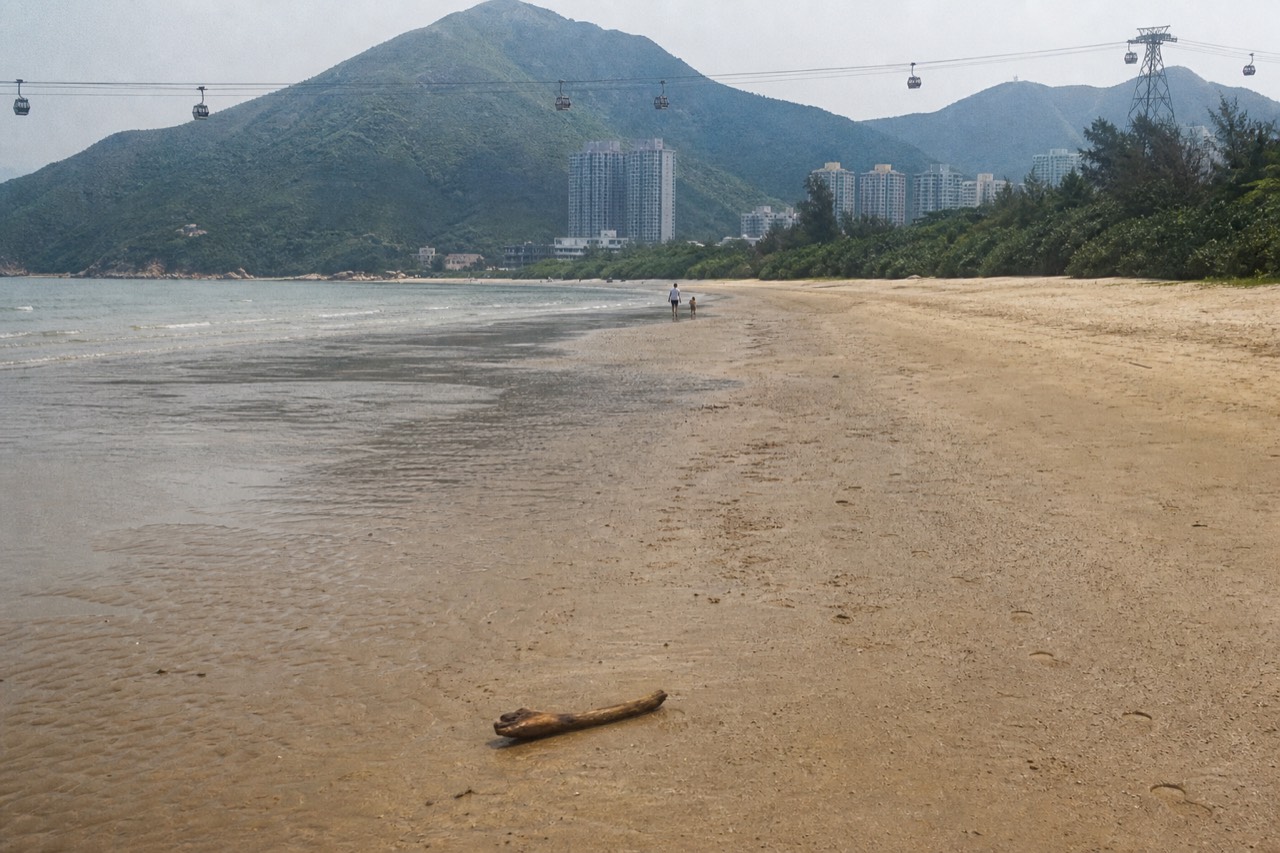
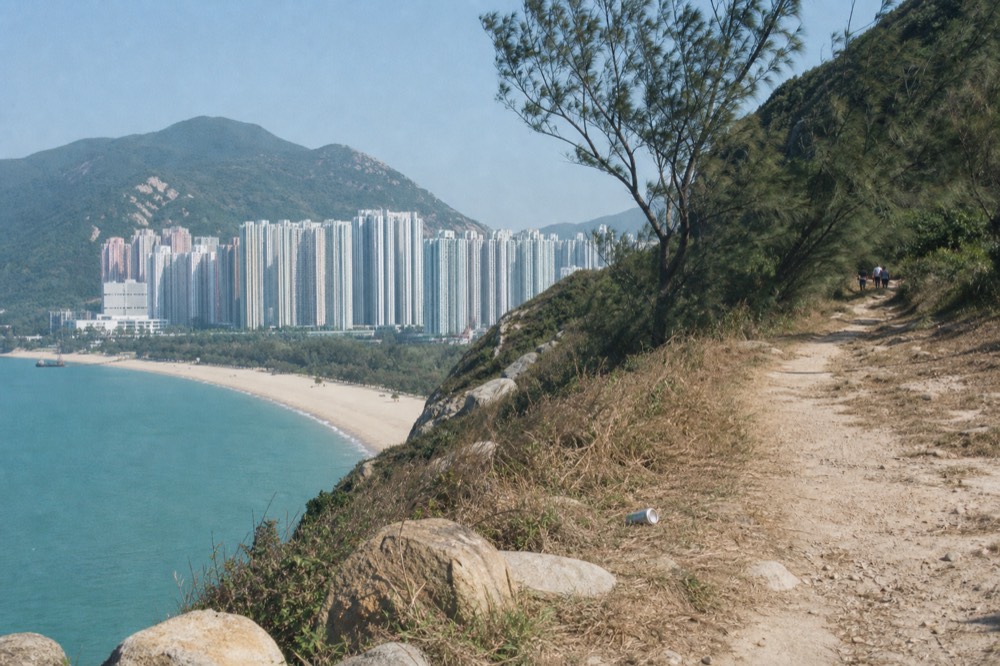
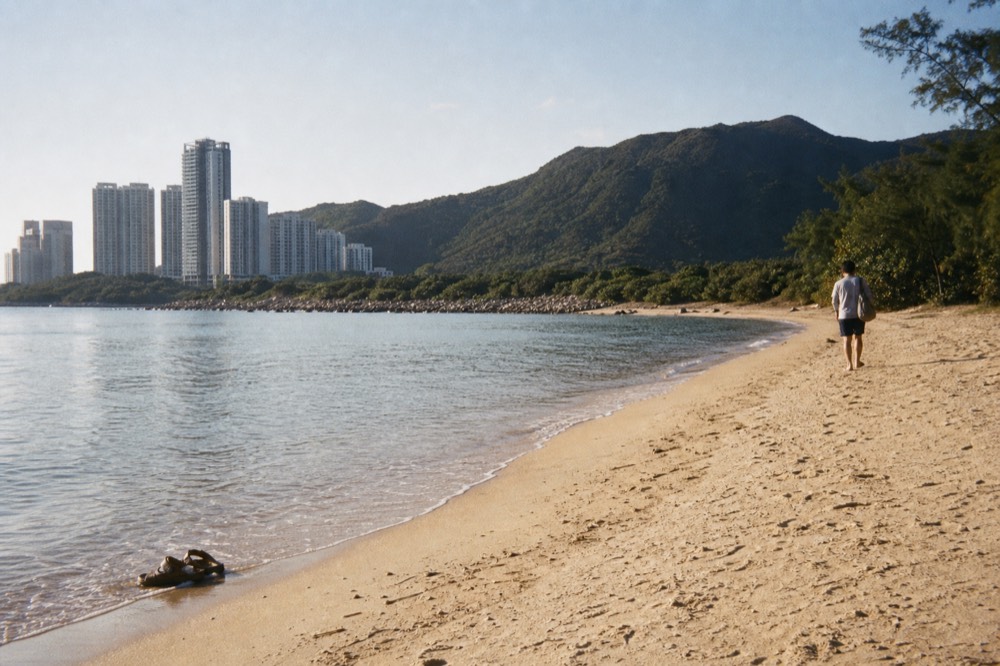
Cheung Sha beach is the longest stretch of sand on Lantau's south coast, a low-key, locals-flavoured beach between the hills and the South China Sea, roughly 20 minutes by bus from the Big Buddha plateau at Ngong Ping and served by New Lantao Bus route 21 onward toward Tai O. It has no entrance fee, no ticket, and no cable car. That last point is the whole story. The Ngong Ping ropeway drops its 1.56 million annual riders on the high plateau, and the overwhelming majority of them loop straight back to Tung Chung after the Buddha and the village. The south coast, which curls around the island below, sees almost none of them.
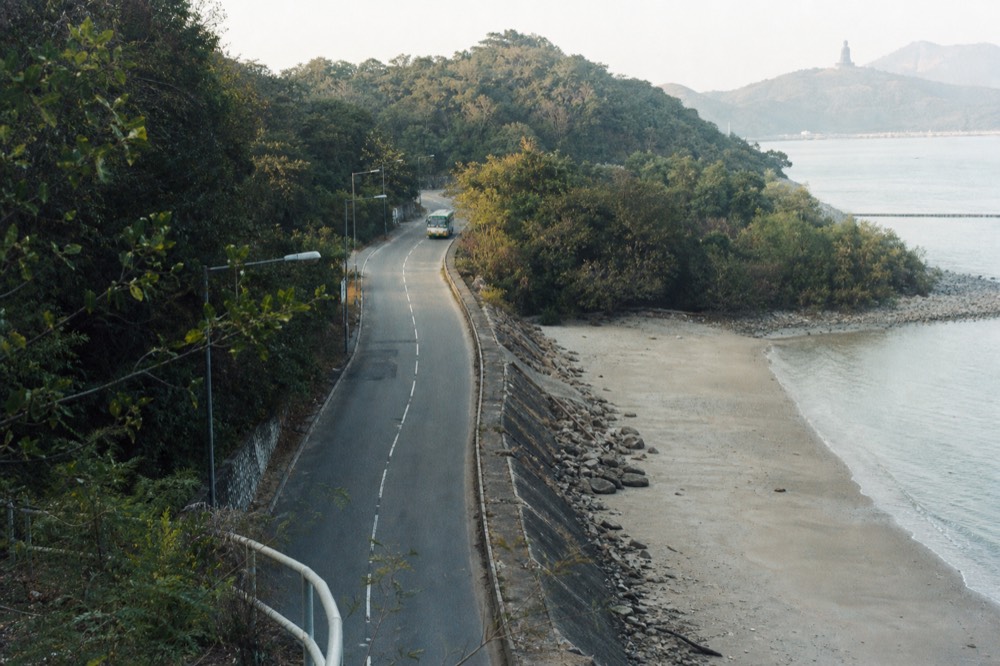
The beach sits on South Lantau Road, the narrow coast-hugging lane that links Tung Chung's side of the island, via the plateau, down to the fishing stilt houses of Tai O on the west coast. That geography matters for planning. A visitor staying in central Hong Kong can reach the plateau by cable car, and the south coast is then a bus ride away rather than a second expedition from the city.
What you get for the detour is a different register of Lantau entirely. The north of the island is infrastructure: the airport, the bridge, the metro line, the outlet mall at Tung Chung. The south is the island's slow half, with beach-side eating, low buildings, and water on three sides. Compared with the queue-and-schedule rhythm of the ropeway day, the south coast runs on nothing in particular. Our Tai O fishing village guide covers the western end of the same coast road in detail.
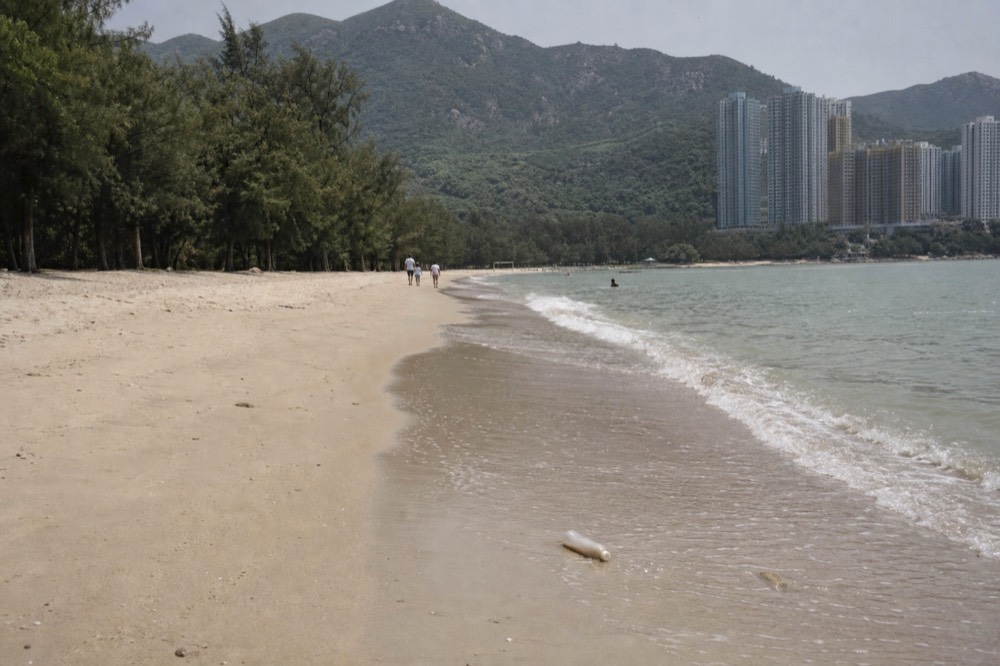
It is also worth saying what Cheung Sha is not. It is not a resort beach with a strip of hotels, and it is not a theme-park beach. The sands around it, Tong Fuk, Pui O and the cluster near Mui Wo, share the same character: sand, a few low-key food spots, and hills. Anyone building a Lantau itinerary around the cable car should read our Lantau Island day trip itinerary first and then decide whether the island earns a second day, because the honest answer is that it usually does.
How do you get to Cheung Sha and the south coast?
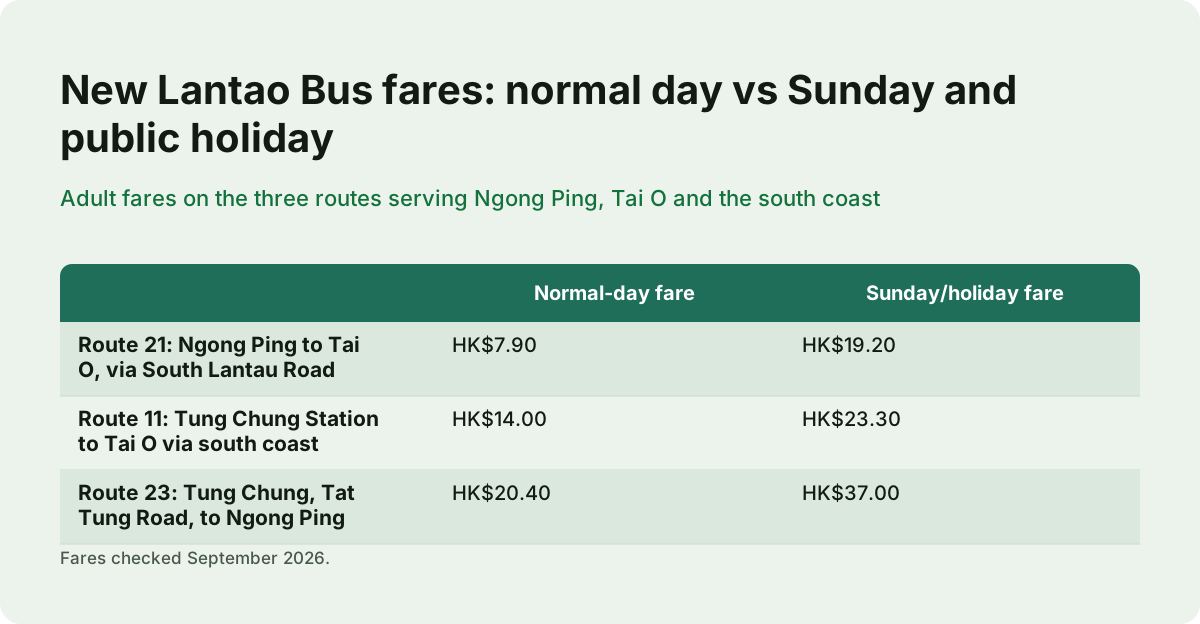
The practical route is cable car or MTR to Tung Chung, then New Lantao Bus: route 11 from Tung Chung Station to Tai O, or route 21 from the Ngong Ping plateau, both running along South Lantau Road past the beach. Route 21 costs HK$7.90 on a normal day and HK$19.20 on a Sunday or public holiday, about a 20-minute ride (checked September 2026). There is no rail on the south coast; the bus, the ferry to Mui Wo, a taxi or your own legs are the entire toolkit.
The bus fares are worth a close look because they move sharply by day of the week. The Sunday and public-holiday fare on route 21 is more than double the weekday one, and route 11 from Tung Chung to Tai O runs HK$14.00 on a normal day against HK$23.30 on a Sunday or public holiday (checked September 2026). The pattern repeats on route 23 to the plateau: HK$20.40 weekday, HK$37.00 Sunday and holiday. The fallback route nearly doubles in price on exactly the days most visitors need it. If your dates are flexible, a weekday visit to the south coast is cheaper before you have even bought lunch.
| New Lantao Bus route | Where it runs | Normal-day adult fare | Sunday / public holiday fare |
|---|---|---|---|
| Route 21 | Ngong Ping to Tai O, via South Lantau Road | HK$7.90 (checked September 2026) | HK$19.20 (checked September 2026) |
| Route 11 | Tung Chung Station to Tai O, via the south coast | HK$14.00 (checked September 2026) | HK$23.30 (checked September 2026) |
| Route 23 | Tung Chung, Tat Tung Road, to Ngong Ping | HK$20.40 (checked September 2026) | HK$37.00 (checked September 2026) |
Frequencies and first and last departures for these routes are not published in the government open-data feed, so plan the return leg with margin rather than trusting a memorised timetable. The fares above come from the Transport Department's open data; the schedules do not.
If you are doing the classic Lantau day, the cable car remains the fastest and most scenic way onto the plateau, and the operator's own ticketing is worth understanding before you commit. The Ngong Ping 360 ticket can be bought in advance as a plain e-ticket, which scans directly at the turnstile with no counter exchange needed, unlike private cabins and guided-tour packages which must be swapped for physical tickets at the office.
The other entry point is Mui Wo, on the east side of the island. Mui Wo is the terminus of the ferry service from central Hong Kong, which makes it the one corner of Lantau you can reach from the city without ever touching the Tung Chung line. The ferry is a genuine alternative geometry: you cross the harbour and land directly in the slow half of the island. Fares and timetables should be checked on the operator's own channels before you travel, as they are not part of the verified record for this guide.
Is Mui Wo worth a stop?
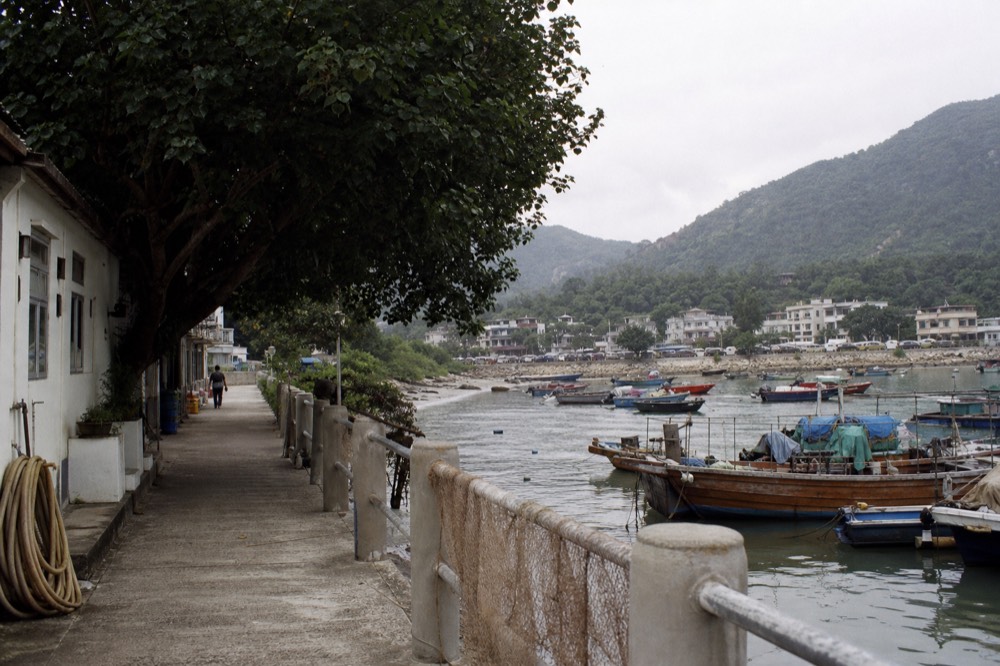
Yes, if you want the relaxed version of Lantau rather than the headline version. Mui Wo is the island's main ferry town, a low-rise settlement of waterfront walks, a small old market street, and the Silver Mine Bay beach area, and it works well as either the first or last stop of a south-coast day. It is not a sights town. Nobody queues in Mui Wo. Its value is as the place where the pace of the island changes, and as the natural bookend to a beach loop.
The town's history is quietly significant. Mui Wo was one of Lantau's earliest settled areas, and its old market street and heritage trail hint at a farming and fishing past that long predates the airport, the bridge and the cable car. The silver mine that gives Silver Mine Bay its name is part of that story. Today the waterfront is the draw: flat, shaded in places, and facing the water rather than turning its back on it.
Practically, Mui Wo slots into a south-coast day in one of two ways. Arrive by ferry in the morning, work your way west along South Lantau Road by bus or taxi toward Cheung Sha and the plateau, and exit the island at Tung Chung by MTR. Or reverse it: cable car up, Buddha, bus down to the coast, and end with an evening ferry back to the city from Mui Wo, which puts you on the water at golden hour instead of in a tunnel. The second version is the better one on a clear day.
One warning that belongs in every 2026 Lantau article: do not build a tight same-day schedule around the Wisdom Path near the plateau. It has been closed for refurbishment since 5 June 2025, with completion expected in the last quarter of 2026, reopening gradually and in stages. A viewing platform on a nearby section of the Lantau Trail remains open. Many older guides still list the path itself as a free, quick stop; as of this September it is not one.
Can you combine the beach with the Big Buddha and the cable car in one day?
You can, but it is a full day and the order matters. The workable shape is cable car up in the morning from Tung Chung, the Big Buddha and Po Lin Monastery before midday, lunch on the plateau or down at the beach, then bus 21 down South Lantau Road to Cheung Sha or on to Tai O, exiting by bus 11 back to Tung Chung. Expect five to six hours at a comfortable pace. The mistake people make is trying to add Mui Wo as well; the ferry town and the far end of the south coast pull in opposite directions from the plateau.
The plateau section deserves its own timing. The Big Buddha requires 268 steps from the plaza, and the climb is free; the statue is 10 minutes on foot from Ngong Ping Village, and Po Lin Monastery, a further 10 minutes, opens at 09:00, an hour before the cable car on a weekday, which is why bus 23 riders get a head start on the crowds. The monastery's vegetarian kitchen serves from 11:30 to 16:30 daily (checked September 2026); the price is not published on the monastery's own site, so expect a fixed communal set meal and check in person.
If you would rather not run the buses, timetable gaps and step-climb yourself, there is a guided format that covers the same territory. A 6-hour guided tour with the cable car, the Big Buddha, the Tai O fishing village and onward transport, rated 4.8 across 490 reviews and priced from $70.15 (checked September 2026), takes the logistics off your plate entirely. It does not linger on the beaches, though; the south coast in a tour context means the drive and the stilt houses, not a towel on the sand.
For independent travellers, the honest advice is to pick one coastal anchor per day. Cheung Sha plus Tai O works as a pair because route 21 links them directly in about 20 minutes from the plateau. Cheung Sha plus Mui Wo also works, westward or eastward. All three in one day, with the Buddha on top, is how people end up seeing nothing but bus stops (see Big Buddha verdict).
What will the weather be like on the south coast?
The best beach months are October and November, which combine the year's highest sunshine, its lowest humidity and almost no fog, while typhoon risk concentrates in June to October and peaks in August with an average of 4.17 cyclone-signal days; fog is a February-to-April problem, with 3.40 of Hong Kong's 3.70 annual fog days falling in those three months. Those figures are Hong Kong Observatory 1991-2020 normals recorded at the Observatory's headquarters, near sea level in the city. The south coast of Lantau sits closer to open water and the plateau above it is measurably cooler and cloudier, so read them as island-wide tendencies rather than a beach forecast.
The two risks are seasonal opposites and worth separating. Fog and low cloud, which can turn a scenic cable car ride into a white tunnel and leave a beach grey, live almost entirely in late winter and spring. Tropical cyclone signals, which can suspend the cable car and whip the coast, live in summer and early autumn. October threads between them: 197.8 sunshine hours, 120.3 mm of rain, 73% humidity and no recorded fog days, per the Observatory normals.
| Month | Mean temp °C | Rainfall mm | Fog days | Cyclone-signal days | Sunshine hours |
|---|---|---|---|---|---|
| February | 17.1 | 38.9 | 1.10 | 0.00 | 101.7 |
| April | 23.0 | 153.0 | 0.83 | 0.20 | 113.2 |
| June | 28.3 | 491.5 | 0.00 | 2.00 | 144.3 |
| August | 28.7 | 453.2 | 0.00 | 4.17 | 182.1 |
| October | 25.7 | 120.3 | 0.00 | 1.70 | 197.8 |
| November | 22.2 | 39.3 | 0.00 | 0.57 | 172.3 |
The full dataset behind that table is published by the Hong Kong Observatory as 30-year climatological normals. If your trip falls in the wet season and the cable car is suspended for weather, ticket holders can exchange for another date or claim a refund at either terminal's ticket office or by email, per the operator's published terms; annual pass holders get no refund.
What does it cost to add the south coast to a Lantau trip?
A full independent day, city-to-city, costs from roughly USD 34 per adult: about $3.10 each (checked September 2026) way on the MTR from Hong Kong Station to Tung Chung, a Standard round-trip cable car ticket at about $38, and buses on the south coast at HK$7.90 to HK$23.30 a leg, all approximate USD at 7.8403 to the dollar (checked September 2026). The beach itself costs nothing. What moves the total is the cabin class and whether you let someone else drive.
The cable car ladder is the biggest variable. Official adult round-trip fares are HK$295 Standard, about $38, HK$365 Crystal, about $47, and HK$545 Crystal+, about $70 (checked September 2026). Single trips are sold too: HK$205 Standard, about $26 (checked September 2026). A genuinely useful hybrid for a beach day is the mixed combo, one way Crystal and one way Standard, at HK$330, about $42 (checked September 2026), riding the glass floor up and the cheap cabin back.
| Item | Official price (HKD) | Approximate USD | Notes |
|---|---|---|---|
| MTR, Hong Kong Station to Tung Chung (Octopus) | HK$24.30 each way | ~$3.10 (checked September 2026) | About 30 minutes on the Tung Chung Line |
| Standard round-trip cable car | HK$295 | ~$38 (checked September 2026) | Free cancellation before redemption on standard tiers |
| Crystal Cabin round trip | HK$365 | ~$47 (checked September 2026) | Glass floor, own shorter boarding line |
| Crystal and Standard mixed combo | HK$330 | ~$42 (checked September 2026) | One glass-floor leg, one standard leg |
| NLB 21, Ngong Ping to Tai O | HK$7.90 / HK$19.20 | ~$1-2.50 (checked September 2026) | Fare doubles on Sundays and holidays |
| NLB 11, Tung Chung to Tai O | HK$14.00 / HK$23.30 | ~$3 (checked September 2026) | Links the coast without the plateau |
| Big Buddha steps and Po Lin Monastery grounds | Free | Free | Monastery open 09:00-18:00 (checked September 2026) |
Two cost traps deserve a line each. First, the luggage bylaw: anything over 48 x 34 x 23 cm or 4 kg may not be taken on board the cabins, and left luggage at the terminal runs HK$100 per piece (checked September 2026). If you are stopping at the beach between the airport and the city, plan the bags before you plan the sand. Second, tickets: since 29 May 2026 the operator refuses boarding to anyone holding a touted ticket, after people in staff-lookalike uniforms sold already-used tickets near Tung Chung. Buy from the official site, the terminal offices or an authorised channel, full stop.
Where does the south coast fit: second day or same day?
As a second day, almost always. The Ngong Ping cluster, cable car, Buddha, monastery, village, needs a half day at minimum, and the operator itself recommends three to four hours for the village and a meal alone; adding a beach and a ferry town to that squeezes both halves into a bus-schedule race. Give day one to the plateau and day two to the coast, in either direction. The exception is the confident independent traveller with an early start, for whom the single-day loop described earlier works, at the cost of leisure.
The second-day version has a shape that suits most visitors. Day one: MTR or taxi to Tung Chung, cable car up, Buddha and monastery, village, cable car or bus 23 back. Day two: ferry to Mui Wo or MTR to Tung Chung, bus along South Lantau Road, Cheung Sha for the middle of the day, Tai O in the afternoon, home via bus 11 or the ferry. Two days, one island, and by the end of it you have seen both the Lantau that is sold and the Lantau that locals actually use.
Budget-minded groups can compress day one with a coach-based tour instead. A 5-hour tour with the Big Buddha, Tai O and a private coach, rated 4.8 across 61 reviews and priced from $45.92 (checked September 2026), covers the headline sights without any queue management of your own, and frees the afternoon for the coast. It trades flexibility for certainty, which is a reasonable trade with children or on a first visit.
Families should weigh the cable car's bylaw rule too: children under 12 must be accompanied by someone aged 15 or older, and infants aged 0 to 2 travel free, with child fares applying from 3 to 11. On the beaches there are no such rules, which is part of their appeal after a structured day on the plateau. For more on pairing the coast with the monastery plateau, see our Po Lin Monastery guide.
What should you know before you go?
Five things carry real weight: the cable car closes 8 to 18 September 2026 for scheduled maintenance and closes several times a year, not once; the Wisdom Path is shut until late 2026; bus fares on the coast double on Sundays and holidays; luggage over 48 x 34 x 23 cm or 4 kg is barred from the cabins; and touted tickets have been refused boarding since 29 May 2026 (all checked September 2026). The first of these is the one that actually breaks itineraries, so it leads.
The maintenance calendar is the least-known fact about Lantau's headline attraction. The 2026 closure record, each entry from the operator's own press releases, reads: a January closure ending 23 January, 3 to 5 March, a May closure ending 21 May, a June closure ending 22 June, and the long annual overhaul from 8 to 18 September. During closures Ngong Ping Village and its indoor attractions, including the Cable Car Discovery Centre, stay open, and bus 23 is the standard replacement. Check the operator's site before locking dates.
For the cable car leg itself, the ticket-only product is the one to compare against. At $21.15 for a one-way Standard cabin, rated 4.7 across 61,490 reviews (checked September 2026), it is the same ride, cabin and view as the expensive packages, minus the guiding. Pair it with the buses in this guide and you have a full two-day Lantau plan for less than the price of a single guided day.
One final structural note. Hong Kong Ngong Ping Cable Car, the ropeway that anchors this site, is a subsidiary of the MTR Corporation, which also runs the Tung Chung line that carries you to the terminal. In other words, the metro, the cable car and the bus-fed south coast are one connected system, and a two-day Lantau plan is really one long transfer through three modes of it.
Cheung Sha beach is free, about 20 minutes by New Lantao Bus route 21 from the Ngong Ping plateau, and best visited on a weekday when coast fares are less than half their Sunday price; Mui Wo is the island's ferry town and works best as a bookend to a south-coast day rather than a rushed stop. The details below cover fares, timings, the September 2026 maintenance closure and advance booking in full.
Common questions about Cheung Sha beach and Mui Wo
Is Cheung Sha beach free to visit?
Yes. Like all of Lantau's south-coast beaches, there is no entrance fee. Your only costs are transport: buses along South Lantau Road run HK$7.90 to HK$23.30 a leg depending on route and day (checked September 2026), and food if you want it.
How do I get from the Big Buddha to Cheung Sha beach?
Take New Lantao Bus route 21 from the Ngong Ping bus terminus, about a 5-minute walk from Ngong Ping Village, toward Tai O, and get off along South Lantau Road at Cheung Sha. The ride is about 20 minutes and costs HK$7.90 on a normal day, HK$19.20 on a Sunday or public holiday (checked September 2026).
Can you do the cable car, Big Buddha and a beach in one day?
Yes, in roughly five to six hours at a comfortable pace: cable car up in the morning, Big Buddha and monastery before midday, then bus 21 down to the coast. Adding Mui Wo as well is the version that usually fails; pick one coastal anchor per day.
What is the best month for Lantau's beaches?
October and November. Hong Kong Observatory 30-year normals show those months with the year's highest sunshine, 197.8 and 172.3 hours, lowest humidity, and no recorded fog days. Typhoon-signal days peak in August at 4.17 on average, and fog is concentrated in February to April.
Is the cable car running in September 2026?
Not from 8 to 18 September 2026, when it is closed for scheduled maintenance. Ngong Ping Village and the indoor attractions stay open, and New Lantao Bus 23 is the standard replacement, at HK$20.40 weekday or HK$37.00 Sunday and public holiday (checked September 2026).
Do I need to book the cable car in advance?
A plain e-ticket bought online scans directly at the turnstile with no counter exchange, which skips the ticket-purchase queue though not the boarding queue. Standard tiers carry free cancellation before redemption, so booking early costs nothing if plans change.