Po Lin Monastery Visitor Guide: History, Etiquette and the Vegetarian Meal
The working Buddhist monastery behind the Big Buddha: its history, what respectful behaviour looks like in an active religious site, and the fixed communal lunch served daily in the vegetarian kitchen.
Short answer
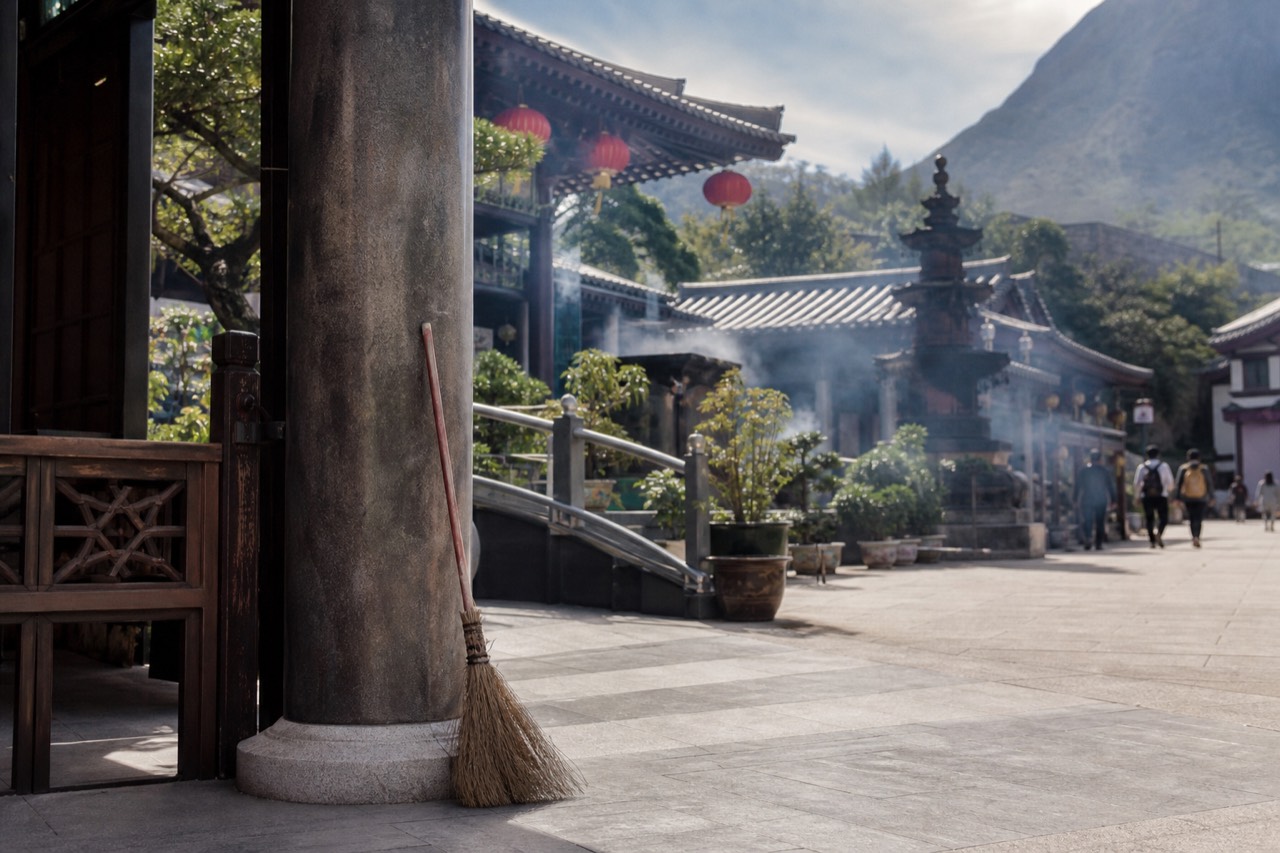
Po Lin Monastery is a working Buddhist monastery founded in 1906 beside the Tian Tan Buddha on Lantau Island, ten minutes on foot from Ngong Ping Village. It opens 09:00 to 18:00 daily (checked September 2026), its vegetarian kitchen serves a fixed communal meal from 11:30 to 16:30, and the monastery publishes no meal price.
What is Po Lin Monastery?
Po Lin Monastery is a working Buddhist monastery on Lantau Island that began in 1906 as a thatched hut, took its current name in 1924, and now sits directly beside the Tian Tan Buddha, ten minutes on foot from Ngong Ping Village.
The site was known as "the Big Thatched Hut" in its first years. Construction began in 1906, and the community was officially named Po Lin Monastery in 1924. What started as a remote retreat is now one of Hong Kong's most visited religious institutions, and the reason is the statue next door: the monastery initiated the Tian Tan Buddha project, and the Buddha's completion in 1993 turned a quiet mountain monastery into a destination that draws visitors from across the world.
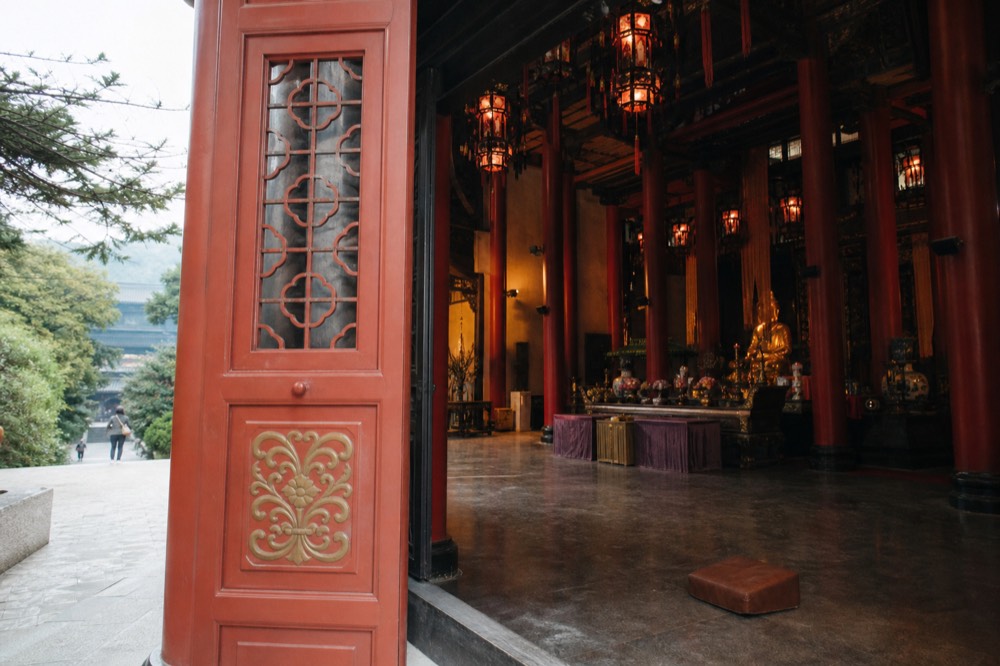
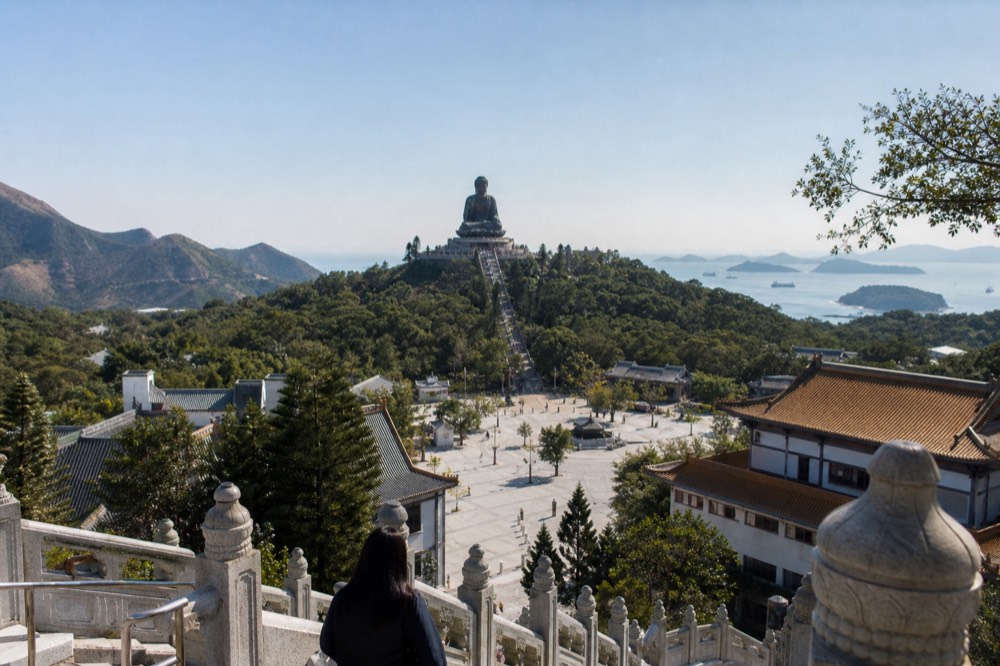
The layout follows a traditional axial plan. You enter through the San Men, the Mountain Gate, pass the Hall of Skanda Bodhisattva, then reach the Main Shrine Hall of Buddha and the Grand Hall of Ten Thousand Buddhas, with Bell and Drum Towers, a Meditation Hall, Dining Hall and Sangha Hall arranged symmetrically on the flanks. Monks live and worship here. That single fact shapes everything else on this page, from the hours to the etiquette to the lunch.
The monastery's connection to the Buddha is documented on Po Lin's own site: the Government granted 6,567 square metres on Mount Muk Yue in 1974 at a nominal premium, the construction committee was formally established on 26 December 1981, and the inaugural ceremony took place on 29 December 1993. Our companion guide to the Big Buddha covers the statue itself in detail.
| Year | Event |
|---|---|
| 1906 | Construction begins; the site is known as "the Big Thatched Hut" |
| 1924 | The community is officially named Po Lin Monastery |
| 1974 | Government grants 6,567 m² on Mount Muk Yue for the Buddha project |
| 1981 | Buddha construction committee formally established on 26 December |
| 1989 | Last bronze piece placed, topping ceremony on 13 October |
| 1993 | Inaugural ceremony for the Tian Tan Buddha on 29 December |
How do you get to Po Lin Monastery?
The standard route is the MTR Tung Chung Line from Hong Kong Station to Tung Chung, about 30 minutes and HK$24.30 with an Octopus card, then a five-minute walk from Exit B to the cable car terminal, and a 25-minute ride up to Ngong Ping. (checked September 2026)
The rail leg is simple. Hong Kong Station to Tung Chung on the Tung Chung Line takes about 30 minutes with no change and costs HK$24.30 with an Octopus card or HK$28.00 as a single-journey ticket (checked September 2026). From Kowloon or Tsim Sha Tsui the fare is HK$18.70 with Octopus. The cable car terminal sits beside the station: a signposted five-minute walk from Exit B, roughly 300 metres.
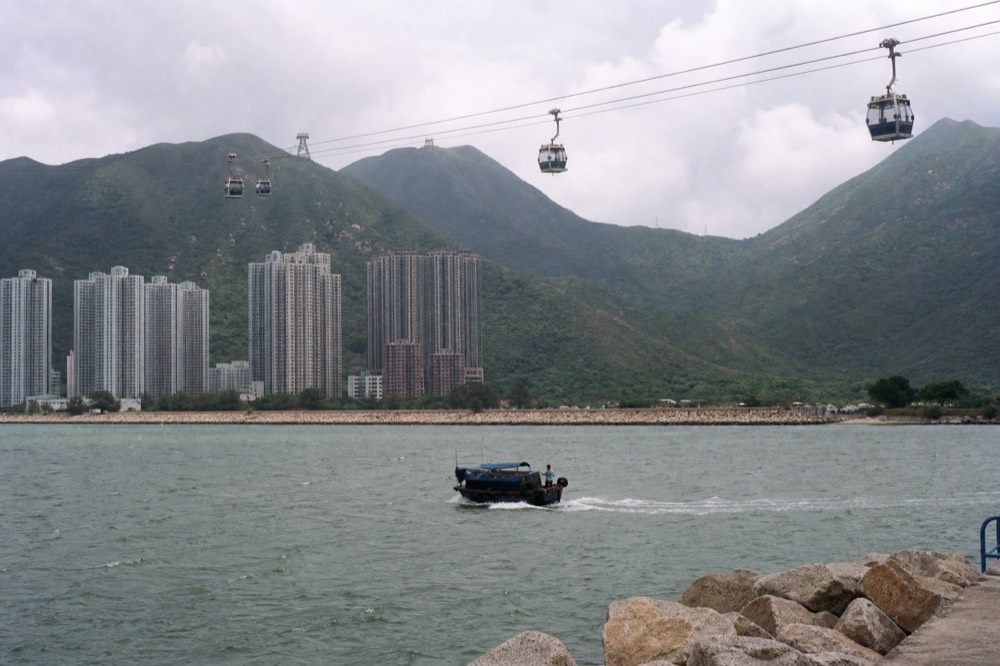
The ride itself is the 5.7-kilometre Ngong Ping cable car, the longest bi-cable ropeway in Asia, carrying 108 cabins over Tung Chung Bay, the airport, the Hong Kong-Zhuhai-Macau Bridge and the country park before arriving at Ngong Ping, from which the monastery is a ten-minute walk. Hong Kong Ngong Ping Cable Car covers the fare ladder in depth, but the short version: the ticket-only product on this site's roster starts from $21.15 for a standard cabin, is rated 4.7 across 61,490 reviews, and covers the 25-minute ride each way (checked September 2026). At the operator's own gate, an adult standard round trip is HK$295, about $38 (checked September 2026).
If the cable car is shut, or you would rather save the fare, New Lantao Bus 23 runs from Tat Tung Road bus terminus, right beside the terminal, up the winding Tung Chung Road to Ngong Ping for HK$20.40 on a weekday and HK$37.00 on a Sunday or public holiday (checked September 2026). It is the standard fallback during maintenance closures. The guide to reaching the Big Buddha compares every option, including the road route, in detail.
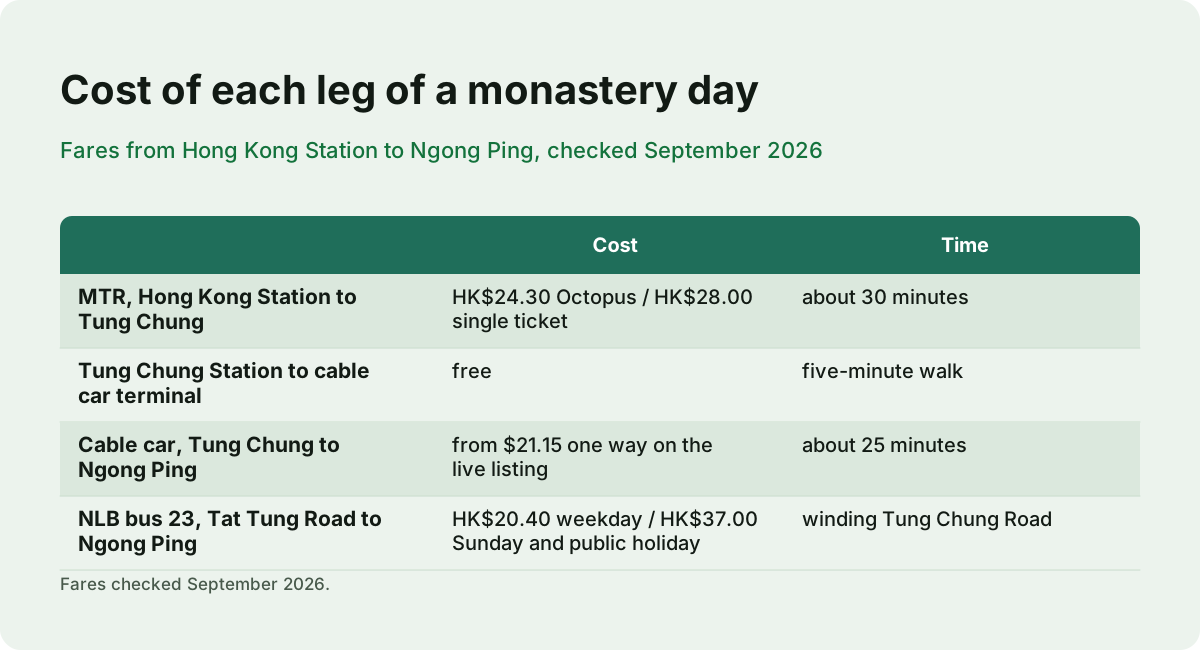
The cost ladder for a monastery day, checked September 2026:
| Leg | What it involves | Cost |
|---|---|---|
| MTR, Hong Kong Station to Tung Chung | Tung Chung Line, about 30 minutes, no change | HK$24.30 (checked September 2026) Octopus / HK$28.00 single ticket |
| Tung Chung Station to cable car terminal | Signposted five-minute walk from Exit B | free |
| Cable car, Tung Chung to Ngong Ping | 5.7 km ride, about 25 minutes each way | from $21.15 one way (checked September 2026) on the live listing |
| NLB bus 23, Tat Tung Road to Ngong Ping | Winding Tung Chung Road, the closure fallback | HK$20.40 weekday / HK$37.00 (checked September 2026) Sunday and public holiday |
What are the opening hours and when should you arrive?
The monastery opens 09:00 to 18:00 every day, an hour before the cable car's weekday start of 10:00, and the vegetarian kitchen serves from 11:30 to 16:30 daily, so on a weekday the monastery is already open before the ride up the mountain has even started running.
The hours mismatch is a real planning detail. The monastery keeps its own clock, 09:00 to 18:00, while the cable car and Ngong Ping Village run 10:00 to 18:00 on weekdays and 09:00 to 18:30 on Saturdays, Sundays and public holidays (checked September 2026). Anyone arriving by bus can therefore reach the monastery before the first cabin has even left Tung Chung on a weekday. Coming down, note the same trap in reverse: the monastery closes at 18:00, before the last cable car down.
The hours that matter on a monastery day, checked September 2026:
| Site | Hours |
|---|---|
| Po Lin Monastery grounds | 09:00 to 18:00 daily |
| Vegetarian kitchen | 11:30 to 16:30 daily |
| Cable car and Ngong Ping Village, weekdays | 10:00 to 18:00 |
| Cable car and Ngong Ping Village, weekends and public holidays | 09:00 to 18:30 |
One date deserves a red circle. The cable car is closed for scheduled maintenance from 8 to 18 September 2026, inclusive, while Ngong Ping Village and the indoor attractions, including the Cable Car Discovery Centre, stay open (checked September 2026). The monastery itself is unaffected and remains reachable by bus. This is not a once-a-year event either: the operator has separately confirmed closures in January, 3 to 5 March, May and June 2026 already, so a mid-week check of the operator's announcements before you travel is cheap insurance. The operator publishes no last-boarding time for normal days, so treat the closing hour as your deadline and work backwards with margin.
For anyone weighing how to structure the day, three products cover most situations: the ticket-only ride, a guided five-hour tour with the Tai O boat, and a six-hour guided tour built around the fishing village.
How should you behave at an active monastery?
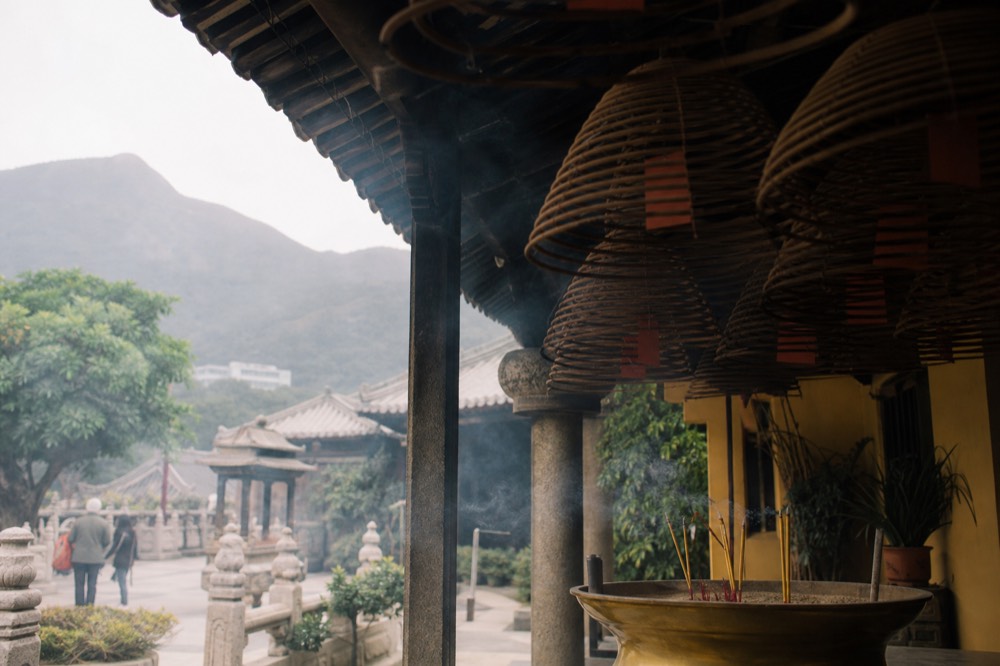
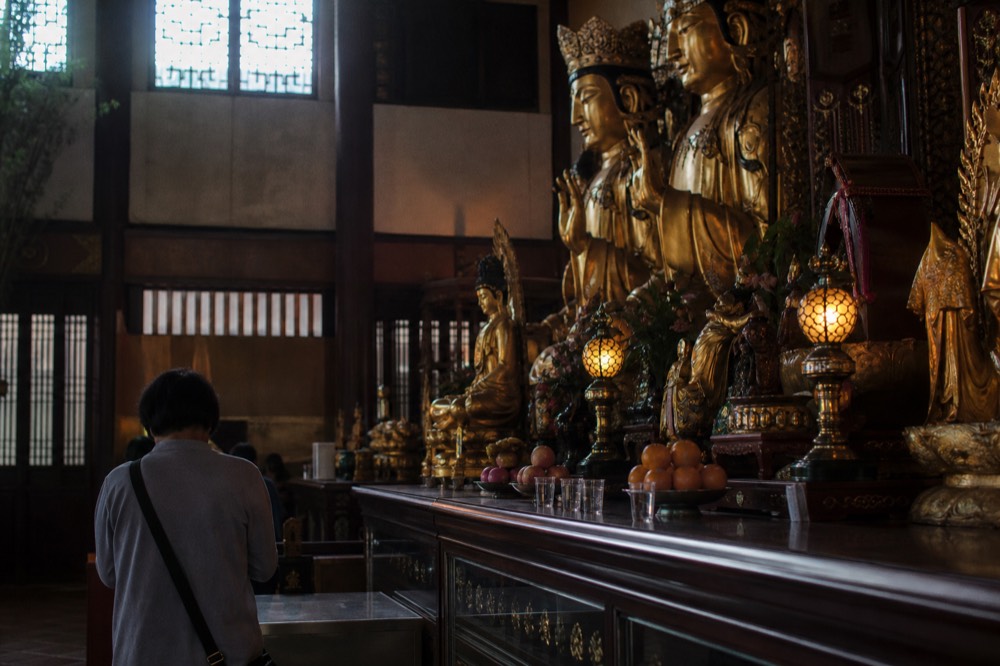
Po Lin is an active religious community, not a theme-park set: dress modestly, keep voices low in the shrine halls, ask before photographing monks or ceremonies, and treat the halls, incense court and dining hall as places where worship is happening around you.
The monastery publishes no formal dress code on its own pages, but the baseline for any working Buddhist monastery applies: cover shoulders and knees, skip beachwear, and remove hats inside the shrine halls. Ceremonies, chanting and incense offerings happen on the site throughout opening hours. If a service is underway, stand back, keep quiet and let it finish. Monks live here; a request before photographing a monk or a ceremony is basic courtesy, and some moments are simply not for the camera.
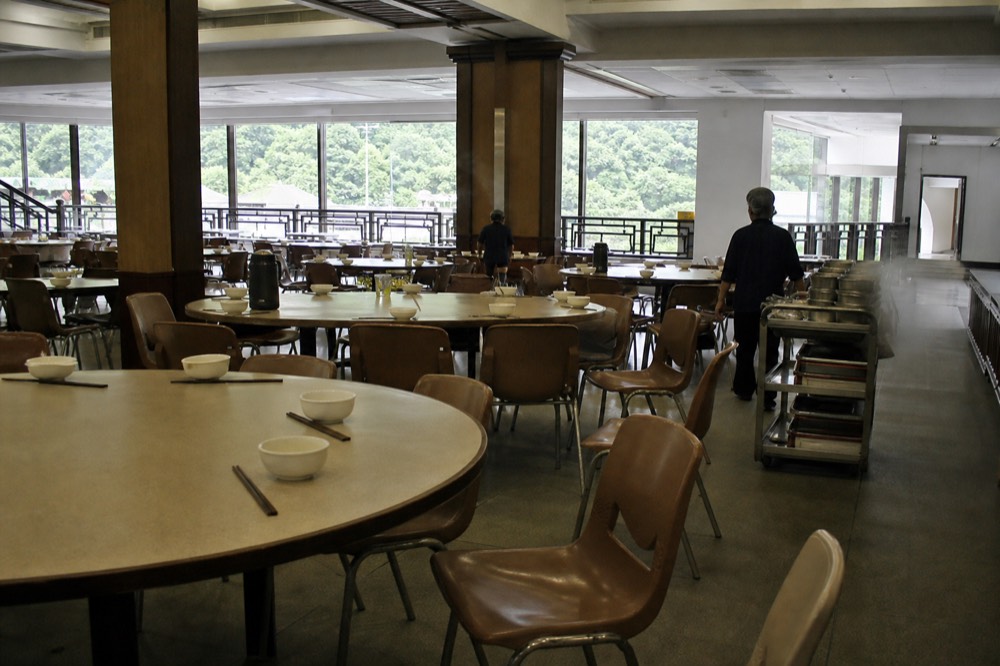
The dining hall is part of the working monastery too. Lunch at the vegetarian kitchen is a communal, seated affair rather than a cafe queue, and the kitchen closes at 16:30 sharp, so late afternoon visitors miss it. Group bookings go through the monastery on 2985 4736. The souvenir shop is not in the monastery itself but in the Hall of Merits, on the first floor of the Buddha's base platform, which is worth knowing before you climb.
| Situation | What to do |
|---|---|
| Inside the shrine halls | Speak quietly, no hats, ask before photographing worshippers or monks |
| During a ceremony | Watch from the back and let it finish; do not interrupt for photos |
| Clothing | Modest dress; shoulders and knees covered |
| The dining hall | Sit, eat what is served, finish what you take |
| Incense court | Light sticks at the designated burners, not near halls or walkways |
What is the vegetarian meal tradition at Po Lin?
The vegetarian kitchen serves a fixed communal set meal, generally a soup, a deep-fried dish and a vegetable dish with rice, portioned by table size and varied by season, from 11:30 to 16:30 daily; the monastery does not publish a price on its own site.
This is one of Hong Kong's older culinary traditions. Buddhist monasteries have served vegetarian set meals to pilgrims for generations, and Po Lin's kitchen, which the monastery's own site says runs 11:30 to 16:30 every day, is the best-known example in the city. The meal is fixed rather than ordered from a menu: a soup, a deep-fried dish and a vegetable dish with rice, portioned by table size and varied with the season, with refills of soup and rice. You eat what the kitchen serves, at a table, with whoever is seated around you.
On price, honesty matters more than a number. Po Lin does not publish the meal price on its own site, and third-party figures circulate widely without a primary source, so this guide will not print one. Expect to pay per person at the kitchen, and check the current charge there on arrival. The kitchen sits to the left of the Main Shrine Hall as you face it.
Next to the kitchen there is a snack shop with more than ten items. The monastery singles out two of its own: the daily-made bean curd dessert and the mango glutinous rice dumplings, the latter made in small quantities only, which is a gentle way of saying they run out.
For visitors who would rather not plan the monastery, the Buddha and the onward journey themselves, a guided five-hour tour combining the cable car, the Buddha and the Tai O boat excursion runs from $67.6 and is rated 4.7 across 652 reviews (checked September 2026). It is an honest alternative for a day you do not want to choreograph.
What is the Big Buddha and how does it connect to the monastery?
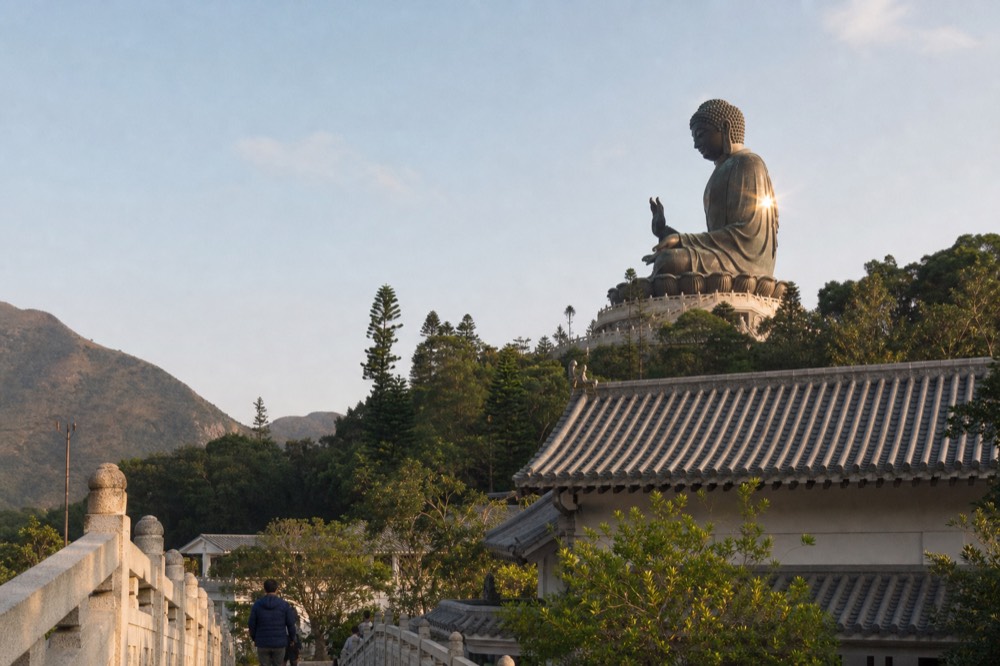
The Tian Tan Buddha stands beside the monastery, 268 free steps from the plaza to the statue, a 34-metre bronze figure cast in 202 sections over twelve years and inaugurated on 29 December 1993, with its face cast as a single five-tonne piece.
The monastery built the Buddha, and the Buddha made the monastery famous. The Hong Kong Tourism Board's own page confirms the figure every visitor asks about: 268 steps from the plaza up to the statue, and climbing them is free. Our steps explainer covers the climb itself, including where to rest and what the view does at each stage.
The construction story, documented on Po Lin's own site, is genuinely remarkable. The statue's body is 26.4 metres tall, 34 metres measured from the lotus throne and base, cast from 250 tonnes of bronze in 202 separate pieces, each 10 to 13 millimetres thick and cast to a tolerance under 3 millimetres. The face is the showpiece: a single casting, 4.3 by 5.8 metres and 5 metric tonnes, whose transport up Lantau's narrow roads required a lorry sandwiched between two cranes. The whole statue was wind-tunnel tested at the Beijing Institute of Aerodynamics, in the facility built for satellites and rockets, before a single piece was cast. The statue sits on Mount Muk Yue, facing north towards Beijing, right hand raised in the gesture of imparting fearlessness, left hand resting on its lap in the gesture of fulfilling wishes.
| Figure | Value |
|---|---|
| Steps from plaza to statue | 268, free to climb |
| Body height | 26.4 m |
| Total height with throne and base | 34 m |
| Bronze | 250 tonnes in 202 sections |
| Face | single casting, 4.3 m × 5.8 m, 5 tonnes |
| Build and opening | about 12 years, inaugurated 29 December 1993 |
What else is there to see around Ngong Ping?
Ngong Ping Village sits next to the cable car terminal with a 1.5-hectare site of shops and attractions, the Wisdom Path has been closed for refurbishment since 5 June 2025 with reopening expected in the last quarter of 2026, and Tai O fishing village is a 20-minute bus ride away.
Ngong Ping Village is the commercial strip between the cable car terminal and the monastery path, and the operator suggests allowing three to four hours to explore it and eat. Its current paid attractions are the Cable Car Discovery Centre, Motion 360, the Ngong Ping Nature Centre and the Fengyun Pavilion of the Three Kingdoms. The best-value route in is the upgrade offer: HK$20 per attraction, adult and child the same, added to any cable car ticket or guided tour bought at the Tung Chung ticket office or the official webstore, so HK$40 buys two one-time entries (checked September 2026). The Ngong Ping Village guide lists what is actually worth the stop.
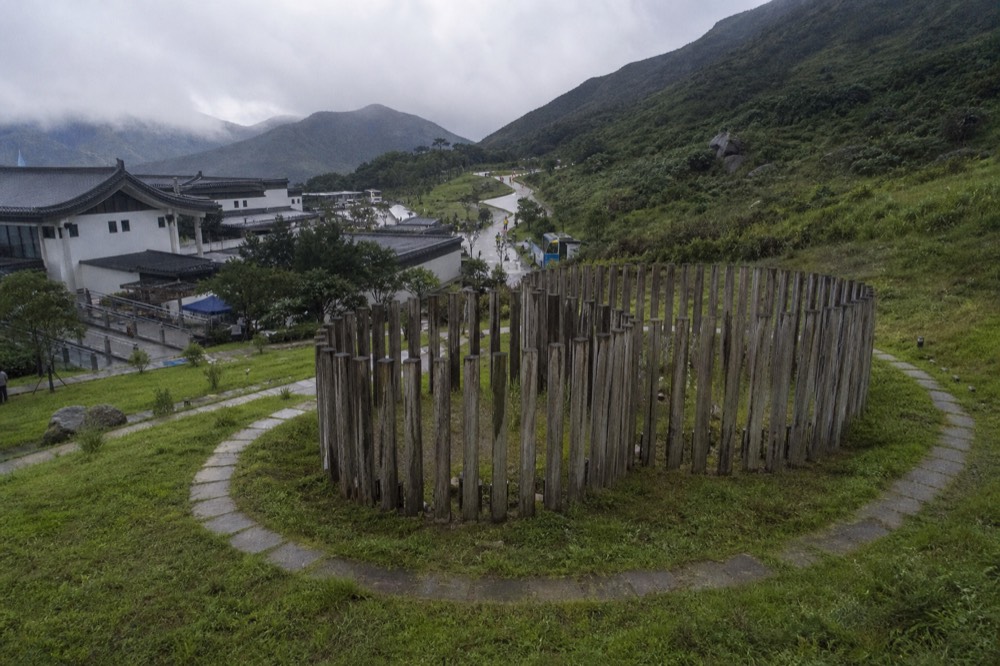
One correction that most older guides get wrong: the Wisdom Path, the 38 timber columns carrying the Heart Sutra in a figure-of-eight below Lantau Peak, has been closed since 5 June 2025, and the Tourism Commission expects the refurbishment to finish in the last quarter of 2026, with a staged reopening. A viewing platform on a nearby Lantau Trail section stays open in the meantime. Do not plan a visit around it.
Tai O, Hong Kong's oldest fishing village with its stilt houses, is the natural second stop. New Lantao Bus 21 runs from the Ngong Ping bus terminus, five minutes from the village, to Tai O in about 20 minutes for HK$7.90 on a normal day and HK$19.20 on a Sunday or public holiday (checked September 2026). The 20-minute boat excursion from the main street passes the stilt houses and the former police station, now the Tai O Heritage Hotel. A six-hour guided tour built around the cable car, the Buddha and the fishing village runs from $70.15 and carries a 4.8 rating across 490 reviews (checked September 2026), for visitors who want the whole arc handled.
On a tighter budget, a five-hour coach-based tour of the Buddha, Tai O and the island runs from $45.92, rated 4.8 across 61 reviews (checked September 2026). It swaps the cable car for a private coach, which also makes it the option that works when the ropeway is shut.
When is the best time of year to visit?
October and November are the statistical sweet spot for clear skies, with 197.8 and 172.3 sunshine hours and the year's lowest humidity, while fog concentrates almost entirely in February to April and typhoon signals peak in August, so the season matters more than the hour.
The official numbers come from the Hong Kong Observatory's 1991 to 2020 normals, recorded at the urban headquarters site near sea level, so treat them as a guide rather than a plateau forecast: Ngong Ping sits high on Lantau and runs cooler, wetter and cloudier than the city below. The pattern, though, is reliable. Hong Kong averages just 3.70 fog days a year, and 3.40 of them fall in February, March and April, the same months with the year's lowest sunshine, 101.7 and 100.0 hours in February and March, and its highest humidity. That is the low-cloud season on the plateau, when the ride can climb into white and the Buddha can disappear.
Summer brings a different risk. Tropical cyclone warning signals average 15.87 days a year, concentrated from June to October and peaking in August at 4.17 days, with September close behind at 3.83. The system's design specification, set out in a 2006 Legislative Council reply, suspends the cable car at Typhoon Signal No. 8 or above, under a black rainstorm warning, lightning, or sustained winds of 90 km/h and gusts of 135 km/h; Observatory data collected at Ngong Ping found those wind conditions occurred on an average of 7 days a year inside operating hours. The operator publishes no current wind threshold on its site, so the 2006 figures are design history, not live policy, and the hotline is the only real-time check.
Crowds follow the calendar as much as the weather. The operator's own 2024 numbers show 1.56 million guests, an average of 4,843 a day, with peak periods in summer, Golden Week and Christmas, when the Crystal+ cabins ran above 90 per cent utilisation. Visitor reports through late 2025 and early 2026 describe standard-cabin waits of one to three hours, including on ordinary weekdays, while pre-bought e-tickets skip the ticket-purchase queue but not the boarding queue. The Crystal and Crystal+ tiers have their own, much shorter boarding line, which makes the upgrade as much a queue product as a view product. Arriving early, on a weekday, outside Golden Week, remains the cheapest queue strategy there is.
| Season | What the official numbers show | Planning read |
|---|---|---|
| February to April | 3.40 of the year's 3.70 fog days; the lowest sunshine months, 100.0 to 101.7 hours | highest whiteout risk, check the morning forecast |
| June to October | cyclone signal days peak in August, 4.17, and September, 3.83 | suspension risk, keep a buffer day |
| October and November | 197.8 and 172.3 sunshine hours, the year's lowest humidity, 73% and 72% | the statistical sweet spot |
Whichever route you take up the mountain, the three products below cover the monastery day from the simple ride to the full guided arc.
Po Lin Monastery opens 09:00 to 18:00 daily, serves its fixed vegetarian lunch from 11:30 to 16:30, charges no published admission for the grounds, and sits ten minutes on foot from Ngong Ping Village beside the 268-step Tian Tan Buddha; the Wisdom Path nearby remains closed until late 2026.
Common questions about Po Lin Monastery
What are Po Lin Monastery's opening hours?
The monastery grounds open 09:00 to 18:00 daily (checked September 2026). The vegetarian kitchen inside serves from 11:30 to 16:30, and the cable car down runs until 18:00 on weekdays and 18:30 on weekends and public holidays, so the monastery closes before the last ride.
Can you eat at Po Lin Monastery?
Yes. The vegetarian kitchen serves a fixed communal set meal, generally a soup, a deep-fried dish and a vegetable dish with rice, from 11:30 to 16:30 daily (checked September 2026). The monastery does not publish a price on its own site, so check the current charge at the kitchen on arrival.
Is there an entrance fee for Po Lin Monastery?
The monastery's own site publishes no admission charge for the grounds. The 268 steps up to the Tian Tan Buddha beside it are free to climb, and the nearby Ngong Ping Village attractions use a separate HK$20-per-attraction upgrade offer added to a cable car ticket (checked September 2026).
How far is Po Lin Monastery from the cable car terminal?
The monastery is a ten-minute walk on foot from Ngong Ping Village, which sits adjacent to the Ngong Ping cable car terminal. The Big Buddha is a further ten minutes from the village, so the full walk from cabin to statue gate takes roughly twenty minutes at an easy pace.
Is the Wisdom Path open?
No. The Wisdom Path has been closed since 5 June 2025 for refurbishment, with the Tourism Commission expecting completion in the last quarter of 2026 and a staged reopening before that. A viewing platform on a nearby Lantau Trail section remains open in the meantime.
How old is Po Lin Monastery?
Construction began in 1906, when the site was known as "the Big Thatched Hut", and the community was officially named Po Lin Monastery in 1924. The Tian Tan Buddha beside it was inaugurated on 29 December 1993 after roughly twelve years of work.