Big Buddha Hong Kong Hike: Routes, Terrain, and Honest Advice
Reaching the Tian Tan Buddha on foot is a rewarding alternative to the cable car, but the Lantau trails demand preparation. This guide lays out the walking routes, what the terrain and Hong Kong heat actually ask of you, and how the hike stacks up against the 25-minute ride.
Short answer
You can hike to the Big Buddha from several starting points on Lantau Island, the most direct being from Ngong Ping Village or Tung Chung. The terrain includes steep stone steps, exposed ridges, and subtropical humidity. Allow at least 1.5–2.5 hours from Ngong Ping to Lantau Peak, or 3–4 hours from Tung Chung via the Lantau Trail. Proper shoes, water, and an early start are essential.
Reaching the Big Buddha on foot is one of the most satisfying ways to experience Lantau Island, but it is not a casual stroll. The trails climb through subtropical forest, exposed ridges, and hundreds of stone steps, and the Hong Kong sun can turn the journey into a serious undertaking. This page gives you the honest picture: the routes that actually work, what the terrain demands, and how the hike compares to the 25-minute cable car ride that most visitors take.
For many, the decision comes down to time, fitness, and the weather. The Hong Kong Ngong Ping Cable Car delivers you to the Buddha in air-conditioned comfort with a view of the airport and the South China Sea, while the hike offers solitude, a real sense of achievement, and a completely different perspective on the landscape. Both are valid, and the best choice often depends on the day.
What is the Big Buddha Hong Kong hike?
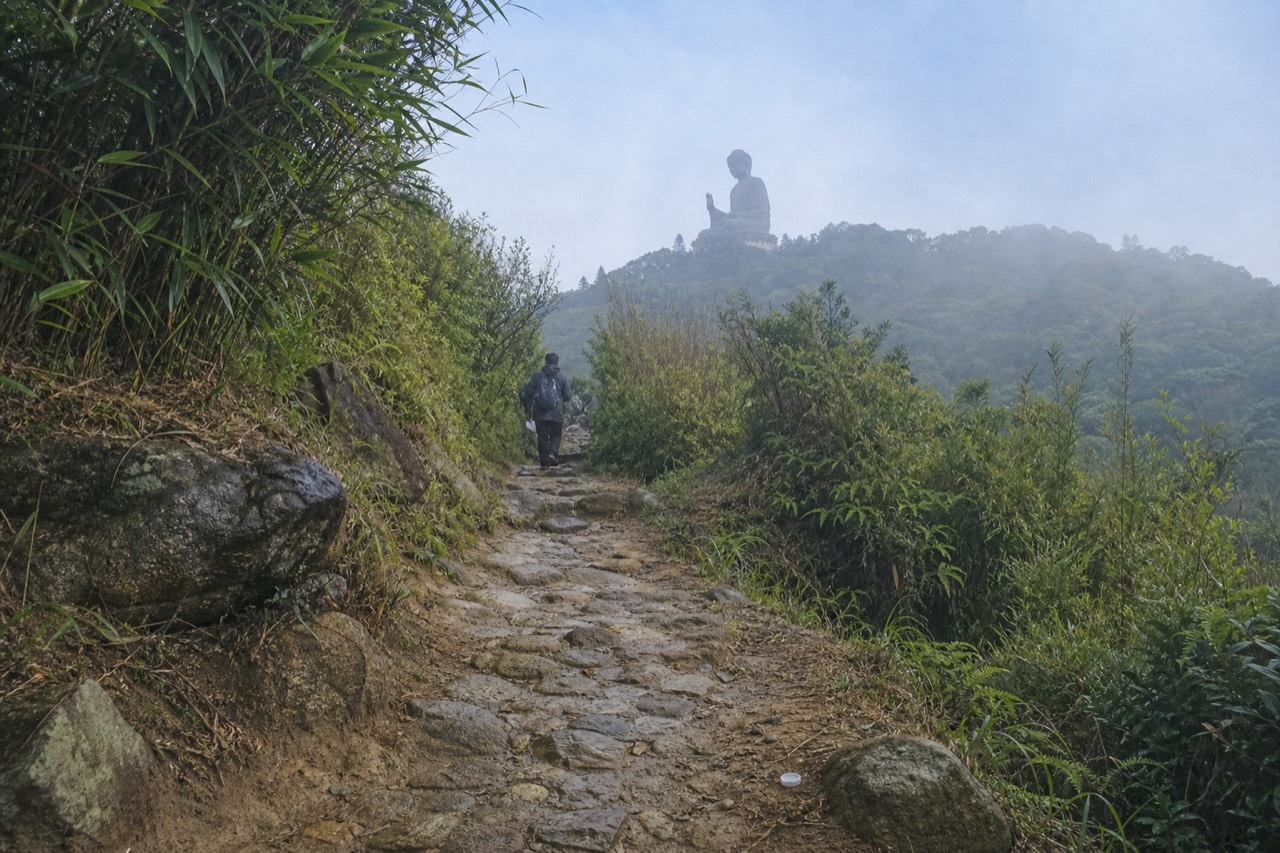
The Big Buddha Hong Kong hike is the walk up to the Tian Tan Buddha statue on Lantau Island, most commonly starting from Ngong Ping Village, Tung Chung, or Pak Kung Au. It follows sections of the Lantau Trail and other footpaths, climbing through the hills that the cable car glides over. The hike is not a single designated route but a collection of trails that all converge at the 34-metre bronze statue.
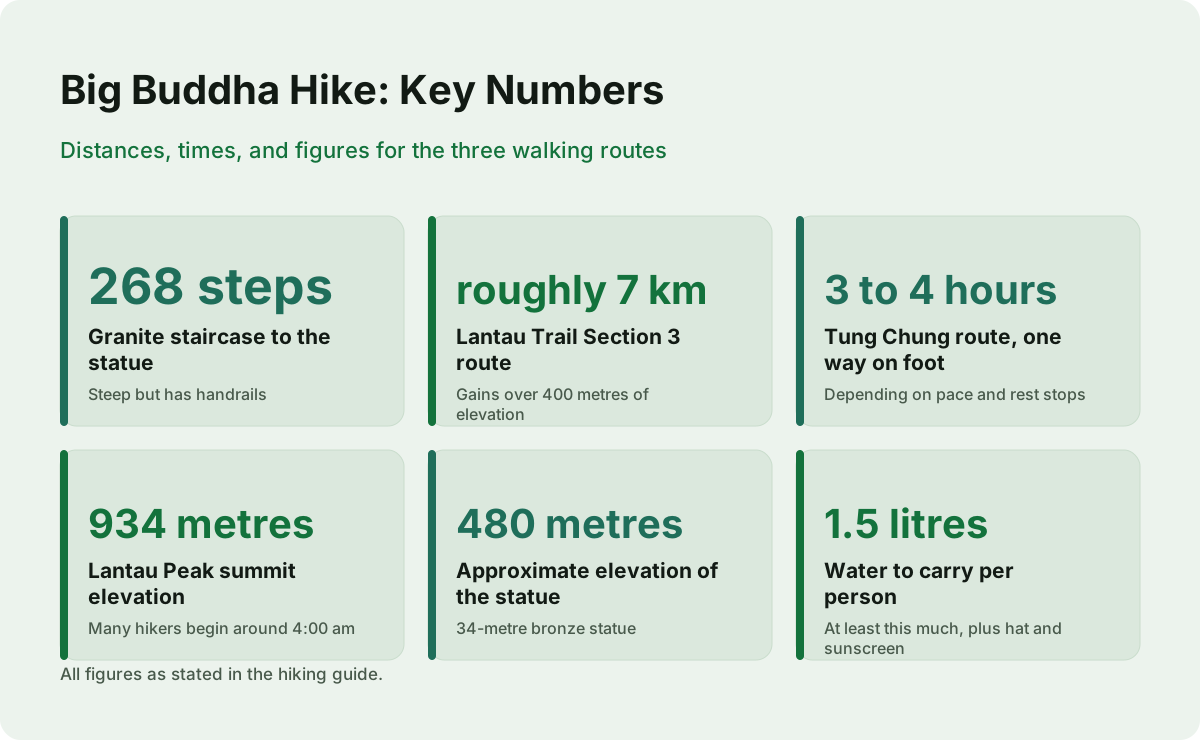
The statue sits at an elevation of roughly 480 metres above sea level, and the surrounding terrain is steep. The most direct walking approach from Ngong Ping Village involves a short but sharp climb on a paved path and then the 268 steps from the plaza up to the statue itself. That is the easy part. The real hiking challenge is getting to Ngong Ping in the first place.
Several longer routes start at lower elevations. The Tung Chung to Ngong Ping hike via the Lantau Trail is a popular full-day option, while the approach from Pak Kung Au over Lantau Peak is a strenuous sunrise favourite. Each route crosses the same ridgeline that the Ngong Ping 360 cable car follows, giving hikers a ground-level view of the cable car towers and the Nei Lak Shan ridge.
How do you actually hike to the Big Buddha?
There are three practical walking routes to the Big Buddha, each with a different starting point, length, and difficulty. The shortest is the path from Ngong Ping Village, which takes about 15 minutes on foot plus the 268 steps. The classic Lantau Trail Section 3 from Tung Chung to Ngong Ping covers roughly 7 km and gains over 400 metres of elevation. The Lantau Peak route from Pak Kung Au is the most demanding, climbing to 934 metres.
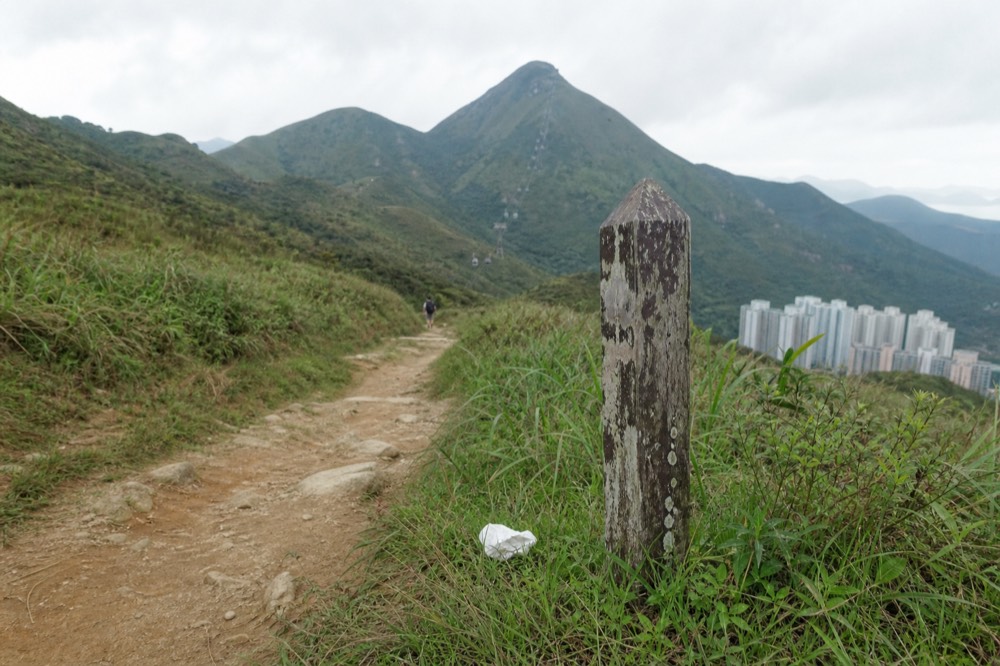
The Ngong Ping Village start is the easiest. If you arrive by cable car or bus, the walk from the village to the Buddha is well signposted and takes about 10 minutes along a flat, paved path. Then you face the 268 steps, which are steep but manageable for most people. This is not a hike in the wilderness sense, but it still counts as walking to the Buddha.
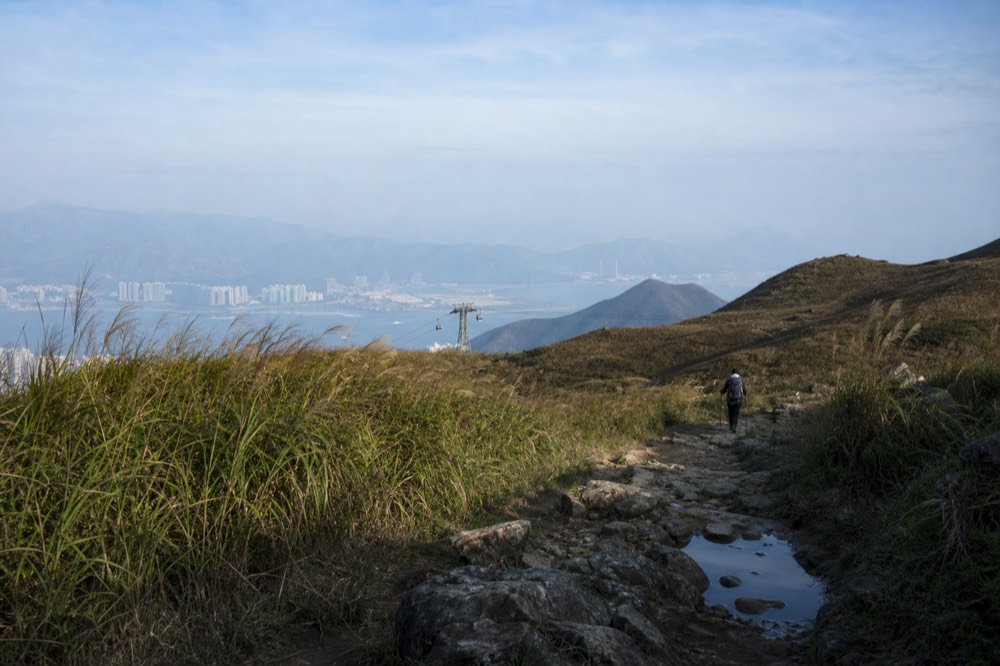
The Tung Chung to Ngong Ping route is a proper half-day hike. It follows Section 3 of the Lantau Trail, starting near the Tung Chung MTR station and climbing steadily through woodland and open hillsides. The trail is well maintained but exposed in places, and the final ascent to Ngong Ping is a long set of stone steps. Hikers should allow 3 to 4 hours one way, depending on pace and rest stops. The path passes directly under the cable car line, and you can often hear the cabins humming overhead.
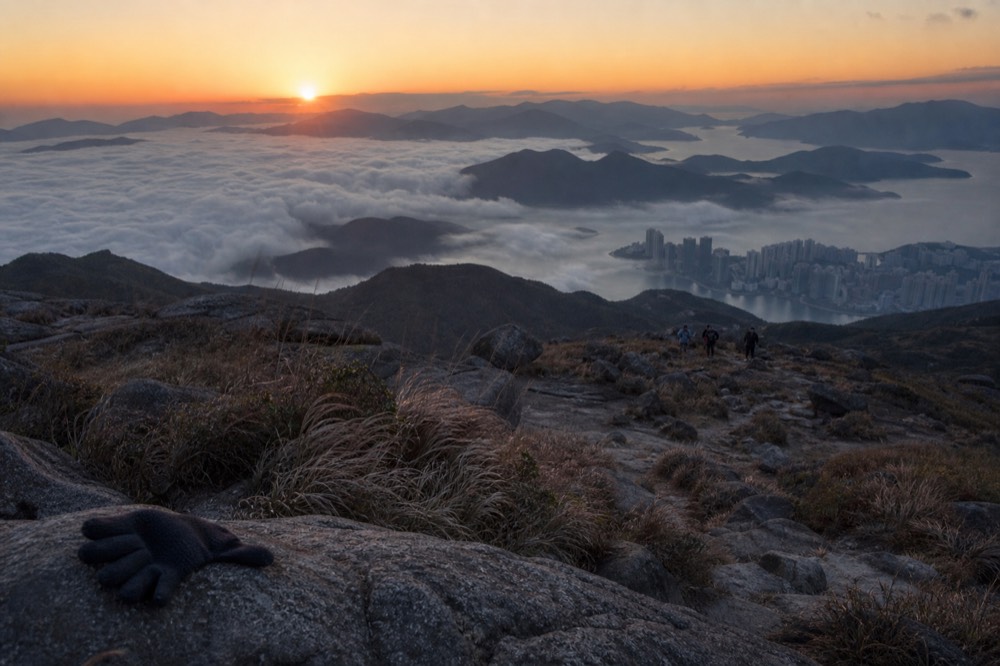
The Lantau Peak sunrise hike is a Hong Kong rite of passage. Starting from Pak Kung Au on Tung Chung Road, the trail climbs steeply to the summit of Lantau Peak at 934 metres, then descends to Ngong Ping and the Buddha. Many hikers begin around 4:00 am to reach the peak for sunrise. This route is strenuous, with rocky steps and significant exposure, and should only be attempted by fit hikers with proper gear.
What is the terrain like on the way up?
The terrain on the way up to the Big Buddha is a mix of paved village paths, forest trails, exposed ridgelines, and long flights of stone steps. The Lantau Trail sections are rocky and uneven in places, with steps cut into the hillside that can be slippery after rain. The final approach to the statue is a wide granite staircase of 268 steps, which is steep but has handrails.
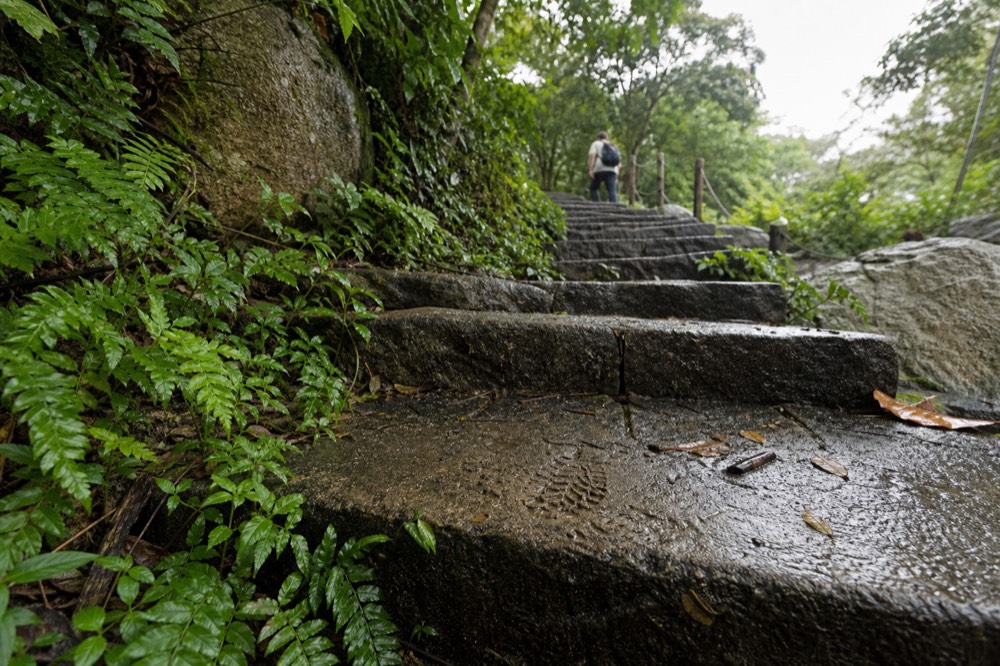
The biggest surprise for many hikers is the number of steps. The Lantau Trail Section 3 from Tung Chung includes a seemingly endless staircase near the top, and the Lantau Peak route has long sections of stone steps that can be hard on the knees. Good hiking shoes with grip are essential, especially after rain when the stone becomes slick.
The trail is exposed for long stretches, particularly on the ridge near Nei Lak Shan. There is little shade, and the sun can be intense even in autumn. Hikers should carry at least 1.5 litres of water per person and wear a hat and sunscreen. The terrain is not technical, but it is physically demanding, and the humidity can make it feel harder than the elevation gain suggests.
One landmark that hikers will notice is the cable car line itself. The Ngong Ping 360 runs parallel to much of the Lantau Trail, and the sight of the cabins gliding silently overhead is a reminder of the alternative. The ridge that the cable car climbs is the same one you are walking, and the views from the trail are similar to those from the cabin, just from a lower angle.
How hot does it get and what should you carry?
Hong Kong's subtropical climate means that hiking to the Big Buddha can be uncomfortably hot and humid for much of the year. From May to September, daytime temperatures often exceed 30°C (86°F) with humidity above 80%, making the climb feel significantly harder. October and November offer the most comfortable conditions, with lower humidity and cooler mornings.
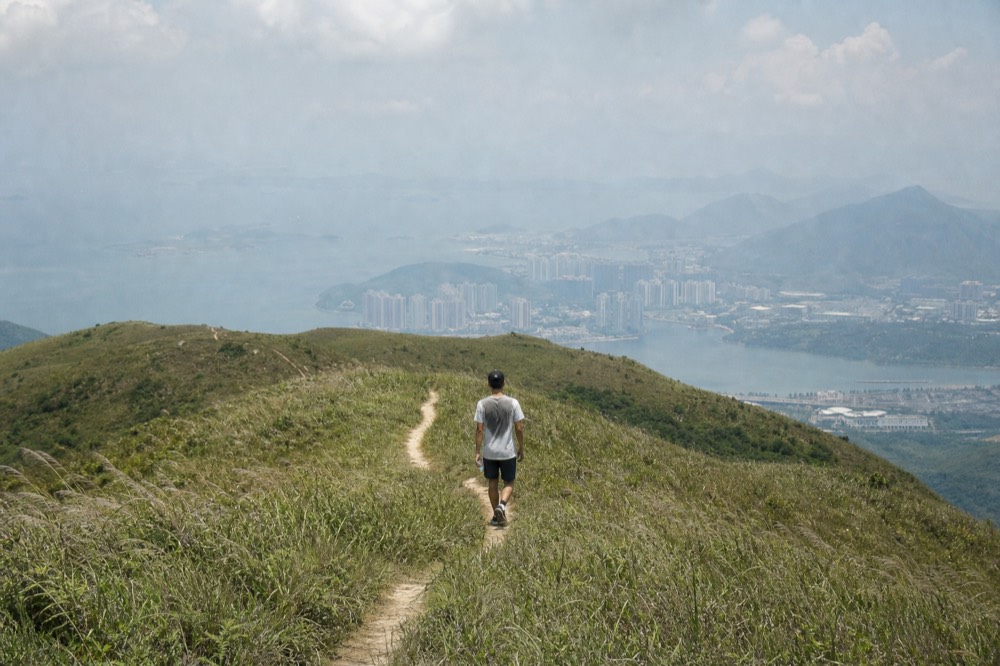
The heat is the single biggest factor that catches hikers off guard. Even on a day that feels mild at sea level, the exertion of climbing several hundred metres in direct sun can lead to dehydration quickly. The Hong Kong Observatory's climatological normals show that July and August are the hottest months, with mean daily maximums of 31.6°C and 31.3°C respectively. These are the months when an early start is most critical.
What you carry matters. A minimum kit for the Tung Chung to Ngong Ping hike includes at least 1.5 litres of water, a hat, sunscreen, insect repellent, and a snack. For the Lantau Peak sunrise hike, add a headlamp, a light jacket for the summit wind, and extra water. There are no shops or water refill points on the trail itself, so you must carry everything you need. The Ngong Ping Village at the top has restaurants and a 7-Eleven, but that is only useful at the end of the hike.
The best months for the hike are October to December, when the humidity drops and the skies are often clear. February to April brings fog, which can obscure the views entirely, and the trail can be slippery. June to September is the typhoon season, and the cable car may be suspended in strong winds, which also makes the trail dangerous. Always check the weather forecast before setting out.
| Month | Mean daily max °C | Mean humidity % | Fog days | Cyclone signal days | Hiking comfort |
|---|---|---|---|---|---|
| Jan | 18.7 | 74 | 0.20 | – | Cool, clear, good |
| Feb | 19.4 | 79 | 1.10 | – | Fog risk, low sunshine |
| Mar | 21.9 | 82 | 1.47 | – | Foggy, humid |
| Apr | 25.6 | 83 | 0.83 | 0.20 | Warming, some fog |
| May | 28.8 | 83 | 0.07 | 0.27 | Hot, humid, start early |
| Jun | 30.7 | 82 | – | 2.00 | Very hot, typhoon risk |
| Jul | 31.6 | 81 | – | 3.13 | Hottest, frequent cyclones |
| Aug | 31.3 | 81 | – | 4.17 | Peak typhoon, oppressive |
| Sep | 30.5 | 78 | – | 3.83 | Still hot, cyclone risk |
| Oct | 28.1 | 73 | – | 1.70 | Best month, dry and clear |
| Nov | 24.5 | 72 | – | 0.57 | Excellent, cool mornings |
| Dec | 20.4 | 70 | 0.03 | – | Cool, clear, ideal |
Hiking vs. riding the Ngong Ping cable car: an honest comparison
The hike and the cable car offer two completely different experiences of the same mountain. The cable car takes 25 minutes each way in a climate-controlled cabin with panoramic views of the airport, the Hong Kong–Zhuhai–Macau Bridge, and the South China Sea. The hike takes 1.5 to 4 hours one way, exposes you to the elements, and rewards you with a sense of accomplishment and close-up views of the terrain.
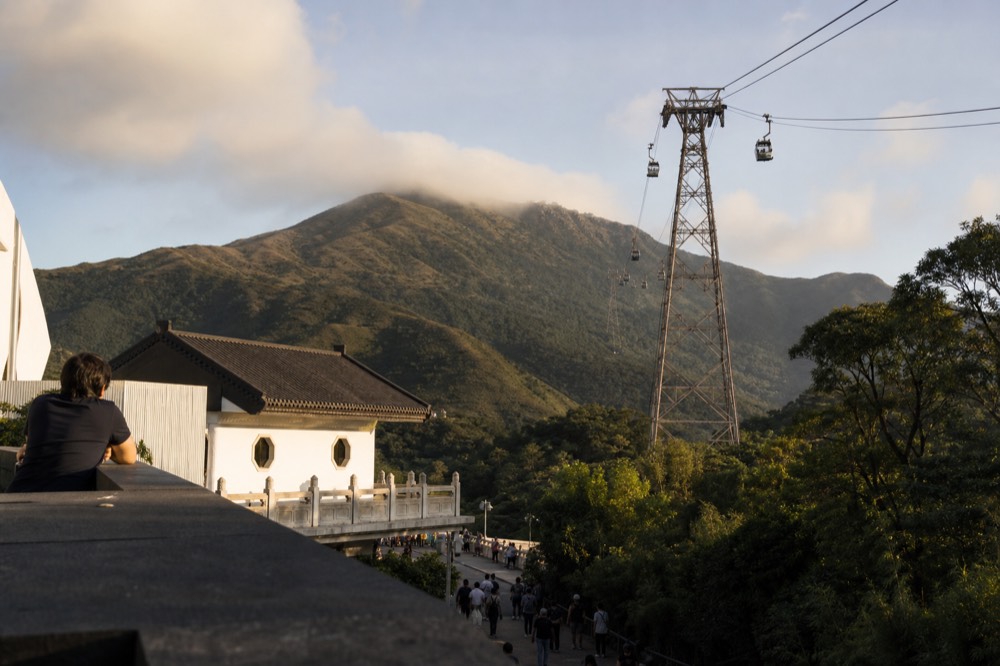
The cable car is the default choice for most visitors, and for good reason. It is fast, comfortable, and offers a perspective you cannot get from the trail. The Crystal Cabin and Crystal+ options add a glass floor, which gives a view straight down to the forest and the coastline below. The standard round-trip fare is HK$295 (about $38) (checked September 2026), and tickets can be booked online with free cancellation before redemption. The cable car also avoids the physical exertion entirely, which is a significant advantage on a hot day.
The hike, on the other hand, costs nothing except your energy and the bus or MTR fare to the trailhead. It lets you experience the Lantau North Country Park up close, and the silence on the trail is a stark contrast to the bustle of Ngong Ping Village. Hikers often report a deeper appreciation for the landscape after walking through it, and the arrival at the Buddha feels earned in a way that stepping out of a cabin does not.
The table below lays out the key differences at a glance.
| Factor | Cable car ride | Hike (Tung Chung to Ngong Ping) |
|---|---|---|
| Time one way | About 25 minutes | 3–4 hours |
| Cost (adult) | HK$295 round trip (≈$38) (checked September 2026) | Free (plus transport to trailhead) |
| Physical effort | Minimal | Moderate to strenuous |
| Views | Panoramic from above, airport and sea | Forest, ridgeline, cable car towers |
| Weather dependency | Suspended in strong winds or typhoon signal No. 8+ | Dangerous in heavy rain or typhoon; exposed to sun |
| Best season | Year-round, clear days best | October–December |
What are the best walking routes to the Big Buddha?
The best walking route to the Big Buddha depends on your fitness, available time, and starting point. The Ngong Ping Village approach is the easiest and most accessible. The Tung Chung to Ngong Ping hike via the Lantau Trail Section 3 is the classic half-day option. The Lantau Peak sunrise hike from Pak Kung Au is the most challenging and rewarding.
The Ngong Ping Village route is not a hike in the traditional sense, but it is the only way to walk to the Buddha if you are already at the top. It is suitable for all ages and fitness levels, and the 268 steps are the only real exertion. If you take the cable car up and then walk down, you can combine the experience of both.
The Tung Chung to Ngong Ping route is the most popular proper hike. It starts near the Tung Chung MTR station, follows the Lantau Trail through the country park, and ends at the Big Buddha. The trail is well marked and well maintained, and you can take the cable car or bus back down if you do not want to walk both ways. The total distance is about 7 km with a cumulative elevation gain of over 400 metres. For detailed transport options to the trailhead, see our guide on getting to the Big Buddha.
The Lantau Peak sunrise hike is for experienced hikers only. Starting at Pak Kung Au, the trail climbs steeply to the summit of Hong Kong's second-highest peak, then descends to Ngong Ping. The views at sunrise, with the Buddha silhouetted against the dawn sky, are spectacular. Hikers should be prepared for cold winds at the summit even in summer, and the descent is hard on the knees.
A less common but viable option is to hike from Tai O to Ngong Ping. This route follows a quieter trail through the hills above the fishing village and joins the Lantau Trail near the Ngong Ping plateau. It takes about 2 hours and offers a different perspective on the island. However, the trail can be overgrown in places, and signage is less consistent than on the main Lantau Trail.
The table below summarises the main routes.
| Route | Starting point | Approximate time one way | Difficulty | Highlights |
|---|---|---|---|---|
| Ngong Ping Village walk | Ngong Ping Village | 15 minutes + 268 steps | Easy | Paved path, accessible |
| Lantau Trail Section 3 | Tung Chung | 3–4 hours | Moderate | Forest, ridge, cable car towers |
| Lantau Peak sunrise | Pak Kung Au | 2–3 hours to peak, 1 hour down | Strenuous | Summit views, sunrise over Buddha |
| Tai O to Ngong Ping | Tai O | 2 hours | Moderate | Quiet trail, fishing village start |
What else should you know before you hike?
The Big Buddha hike is free, but you should plan for transport, weather, and the 268 steps at the end. The cable car is the quickest way down if you are tired, and a one-way ticket costs HK$205 for a Standard Cabin (about $26) (checked September 2026). The Po Lin Monastery vegetarian restaurant is open from 11:30 to 16:30 daily and is a welcome rest stop after the climb.
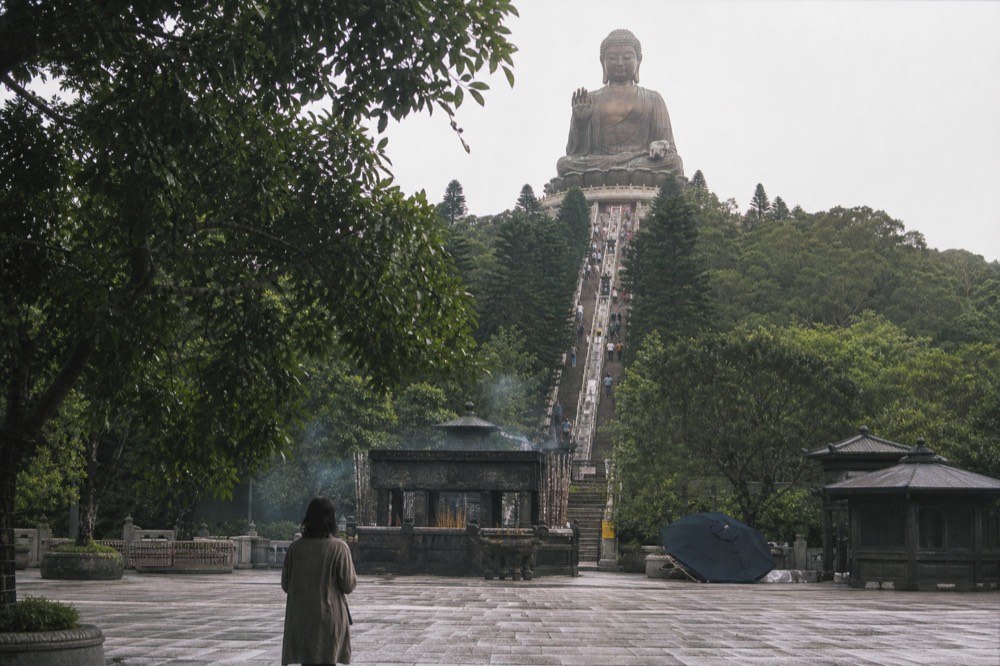
The 268 steps to the Buddha are free to climb, and the statue itself is open from roughly 10:00 to 17:30. The interior exhibition hall inside the base may have a separate admission fee, but the exterior and the steps are accessible at no cost. The Po Lin Monastery next door is also free to enter and is open from 09:00 to 18:00, so it is often open before the cable car starts running on weekdays.
If you hike up and want to ride the cable car down, you can buy a single-trip ticket at the Ngong Ping terminal. The Standard Cabin single trip is HK$205 (about $26), and the Crystal Cabin single trip is HK$240 (about $31) (checked September 2026). The cable car closes at 18:00 on weekdays and 18:30 on weekends and public holidays, so you need to be at the terminal well before closing. The operator does not publish a last-boarding time for normal days, so plan to arrive at least 30 minutes before closing.
Transport to and from the trailheads is straightforward. The MTR Tung Chung Line from Hong Kong Station to Tung Chung takes about 30 minutes and costs HK$24.30 with an Octopus card (about $3.10) (checked September 2026) (see Lantau Island). From Tung Chung, the Lantau Trail Section 3 starts near the station. For the Pak Kung Au start, take NLB bus 11 or 23 from Tung Chung and alight at the Pak Kung Au bus stop on Tung Chung Road.
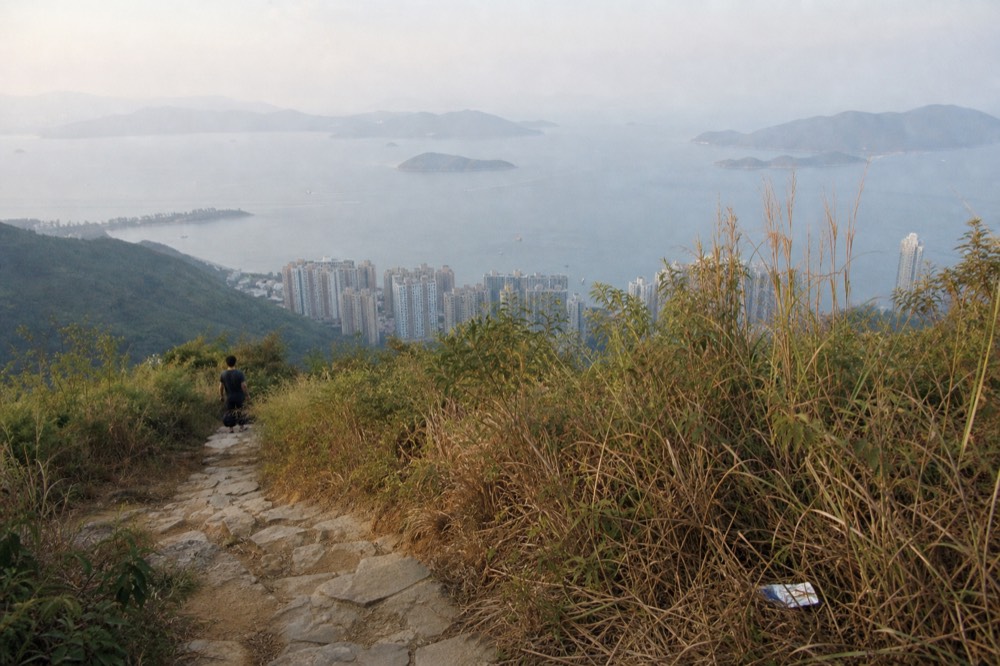
The terrain on the Lantau Trail is generally safe, but there are a few things to watch for. The trail can be slippery after rain, and the stone steps are uneven in places. There is no mobile phone reception in some sections, so download a map before you start. The trail is also used by mountain bikers on some sections, so stay alert. Snakes are present but rarely seen; give them space if you encounter one.
If you are hiking during the summer typhoon season, check the Hong Kong Observatory warnings before you leave. The cable car is suspended under Typhoon Signal No. 8 or above, and the trail becomes dangerous in heavy rain or strong winds. The 2006 design specification for the cable car set wind thresholds of 90 km/h sustained or 135 km/h gusts, and conditions like that make hiking on an exposed ridge unsafe.
Common questions about hiking to the Big Buddha in Hong Kong
Is the Big Buddha hike free?
Yes, the hike itself is free. There is no admission charge to climb the 268 steps to the statue or to walk the Lantau Trail. You only pay for transport to the trailhead and any food or drink you buy along the way.
How long does it take to hike from Tung Chung to the Big Buddha?
The Tung Chung to Ngong Ping hike via the Lantau Trail Section 3 takes approximately 3 to 4 hours one way for a fit hiker. The distance is about 7 km with over 400 metres of elevation gain, and the trail includes long flights of stone steps.
Can you hike up and take the cable car down?
Yes, you can hike up and ride the cable car down. Single-trip tickets are available at the Ngong Ping terminal. A Standard Cabin single trip costs HK$205 (about $26) (checked September 2026). The cable car closes at 18:00 on weekdays and 18:30 on weekends, so plan to arrive at the terminal at least 30 minutes before closing.
What is the hardest hike to the Big Buddha?
The Lantau Peak sunrise hike from Pak Kung Au is the most challenging route. It climbs steeply to 934 metres, the second-highest peak in Hong Kong, and then descends to the Buddha. The trail is rocky, exposed, and requires a headlamp for the pre-dawn start. It is suitable only for experienced hikers.
Is it safe to hike to the Big Buddha alone?
The main Lantau Trail is well marked and generally safe for solo hikers, but you should tell someone your route and expected return time. Mobile phone reception is patchy in some sections, and the trail can be quiet on weekdays. Carry enough water and avoid hiking during typhoon warnings or heavy rain.
What should I wear for the hike?
Wear sturdy hiking shoes with good grip, lightweight clothing, a hat, and sunscreen. The steps can be slippery, and the sun is intense on exposed sections. Bring a light jacket for the summit if you are doing the Lantau Peak hike, as it can be windy and cool even in summer.