Is Lantau Island Part of China?
A factual, careful answer to whether Lantau Island is part of China: Hong Kong's status as a Special Administrative Region and Lantau's place within it. Neutral and encyclopaedic in tone, no politics, no opinion.
Is Lantau Island Part of China?
Yes. Lantau Island is part of China. It sits within Hong Kong, which is a Special Administrative Region of the People's Republic of China, and it has been under Chinese sovereignty since the handover from Britain. Nothing about Lantau's geography, its administration or its place on the map is in dispute, and no visitor needs a separate permit to go there.
That is the short answer, and it is worth stating plainly because the question gets asked more often than you might think. Lantau is the island that holds Hong Kong International Airport, the Tian Tan Buddha, Po Lin Monastery, the Tai O fishing village and the Ngong Ping 360 cable car, so a great many visitors touch down on Lantau before they fully understand what Hong Kong is or how it relates to China. The confusion usually comes from the fact that Hong Kong keeps its own currency, its own immigration policy and its own legal system, which makes it feel like a separate place when you cross into it.
The arrangement has a name: "one country, two systems." Under it, Hong Kong is unambiguously part of China while retaining distinct arrangements for matters like money and border control. For a traveller, this is not an abstract constitutional point. It decides whether you clear immigration when you fly into Hong Kong from Shanghai (you do), whether you can spend the yuan in your pocket at a Lantau food stall (generally not), and whether the stamp in your passport comes from Hong Kong or from the mainland.
This article keeps to the facts and leaves the politics out. What follows is the geography, the administration, the practical border and money questions, and a few of the verifiable details about Lantau itself that follow directly from its status.
If your reason for asking is a trip you are already planning, the cable car across Lantau is the island's signature experience, and there are two honest ways to do it: buy the ticket and plan the day yourself, or hand the planning to a guided tour.
Where is Lantau Island, exactly?
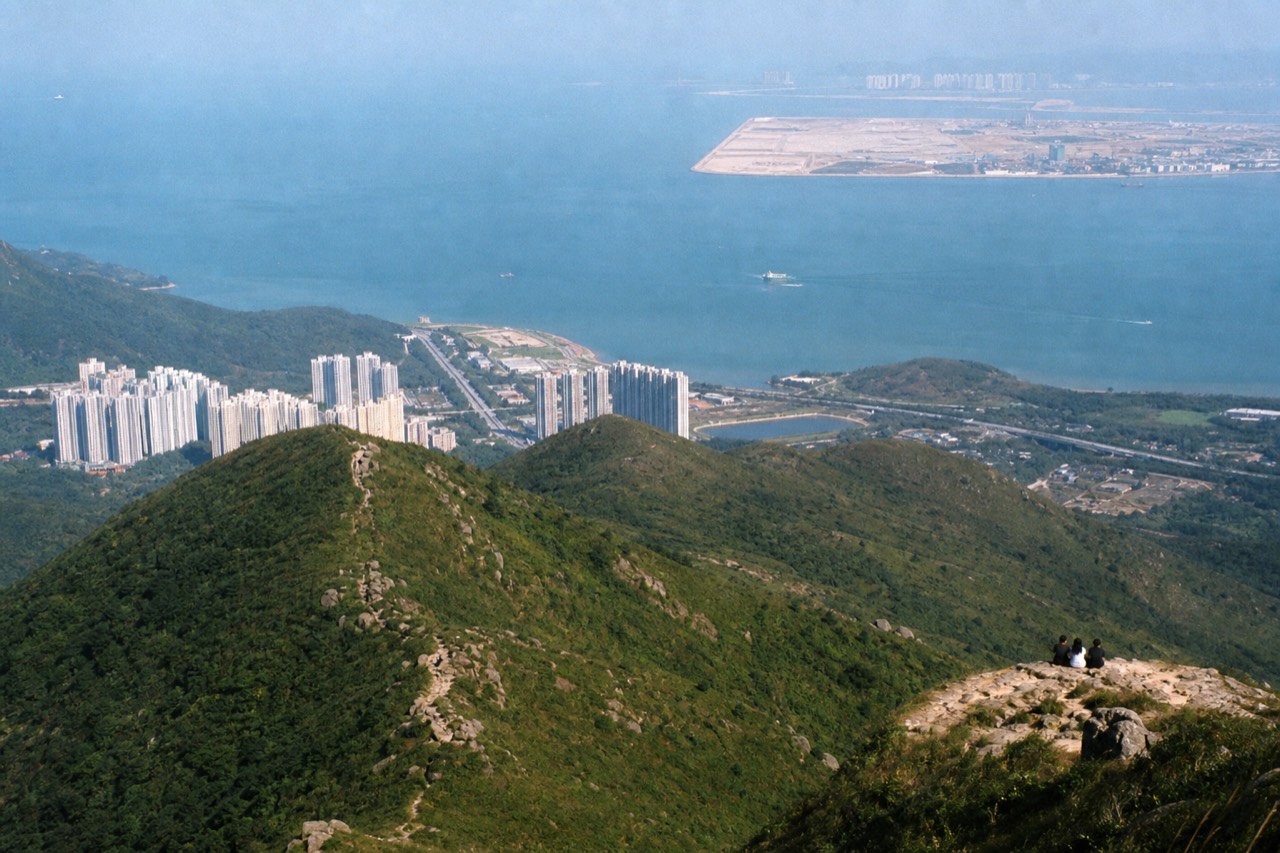
Lantau is an island in the Pearl River estuary, lying west of the Kowloon peninsula and the main urban area of Hong Kong, at the mouth of the river that separates Hong Kong from the neighbouring mainland city of Shenzhen. It is the island that Hong Kong International Airport sits on, and the cable car, the Big Buddha and Tai O are all on it.
To place it precisely: Lantau sits on the western side of Hong Kong's territory, facing the South China Sea to the south and the Pearl River Delta to the west. It is not a remote outpost. It is stitched into the rest of Hong Kong by an extensive transport network, and that network is the clearest everyday evidence of the island's status. The MTR's Tung Chung Line runs from Hong Kong Station in Central to Tung Chung on Lantau's north shore in about 30 minutes, at an adult Octopus fare of HK$24.30 (checked September 2026). Hong Kong's airport, on reclaimed land just off Lantau's north coast, connects to over 220 destinations with roughly 1,100 flights a day. The Hong Kong-Zhuhai-Macau Bridge, 50 km long and including the world's longest six-lane undersea tunnel, runs from Lantau's west side across the delta.
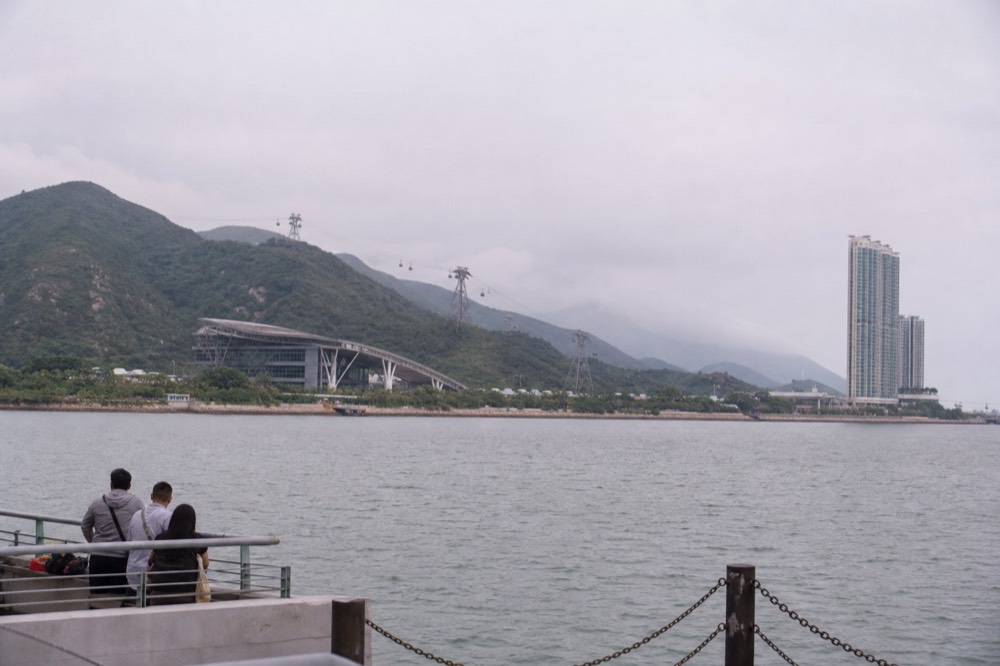
Administratively, the whole of Hong Kong, Lantau included, is one jurisdiction. There is no internal border between Lantau and Hong Kong Island, no checkpoint on the Tung Chung Line, and no document check of any kind for travelling within the territory. A visitor who lands at the airport, rides the cable car at Tung Chung, climbs to the Big Buddha and takes a bus to Tai O will not show a passport after airport immigration, because every one of those places is inside the same Special Administrative Region.
The physical geography is worth a word too, because Lantau is Hong Kong's most mountainous major island. Lantau Peak, also called Fung Wong Shan, stands 934 m, the second-highest summit in Hong Kong, and Nei Lak Shan rises to 751 m, the sixth-highest. The Ngong Ping plateau, where the Big Buddha and the cable car's upper terminal sit, is a high, often cloud-catching shelf between them. Much of the island's north is protected as Lantau North Country Park, established in 1978 and covering 22 square kilometres. You can read more about the island as a whole in our Lantau Island overview guide.
The places that make Lantau famous
Lantau's landmarks are a useful checklist of things that are all, equally, in Hong Kong and therefore in China:
| Place | What it is | Where on Lantau |
|---|---|---|
| Hong Kong International Airport | Main airport of Hong Kong, 220+ destinations | Reclaimed land off the north coast |
| Ngong Ping 360 | 5.7 km bi-cable gondola, opened 18 September 2006 | Tung Chung to Ngong Ping |
| Tian Tan Buddha (Big Buddha) | 34 m bronze statue, inaugurated 29 December 1993 | Ngong Ping plateau, 10 minutes from the village |
| Po Lin Monastery | Buddhist monastery, founded 1906, named Po Lin in 1924 | Adjacent to the Big Buddha |
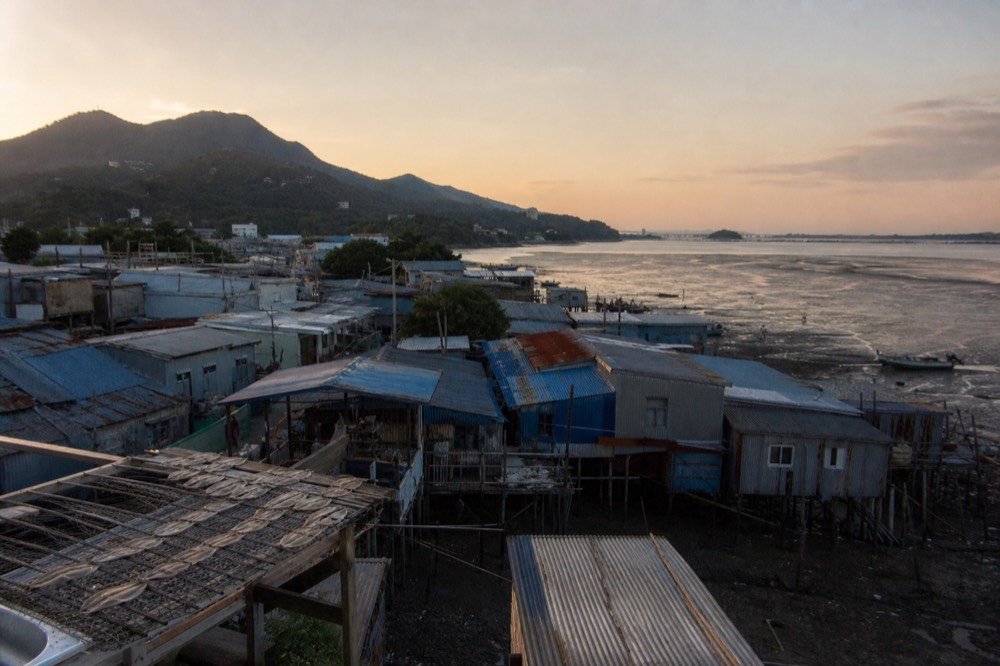
| Tai O | Hong Kong's oldest fishing village, known for stilt houses | West coast, about 20 minutes by bus from Ngong Ping |
One detail that surprises people: the cable car itself is owned by a subsidiary of the MTR Corporation, the same company that runs the metro line carrying you to the terminal. Ngong Ping 360 Limited, the operator, is an MTR subsidiary, which means one of Hong Kong's best-known tourist experiences is run by the territory's rail operator.
Do you need a visa or passport to visit Lantau?
No separate document is needed to visit Lantau once you are legally in Hong Kong, because Lantau is inside Hong Kong's border and there is no internal boundary of any kind. What does matter is your entry status for Hong Kong itself, which is administered separately from mainland China's immigration system, so a mainland visa alone does not get you into Hong Kong.
This is the point where Lantau's status becomes practical. Hong Kong operates its own immigration regime, with its own entry requirements, its own arrival stamps and its own rules on length of stay. A traveller who holds a visa for mainland China generally still needs to satisfy Hong Kong's separate entry requirements to arrive here, and vice versa: entering Hong Kong does not automatically permit onward travel to the mainland. Crossing between the two is a genuine border crossing, with immigration and customs inspection, whether you do it at an airport, a land checkpoint or a ferry terminal.
Inside Hong Kong, though, nothing separates Lantau from anywhere else. The full range of transport options runs as domestic journeys:
| Journey | Cost (adult) | Notes |
|---|---|---|
| MTR Hong Kong Station to Tung Chung | HK$24.30 Octopus / HK$28.00 single (checked September 2026) | About 30 minutes, no changes |
| MTR Kowloon or Tsim Sha Tsui to Tung Chung | HK$18.70 Octopus / HK$21.00 single (checked September 2026) | Same line, same terminal |
| New Lantao Bus 23, Tung Chung to Ngong Ping | HK$20.40 weekday / HK$37.00 Sunday and public holiday (checked September 2026) | The road alternative to the cable car |
| New Lantao Bus 21, Ngong Ping to Tai O | HK$7.90 weekday / HK$19.20 Sunday and public holiday (checked September 2026) | About 20 minutes |
| Taxi, Central to Tung Chung | About HK$290 (checked September 2026) | Around 30 minutes, tolls included |
Notice the pattern in that table: fares on the Lantau buses nearly double on Sundays and public holidays, exactly the days most visitors travel. Route 23 costs HK$20.40 on a weekday and HK$37.00 on a Sunday or public holiday (checked September 2026), an 81% difference. That is ordinary domestic transport pricing, the kind of thing that only exists within a single, settled jurisdiction.
If you are flying in specifically for Lantau, our guide to getting from the airport to the Big Buddha covers the connection in detail, since the airport is on Lantau itself.
What currency and language are used on Lantau?
Hong Kong's currency is the Hong Kong dollar, and that is what you spend on Lantau, not the Chinese yuan. Chinese and English are both official languages of Hong Kong, so signage, tickets and transport on Lantau appear in both, and English works fine at the airport, the cable car terminals and the main attractions.
The currency question is where the "part of China" answer meets everyday reality. Hong Kong issues its own banknotes and coins through three note-issuing banks under the Hong Kong Monetary Authority's framework, and the Hong Kong dollar is pegged to the US dollar in a 7.75 to 7.85 band. At the reference rate used on this site, 1 US dollar equals 7.8403 Hong Kong dollars (checked September 2026). Prices on Lantau, from the cable car ticket to the Tai O boat ride, are quoted in Hong Kong dollars, and mainland yuan is not the circulating currency.
A quick sense of what things cost on the island, in the currency you will actually use:
| Item | Price in HKD | Approximate USD |
|---|---|---|
| Ngong Ping 360, Standard round trip, adult | HK$295 (checked September 2026) | About $38 |
| Ngong Ping 360, Crystal round trip, adult | HK$365 (checked September 2026) | About $47 |
| Big Buddha steps | Free | Free |
| Left luggage at Tung Chung terminal | HK$100 per piece (checked September 2026) | About $13 |
| Po Lin Monastery vegetarian kitchen | Price not published by the monastery | Check on the day |
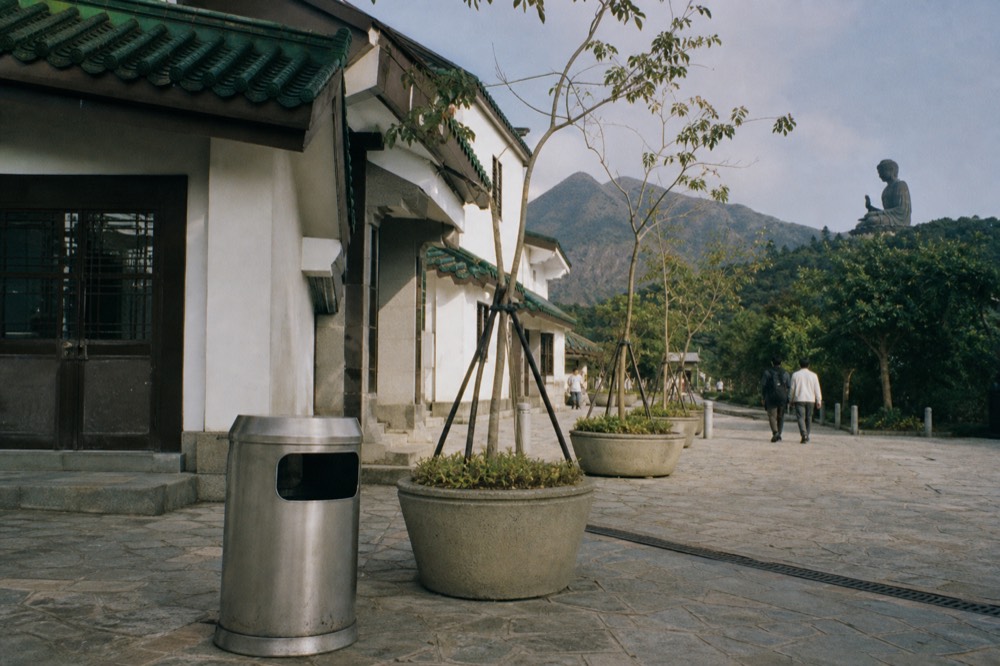
On language: because Chinese and English share official status, the MTR announcements on your way to Tung Chung, the cable car's safety notices and the signs on the trail to the Big Buddha are bilingual. Payment is similarly modern and mixed. The cable car operator accepts cash, all major credit cards, Alipay and WeChat Pay at all its facilities, which reflects the territory's position between two worlds of payment habit.
Is Lantau Island part of Hong Kong or a separate place?
Lantau is fully part of Hong Kong. It is not a separate territory, not a dependency, and not administered any differently from Hong Kong Island or Kowloon. All of Hong Kong's territory, including Lantau, Hong Kong Island, the Kowloon peninsula and the outlying islands, forms the single Special Administrative Region that sits within China.
It helps to see the pieces laid out. Hong Kong's territory is usually grouped into three main areas plus the outlying islands: Hong Kong Island, south of the harbour; Kowloon, on the mainland side; and the New Territories, which include Lantau and the other outlying islands. Lantau belongs to that last group. It is governed by the same institutions, served by the same police and transport systems, and subject to the same laws as everywhere else in Hong Kong.
The evidence is everywhere in how the island is run. The MTR Corporation, Hong Kong's rail operator, owns the cable car company. The New Lantao Bus routes that serve the island's villages are franchised under Hong Kong's transport framework, with fares published through Hong Kong government open data. The Hong Kong Observatory's weather stations and warnings cover Lantau like anywhere else, which matters because the cable car suspends in severe weather. Even the Big Buddha's land has a documented place in the system: the government granted the site on Mount Muk Yue to Po Lin Monastery in 1974, a grant recorded in the monastery's own published history.
The construction of the Big Buddha also tells the story of Lantau's connectedness. The statue, inaugurated on 29 December 1993 after twelve years of work, was cast in 202 separate bronze pieces at a plant in Nanjing on the mainland, and its face, a single 5-tonne casting measuring 4.3 by 5.8 metres, was carried up Lantau's narrow roads on a lorry sandwiched between two cranes. The whole statue was wind-tunnel tested at the Beijing Institute of Aerodynamics. Lantau's most famous landmark is, quite literally, a joint project across the whole of China, and it has stood on the island for over three decades.
For planning purposes, nothing on the island behaves differently from the rest of Hong Kong. The cable car runs weekdays 10:00 to 18:00 and weekends and public holidays 09:00 to 18:30 (checked September 2026), and it closes periodically for scheduled maintenance, including 8 to 18 September 2026 (checked September 2026), when the cable car stops but Ngong Ping Village stays open. Those are ordinary operator schedules, published in Hong Kong, priced in Hong Kong dollars.
The maintenance calendar is a good illustration of how normal and how local all of this is. Recent verified closures, each announced by the operator through its own Hong Kong press office:
| Closure period | What stayed open |
|---|---|
| 4-24 March 2025 (resumed early, 23 March) | Ngong Ping Village and indoor attractions |
| 2-16 September 2025 | Ngong Ping Village and indoor attractions |
| 3-5 March 2026 | Ngong Ping Village and indoor attractions |
| 8-18 September 2026, the long annual overhaul | Ngong Ping Village, Cable Car Discovery Centre |
| Shorter closures in May, June and November across 2024-2026 | Village and indoor attractions |
The pattern is consistent: the cable car closes several times a year, not once, and every closure is announced in advance on the operator's own site. That is the behaviour of an ordinary, regulated transport operator inside a settled jurisdiction, and the announcements are published bilingually like everything else in the territory.
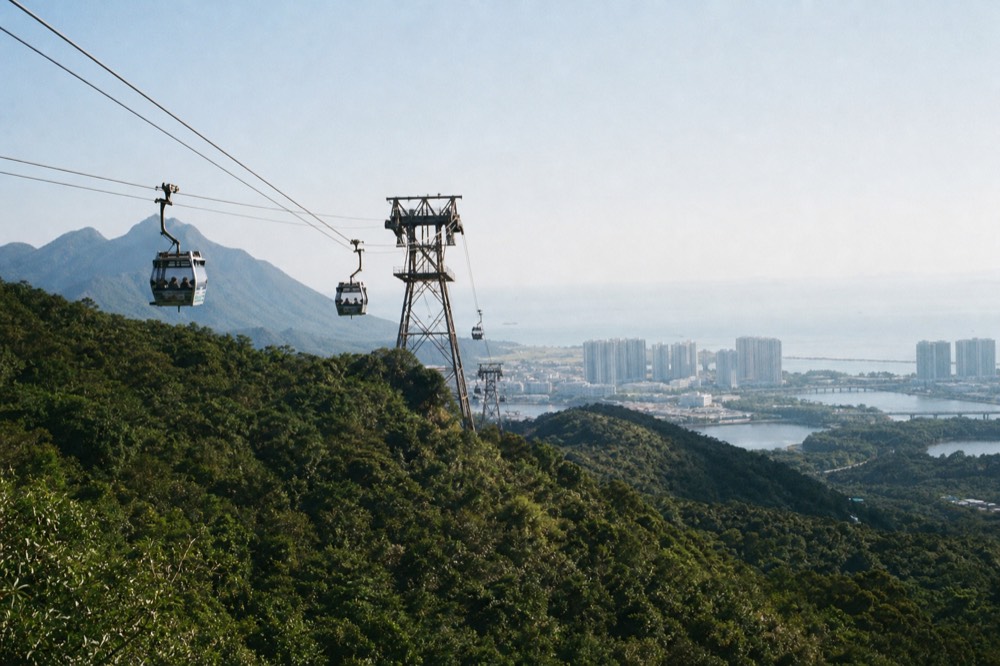
The simplest way to see the island's signature sights in one day is still the cable car itself. The standard ticket covers the 25-minute ride each way over the 5.7 km line, and the ride passes the airport, the delta bridge and the country park before arriving at the plateau.
Why do people ask this question at all?
The question arises because Hong Kong feels like a separate country when you travel through it: it has its own currency, its own passport stamps, its own driving side and its own customs line, even though it is part of China. That gap between legal status and everyday experience is what makes people unsure whether an island inside Hong Kong counts as China.
Consider what a visitor actually experiences. You land at an airport that is one of the world's busiest international hubs, on an island that belongs to a Chinese Special Administrative Region. You clear a Hong Kong immigration desk that is separate from the mainland's. You withdraw Hong Kong dollars from the ATM, ride a metro run by a listed Hong Kong company, and take a cable car across a country park. At no point does anything announce itself as "China" in the way a visit to Beijing or Guangzhou would. The currency is different, the vehicle number plates are different, and the internet you browse is different.
At the same time, the connections are unmistakable. The bridge from Lantau runs directly to Zhuhai and Macau. The Buddha statue was cast in Nanjing. The peak-season crowds on the cable car include large numbers of visitors from the mainland, and the operator recorded record-breaking daily mainland visitor numbers during a National Day holiday, with mainland visitors making up 29% of its 1.56 million guests in 2024 (checked September 2026). Guest origin that year split 37% short-haul markets, 29% mainland China, 20% Hong Kong and 14% long-haul.
Both impressions are accurate. Lantau is part of China, and it is reached through the distinct arrangements of a Special Administrative Region. There is no contradiction to resolve, only a status to describe accurately, and that is what this article has tried to do.
If the answer has settled the question and you are now planning the visit, two routes work well. The ticket-only option suits independent travellers who want to set their own pace around the Buddha, the monastery and the village. A guided tour suits anyone who would rather not work out the buses to Tai O or time the queues themselves; the five-hour guided option with the Tai O boat ride is the popular middle ground.
For more background before you commit to a day on the island, our piece on whether Lantau is worth visiting covers the honest case both ways, and the Hong Kong Ngong Ping Cable Car site's ticket guide explains the cabin options in detail.
Lantau Island is part of China through Hong Kong, which is a Special Administrative Region of the People's Republic of China. There is no separate status for Lantau, no internal border within Hong Kong, and no separate visa or currency for the island. Below are the specific questions readers ask most often, answered with the same verified facts used throughout this article.
Common questions about Lantau Island's status
Is Lantau Island Part of China?
Yes. Lantau is inside Hong Kong, which is a Special Administrative Region of China, and it has been under Chinese sovereignty since the handover from Britain. There is no separate status for Lantau; it is administered exactly like the rest of Hong Kong's territory.
Do I need a separate visa for Lantau?
No. Once you have legally entered Hong Kong you can travel anywhere in the territory, Lantau included, with no internal borders or document checks. What matters is your entry status for Hong Kong itself, which is administered separately from mainland China's immigration system.
Can I use Chinese yuan on Lantau?
Generally no. The currency throughout Hong Kong, Lantau included, is the Hong Kong dollar, which is pegged to the US dollar in a 7.75 to 7.85 band. The cable car operator accepts cash, major credit cards, Alipay and WeChat Pay at its facilities.
Is there a border between Lantau and Hong Kong Island?
No. Lantau, Hong Kong Island, Kowloon and the outlying islands all form one jurisdiction. The MTR ride from Central to Tung Chung is a domestic journey with no immigration or customs checks of any kind.
Is the Big Buddha in China or Hong Kong?
Both. The Big Buddha stands at Ngong Ping on Lantau, part of Hong Kong, a Special Administrative Region of China.