What Is the Dress Code for Visiting the Hong Kong Big Buddha?
No official dress code is posted at the Big Buddha or Po Lin Monastery, but respect for a working Buddhist temple and the 268-step climb in Hong Kong's heat shape what you should wear. This guide covers practical clothing advice, weather by month, and what to bring for a comfortable visit.
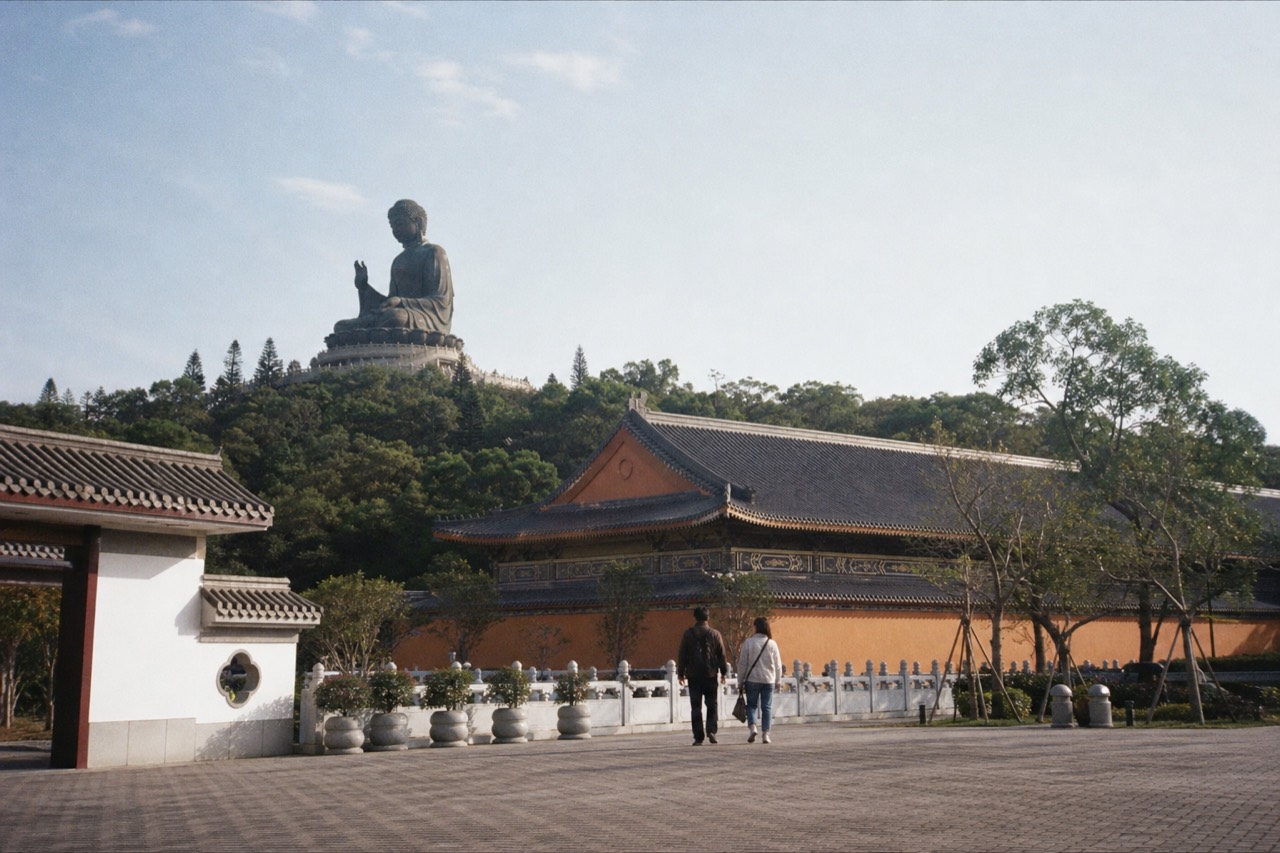
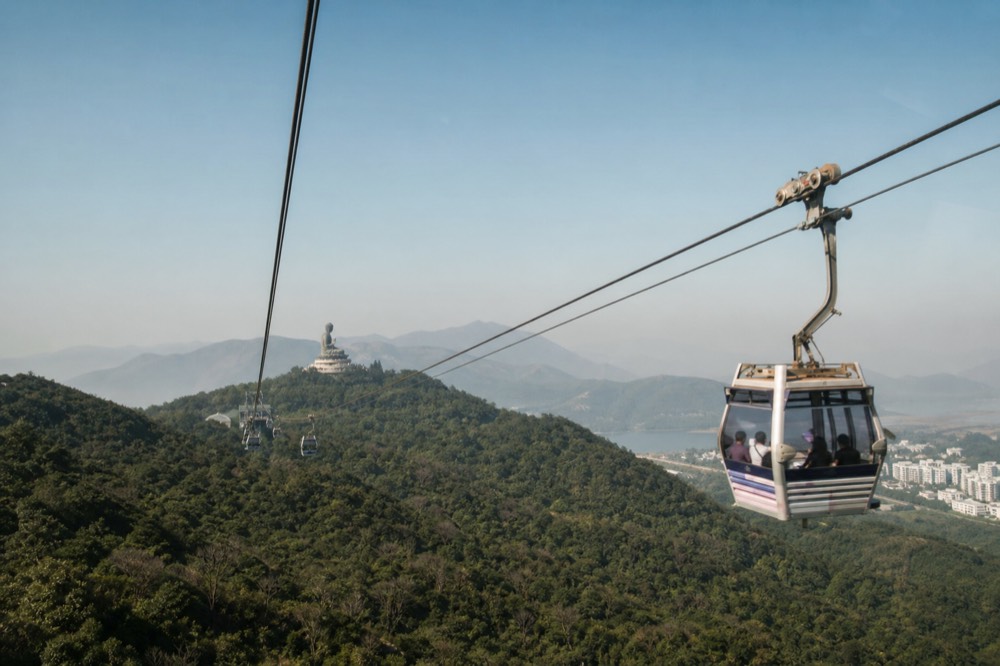
The Hong Kong Ngong Ping Cable Car glides 5.7 km from Tung Chung to the Ngong Ping plateau, depositing you a short walk from the Tian Tan Buddha and the active Po Lin Monastery. With 1.56 million guests in 2024 and an average of 4,843 visitors a day, the site is one of Hong Kong’s busiest attractions. The question most first-time visitors ask is simple: what should I wear? There is no posted dress code at the Big Buddha or the monastery, but a few practical and cultural considerations go a long way (see Ride Time to Big Buddha).
What Is the Dress Code for Visiting the Hong Kong Big Buddha?
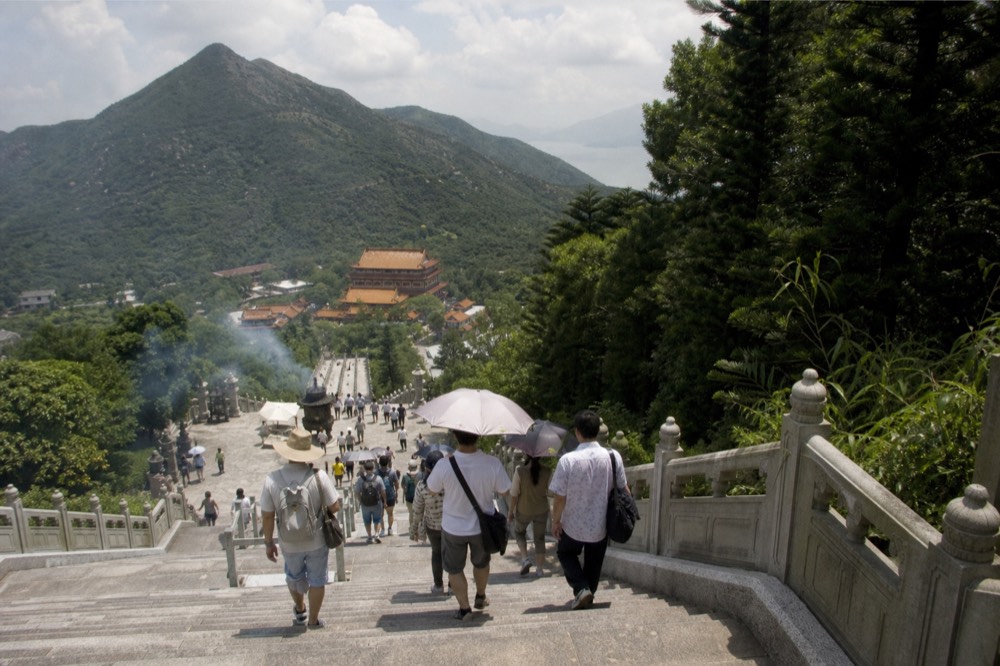
No official dress code is posted at the Tian Tan Buddha or Po Lin Monastery. As a working Buddhist temple, visitors should dress modestly: shoulders and knees covered, and nothing overly revealing. The climb involves 268 steps in Hong Kong’s often hot and humid weather, so lightweight, breathable fabrics and comfortable walking shoes are essential. A light scarf or shawl is handy for covering up inside temple halls, and sun protection is a must.
Po Lin Monastery does not publish a dress code on its website or at the entrance. The site is a functioning place of worship, not a museum, and monks and worshippers are present throughout the day. In practice, most visitors wear casual summer clothing: shorts, t-shirts, and sandals are common, especially in the warmer months. However, a review of recent visitor photos and accounts shows that those who cover their shoulders and knees tend to feel more comfortable inside the monastery’s main halls, where a quieter, more reverent atmosphere prevails. The souvenir shop and vegetarian kitchen are more relaxed, but the main shrine hall and the Grand Hall of Ten Thousand Buddhas are active prayer spaces.
The 268 steps to the Buddha’s base are steep and exposed. In the summer, temperatures at Ngong Ping can feel several degrees cooler than downtown Hong Kong, but the humidity remains high. A hat, sunglasses, and sunscreen are advisable year-round, and a reusable water bottle is a smart addition because there are limited refill points on the plateau. The cable car terminal sells drinks, but once you are at the top, options are mostly inside the monastery’s snack shop or the village.
What to wear for climbing the 268 steps and visiting the monastery
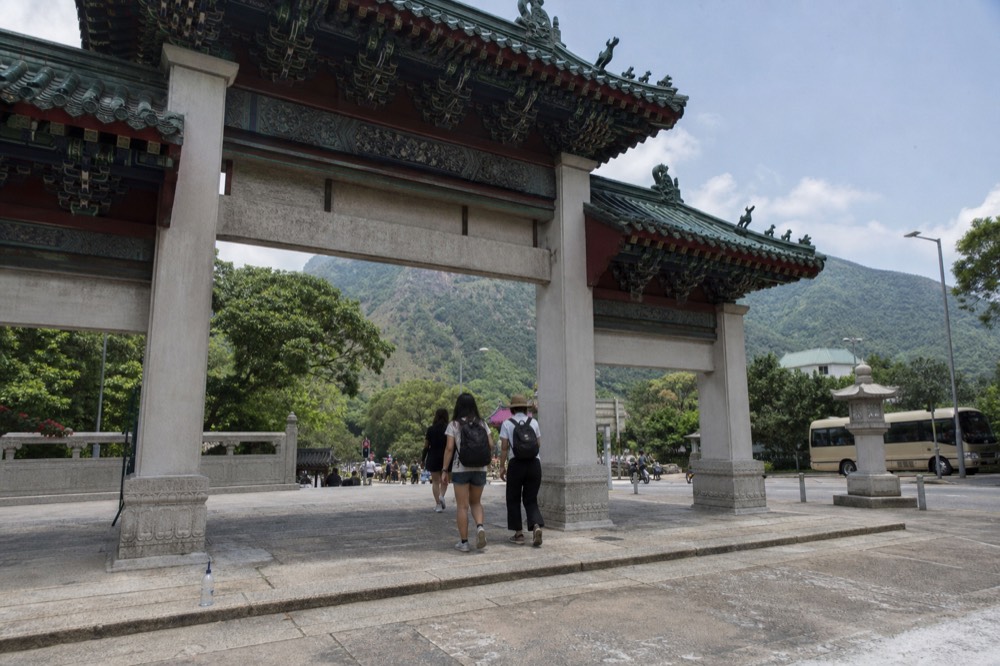
Opt for lightweight, moisture-wicking clothing and sturdy closed-toe shoes with good grip, as the 268 steps are uneven and can be slippery after rain. Bring a thin long-sleeved shirt or scarf for sun protection and to cover your shoulders inside the monastery; leave flip-flops and high heels behind.
The climb to the Buddha is free and takes most people 5 to 10 minutes, but in the midday sun it can feel longer. The steps are wide and have railings, but there is no shade until you reach the top. A hat and sunglasses are essential, and many visitors carry an umbrella for portable shade. The monastery’s vegetarian kitchen (open 11:30 am to 4:30 pm daily) is a welcome break, though the meal price is not published and must be confirmed on the day.
Once inside the monastery, the atmosphere shifts. The main shrine hall and the Grand Hall of Ten Thousand Buddhas are active spaces where monks chant and worshippers light incense. While there is no enforcement of a dress code, visitors who enter in swimwear, very short shorts, or bare shoulders may receive disapproving glances. A light scarf or a sarong solves this instantly. The monastery’s souvenir shop, on the first floor of the Buddha’s base platform, is a good place to pick one up if you forget.
What to bring and what to leave behind
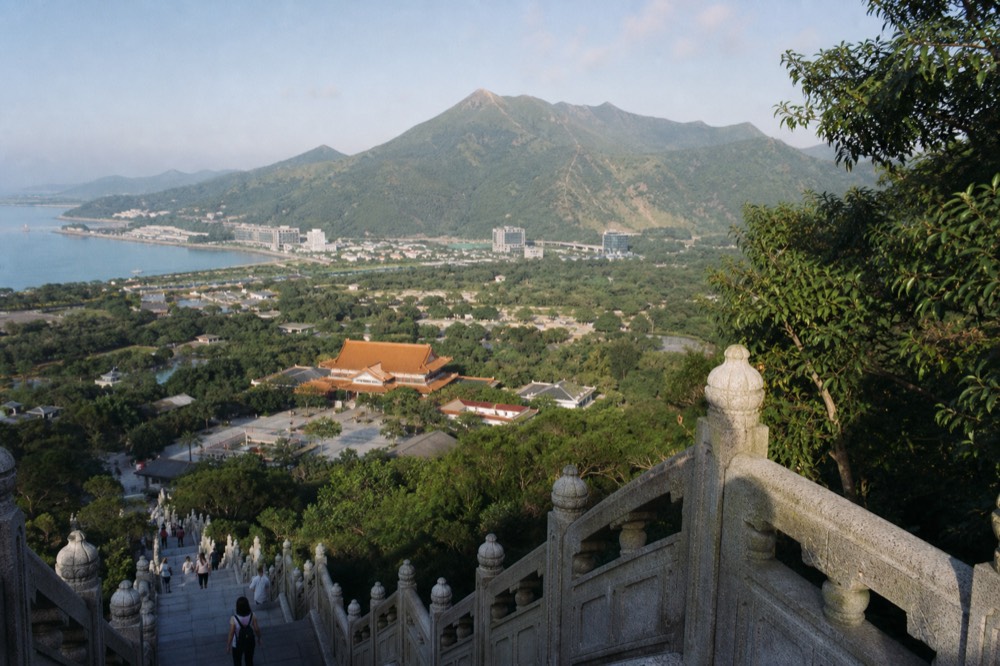
Pack light: a day bag with water, sunscreen, a hat, and a scarf or sarong for the monastery. Leave large luggage at the cable car terminal’s left-luggage service (HK$100 per piece, no booking needed). Avoid bringing drones, selfie sticks that obstruct others, and any bag larger than 48 x 34 x 23 cm, which is barred from cable car cabins under the Tung Chung Cable Car Bylaw (checked September 2026).
The cable car terminal at Tung Chung has a left-luggage counter on the first floor, and there is another at Ngong Ping Village. Both close when the cable car does, so collect your belongings before 6:00 pm on weekdays or 6:30 pm on weekends and public holidays. The service is especially useful if you are heading to the airport afterwards: Hong Kong International Airport is about a 10-minute taxi ride from Tung Chung, and the MTR takes roughly 30 minutes from Tung Chung to Hong Kong Station.
For the climb, a small shoulder bag or a light backpack is ideal. There are no lockers at the Buddha or the monastery, so you will carry everything with you. Water is sold at the village and at the monastery’s snack shop, but prices are higher than in the city. A reusable bottle filled before you board the cable car is the most economical option.
| Item | Recommendation | Note |
|---|---|---|
| Footwear | Closed-toe walking shoes or sturdy sandals with grip | Flip-flops are not practical for 268 steps |
| Clothing | Lightweight, breathable fabrics; a long-sleeved layer for sun/cover-up | Avoid very short shorts or bare shoulders inside the monastery |
| Sun protection | Hat, sunglasses, SPF 30+ sunscreen | There is no shade on the steps |
| Water | At least 1 litre per person | Refill points are limited; buy at the terminal or village |
| Bag | Small daypack under 48 x 34 x 23 cm and 4 kg | Larger luggage must be stored at the terminal (HK$100) (checked September 2026) |
| Scarf/sarong | Light scarf for entering temple halls | Not required but widely appreciated |
Best time to visit and weather considerations for your clothing
October and November offer the most comfortable conditions: average high temperatures of 28°C and 25°C, low rainfall, and the highest sunshine hours of the year. Avoid February to April if clear views matter, because 3.4 of Hong Kong’s3.7 annual fog days fall in those months, often shrouding the Buddha in mist. Summer (June to August) is hot, wet, and carries the highest typhoon risk, with August averaging 4.17 days of tropical cyclone signals.
Hong Kong’s climate shapes what you wear more than any monastery rule. The table below uses Hong Kong Observatory1991–2020 normals, recorded at the headquarters in Kowloon, so conditions at Ngong Ping (which sits higher) are typically a few degrees cooler and cloudier. Use it as a planning guide, not a forecast.
| Month | Mean max °C | Rainfall mm | Fog days | Cyclone signal days | Sunshine hrs |
|---|---|---|---|---|---|
| Jan | 18.7 | 33.2 | 0.20 | – | 145.8 |
| Feb | 19.4 | 38.9 | 1.10 | – | 101.7 |
| Mar | 21.9 | 75.3 | 1.47 | – | 100.0 |
| Apr | 25.6 | 153.0 | 0.83 | 0.20 | 113.2 |
| May | 28.8 | 290.6 | 0.07 | 0.27 | 138.8 |
| Jun | 30.7 | 491.5 | – | 2.00 | 144.3 |
| Jul | 31.6 | 385.8 | – | 3.13 | 197.3 |
| Aug | 31.3 | 453.2 | – | 4.17 | 182.1 |
| Sep | 30.5 | 321.4 | – | 3.83 | 174.4 |
| Oct | 28.1 | 120.3 | – | 1.70 | 197.8 |
| Nov | 24.5 | 39.3 | – | 0.57 | 172.3 |
| Dec | 20.4 | 28.8 | 0.03 | – | 161.6 |
In practice, the busiest periods (Lunar New Year, Easter, Labour Day, and National Day Golden Week) coincide with school holidays and mainland China travel peaks. The cable car’s Crystal+ cabins ran at over 90% utilisation during these windows in 2024, and standard cabin queues of 1 to 3 hours are frequently reported, even on weekdays. Dressing for a long wait in the sun is as important as dressing for the Buddha. A hat, water, and a portable fan make a real difference.
If you are visiting during the annual maintenance closure (8 to 18 September 2026, when the cable car is suspended but Ngong Ping Village remains open), you will need to take New Lantao Bus 23 from Tung Chung instead. The bus fare is HK$20.40 on weekdays and HK37.00 on Sundays and public holidays (checked September 2026). The winding road can cause motion sickness, so light, comfortable clothing and perhaps travel-sickness medication are wise if you are prone to it.
| Clothing item | Why it matters |
|---|---|
| Breathable t-shirt or blouse | Heat and humidity are high for most of the year |
| Long, loose trousers or a mid-length skirt | More comfortable in temple halls and on the steps |
| Closed-toe walking shoes | The steps are uneven and can be slippery |
| Light scarf or shawl | Instant cover-up for monastery visits |
| Hat and sunglasses | Essential for the exposed 268-step climb |
| Light rain jacket (May–September) | Sudden downpours are common in summer |
Because the Ngong Ping plateau sits roughly 440 metres above sea level, actual temperatures are regularly 3 to 5 °C lower than the Kowloon readings in the table, and the difference can feel sharper when the wind picks up during the northeast monsoon from November to March. A light fleece or sweater belongs in a daypack even on mornings that feel mild at sea level, and a windproof outer layer helps on the open platforms around the statue, where there is almost no shelter. Sun protection remains important across all seasons: the thinner, cleaner air at altitude transmits high UV levels even on hazy or cool days, and the pale granite of the Buddha and the staircase reflects glare upward, so sunscreen and wraparound sunglasses reduce squinting and skin damage.
Summer humidity at Ngong Ping regularly pushes dew points above 25 °C, making the felt temperature several degrees warmer than the air temperature shown in the table. Choose moisture-wicking fabrics over pure cotton whenever possible; cotton saturates with perspiration or rain and becomes heavy and slow to dry. The 268 steps can turn slick in a sudden downpour, so a shoe with a textured sole offers far more confidence than a smooth-soled sandal. A compact, collapsible umbrella can do double duty, serving as a sunshade while queuing for the cable car and then as a rain shield when afternoon squalls arrive with little warning. If you plan to hike the nearby Wisdom Path or continue toward Lantau Peak, carry a waterproof bag cover or a dry sack for electronics, because the mountain can generate its own localised shower clouds even when Tung Chung remains dry.
Fog behaviour on the plateau is most predictable between February and early April, when the southerly monsoon flow pushes warm, moist air against the cooler hillsides overnight; the mist often lingers until late morning then burns off by 11am or noon. If a clear view of the Buddha’s face is a priority, aim to start your visit after 1 o’clock during these months, once the inversion layer has had time to lift. The same pattern can persist on individual days in late autumn, though low cloud is raer outside the spring window. A light, water-repellent windshirt is useful when the cloud base sits right on the plateau and the humidity clings to skin, because it keeps the chill of the damp at bay without adding bulk that would be uncomfortable on the warm descent back to Tung Chung. Mosquitoes and midges are most active between April and October after rainfall; an unscented repellant worn on ankles, wrists and behind the ears prevents distraction on the temple grounds without introducting a strong fragrance that feels out of place.
Seasonal clothing guide: what to wear each month
Dress for the season, not just the temple. In winter (December to February), temperatures can dip to 15°C at Ngong Ping, so a light jacket or sweater is useful. Spring (March to May) is humid and foggy, so quick-dry fabrics and a waterproof layer help. Summer (June to September) demands the lightest clothing you own, plus strong sun protection. Autumn (October to November) is the ideal window: warm days, cool evenings, and the lowest chance of rain.
The table below summarises clothing recommendations by season, based on Hong Kong Observatory normals and typical conditions at the Ngong Ping plateau.
| Season | Typical weather | Recommended clothing | Extra items |
|---|---|---|---|
| Winter (Dec–Feb) | 15–19°C, low rainfall, occasional fog | Long trousers, long-sleeved top, light jacket or fleece | Scarf for wind, sunscreen on clear days |
| Spring (Mar–May) | 18–29°C, increasing rain and fog | Quick-dry trousers or hiking pants, t-shirt, waterproof shell | Umbrella, insect repellent, extra socks |
| Summer (Jun–Sep) | 27–32°C, heavy rain, typhoon risk | Shorts or lightweight trousers, breathable t-shirt, sandals with grip | Rain jacket, portable fan, electrolyte tablets |
| Autumn (Oct–Nov) | 20–28°C, low rain, high sunshine | Light trousers or shorts, t-shirt, a light long-sleeve for evening | Sunscreen, hat, reusable water bottle |
The monastery’s vegetarian kitchen (open 11:30 am to 4:30 pm) is a welcome break in any season, though the meal price is not published and must be confirmed on the day. The Po Lin Monastery guide has more on the history and layout. For details on reaching the site, see how to get to the Big Buddha, which covers the cable car, bus, and taxi options.
Footwear: the most important clothing decision
Closed-toe walking shoes or sturdy hiking sandals are the best choice for the 268 steps. The steps are wide but uneven in places, and after rain they become slippery. Flip-flops and high heels are impractical and can be dangerous. If you plan to hike Lantau Peak afterwards, proper hiking boots are essential.
Many visitors underestimate the climb. It is not a gentle ramp: it is a steep staircase with no shade. In the summer heat, even fit visitors can find it taxing. A pair of well-cushioned trainers or walking sandals with a secure strap will serve you far better than fashion footwear. The monastery grounds are paved, but the path to the Wisdom Path (once it reopens) is a dirt trail, so sturdy shoes are useful there too.
If you forget suitable shoes, the Ngong Ping Village has a few shops, but selection is limited and prices are higher than in the city. The cable car terminal at Tung Chung is next to Citygate Outlets, which has several sports and outdoor stores. That is a good last-minute stop if you realise your footwear is not up to the task.
Monastery etiquette beyond clothing
Dress is only one part of respectful behaviour. Speak quietly inside the temple halls, avoid pointing your feet at Buddha statues, and ask before taking photos of monks or worshippers. Incense is provided, but lighting it inside the halls is not always permitted. Follow the lead of local visitors.
The Po Lin Monastery is a living religious site, not a tourist attraction with a gift shop at the exit. Monks live and work there, and ceremonies take place throughout the day. Visitors are welcome, but a little awareness goes a long way. When entering a hall, step over the threshold rather than on it. If you are unsure whether photography is allowed, look for signs or ask a volunteer. The main shrine hall usually permits photos without flash, but the Grand Hall of Ten Thousand Buddhas is more restrictive.
The vegetarian meal is a communal affair. It is served on large round tables, and you may be seated with other visitors. The food is simple: soup, a deep-fried dish, a vegetable dish, and rice, with refills of soup and rice. There is no menu and no à la carte ordering. The meal is not included in any cable car ticket, and the price is not published, so bring cash and confirm the cost when you arrive.
Common questions about visiting the Big Buddha
What Is the Dress Code for Visiting the Hong Kong Big Buddha?
There is no posted dress code. As a working Buddhist monastery, modest attire is appreciated: cover shoulders and knees, avoid swimwear or very revealing clothing. Practical clothing for the 268-step climb and Hong Kong’s heat (lightweight fabrics, comfortable shoes, sun protection) makes the visit more comfortable.
How many steps are there to the Big Buddha?
There are 268 steps from the plaza to the base of the statue. Climbing them is free, and most people take 5 to 10 minutes. The steps are wide with railings but have no shade.
Is Po Lin Monastery free to enter?
Yes, the monastery grounds and the Big Buddha steps are free. The vegetarian kitchen (open 11:30 am to 4:30 pm) charges for meals, though the price is not published and should be confirmed on the day. The souvenir shop and exhibition hall inside the Buddha’s base may have separate fees.
What are the opening hours of the Big Buddha and Po Lin Monastery?
The monastery opens from 9:00 am to 6:00 pm daily. The cable car operates from 10:00 am to 6:00 pm on weekdays and 9:00 am to 6:30 pm on weekends and public holidays, so on weekdays the monastery opens before the cable car starts running.
Can I visit the Big Buddha if the cable car is closed?
Yes. New Lantao Bus 23 runs from Tung Chung to Ngong Ping. The fare is HK$20.40 on weekdays and HK$37.00 on Sundays and public holidays (checked September 2026). The journey takes about 50 minutes on a winding road. The cable car closes for maintenance several times a year; the next scheduled closure is 8–18 September 2026.
Is the Wisdom Path open?
No. The Wisdom Path has been closed since 5 June 2025 for refurbishment and is expected to reopen in stages from the last quarter of 2026. A viewing platform on a nearby section of the Lantau Trail remains open.