What Time of Day Is Best to Visit Ngong Ping?
The first hour after opening is the best time to ride the Ngong Ping cable car. The opening times, the queue reports and the fog calendar that explain why, with sources.
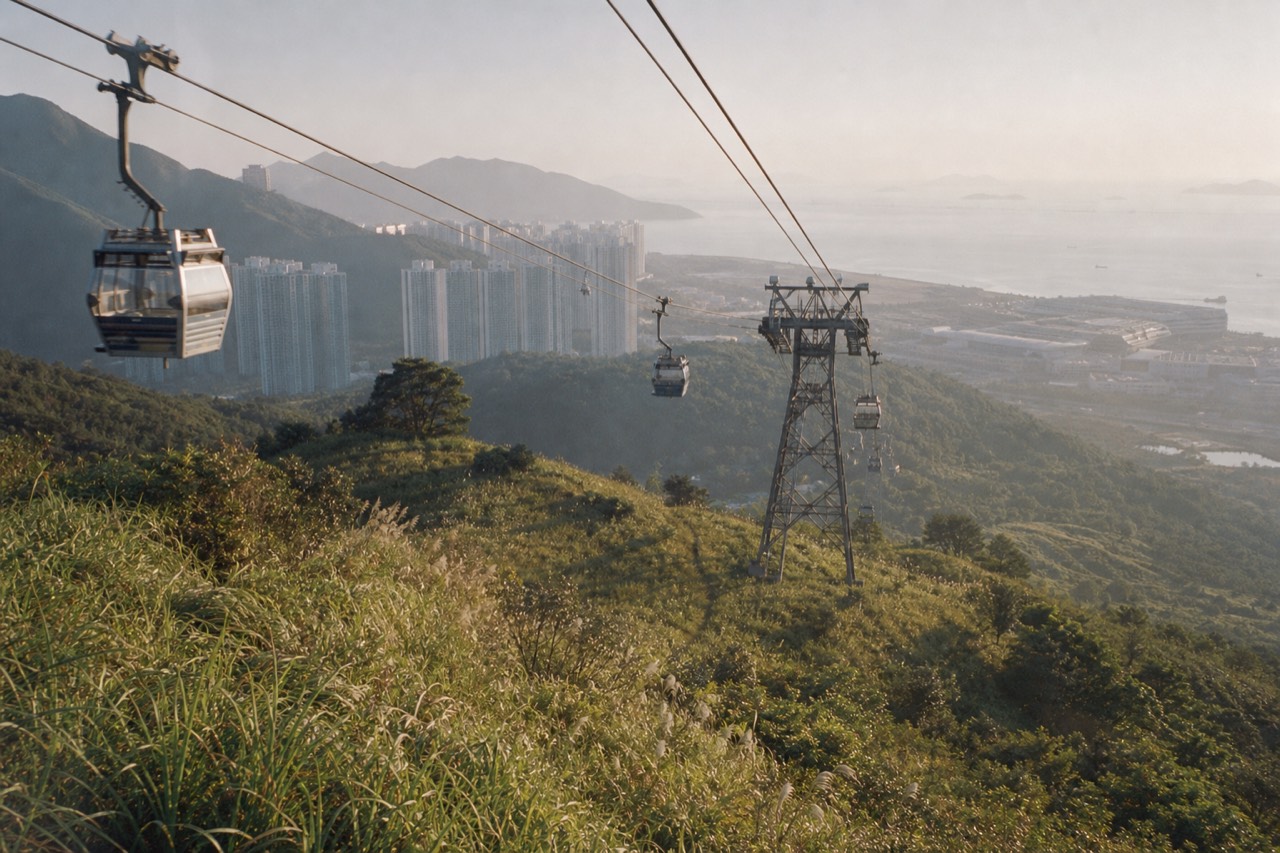
What Time of Day Is Best to Visit Ngong Ping?
The first hour of operation is the best time to visit: ride up between 10:00 and 11:00 on a weekday, or 09:00 to 10:00 on a weekend or public holiday (checked September 2026). Standard Cabin queues build through late morning, with recent visitor reports putting midday waits at one to three hours. Low cloud on the plateau also thickens as the day warms, so early riders get shorter lines and clearer air.
Two clocks decide how a day at Ngong Ping goes, and neither cares about your itinerary. The first is the queue clock. The operator carried 1.56 million guests in 2024, an average of 4,843 a day, and every one of them funnels through a single boarding line per cabin class at Tung Chung. The second is the cloud clock. Ngong Ping sits high on the Lantau plateau, and visibility up there follows its own daily and seasonal rhythm, often clearest early, before the air warms and convection builds over the hills.
The queue evidence is unusually consistent. Visitor reports from late 2025 and early 2026 describe Standard Cabin waits of one to three hours, including on unremarkable weekdays: two and a half hours on a November Monday, an hour and three quarters in March 2026, and roughly ninety minutes for tickets alone on a January weekday. These are individual accounts rather than operator statistics, so treat them as reports, not a published average. They all point the same way, though, and the operator's own behaviour confirms the pattern: weekend opening runs a full hour earlier than weekday opening precisely because weekends are busier.
A pre-bought e-ticket changes one queue, not both. It skips the ticket-purchase counter, because plain cable car e-tickets scan at the turnstile with no counter step. It does not skip the boarding line. Reviewers make this distinction repeatedly, and confusing the two is the most common planning mistake at Tung Chung.
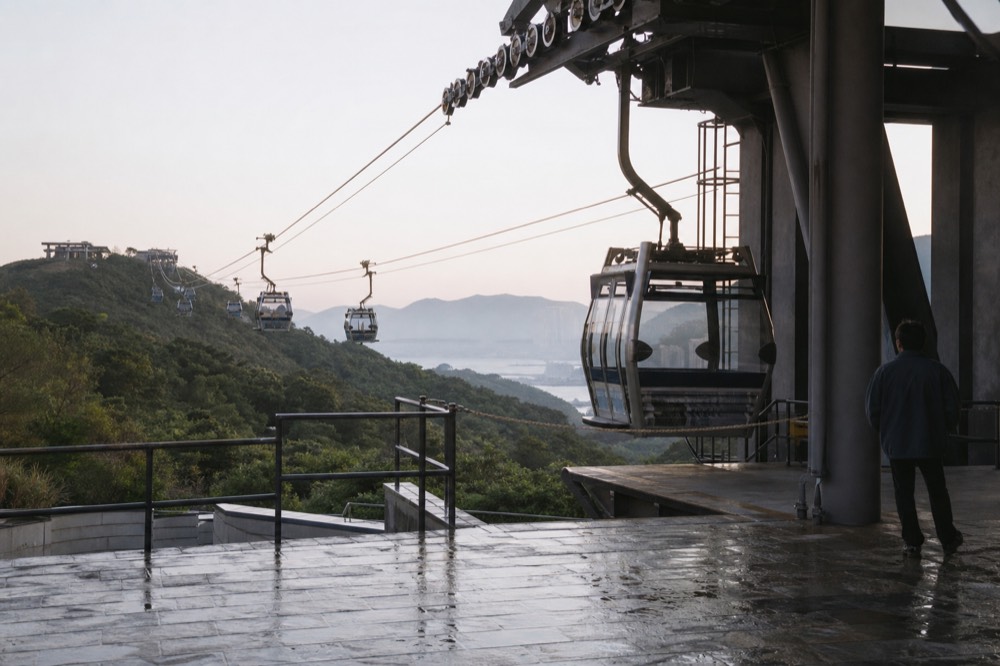
The ride itself takes about 25 minutes each way over 5.7 km, the longest bi-cable ropeway in Asia, so the timing question is really about the hours around the ride: the queue before it and the plateau after it. For the full loop, including the Big Buddha and the monastery, how long the ride takes breaks down every leg of the day.
There are three honest ways to buy your morning. A plain ticket keeps the clock in your hands and costs least. A priority or premium product buys queue relief. A guided tour buys timing discipline, someone else watching the clock for you. The three options below cover all three approaches.
When does the cable car open, and how early should you arrive?
Ngong Ping cable car opens at 10:00 on weekdays and 09:00 on Saturdays, Sundays and public holidays, closing at 18:00 and 18:30 respectively (checked September 2026). Aim to be at the Tung Chung terminal 30 to 45 minutes before opening on weekends and in peak season, and by opening time on a quiet weekday. The terminal is a five-minute walk from MTR Tung Chung Station Exit B.
Those hours come straight from the operator's own tourist guide page, and the weekend extension is the tell. An operator does not open an hour earlier on Saturdays unless Saturday demand justifies it. So the weekend morning strategy writes itself: the earliest weekend slots are contested, and arriving for the 09:00 opening means joining a short line instead of a long one.
Getting there early is cheap and easy. The Tung Chung Line runs from Hong Kong Station to Tung Chung in about 30 minutes, at HK$24.30 with an Octopus card or HK$28.00 for a single-journey ticket (checked September 2026). From Kowloon or Tsim Sha Tsui the fare is HK$18.70 (checked September 2026). Exit B drops you a five-minute, roughly 300 m walk from the terminal, and the first cabins of the day leave with the shortest boarding lines they will see until evening.
The plain ticket is the cheapest way in. It starts from $21.15, rated 4.7 across 61,490 reviews (checked September 2026), and covers the 25-minute ride each way. At the operator's gate the adult round trip runs HK$295 for a Standard Cabin and HK$365 for a Crystal Cabin (checked September 2026), roughly $38 and $47. Standard tiers carry free cancellation before redemption, which matters more than it sounds in a place where weather can close the ride on any given morning.
One refinement is worth the money on busy days. Crystal and Crystal+ cabins have their own, much shorter boarding line, and reviewers consistently report waits of around ten minutes against an hour or more for Standard. The glass floor is the famous part, but the separate queue is the practical part. The full breakdown of what each cabin actually buys is in Crystal Cabin versus Standard Cabin.
Every timing recommendation on Hong Kong Ngong Ping Cable Car comes back to one principle: beat the boarding queue, not just the ticket counter. The table below turns that into an arrival time for your specific day. Opening hours are the operator's published times (checked September 2026).
| The day you are visiting | Cable car opens | Be at the terminal by | Why that window works |
|---|---|---|---|
| Quiet weekday, shoulder season | 10:00 | 09:30 to 09:45 | First-hour boarding lines are the shortest of the day |
| Saturday, Sunday or public holiday | 09:00 | 08:15 to 08:30 | Weekend crowds arrive early; the operator opens earlier for exactly this reason |
| Peak periods: Golden Week, summer, Christmas | 10:00 weekdays, 09:00 weekends | 60 minutes before opening | Crystal+ ran above 90% utilisation at peak in 2024, and Standard lines stretch fastest |
One warning that belongs here rather than anywhere else: do not buy from anyone approaching you near the station. Since 29 May 2026 the operator refuses boarding on touted tickets outright, and the people selling them have worn clothing designed to look like staff uniforms. The official ticket office is on the first floor of the terminal.
Why does fog make some mornings a gamble?
Fog is overwhelmingly a February-to-April problem: 3.40 of Hong Kong's 3.70 annual fog days fall in those three months, and February and March are also the dullest, most humid months of the year. In late winter and spring, the safer play is to delay the ride to late morning and let the low cloud burn off. Outside those months, early morning is almost always the clear choice.
This is not folklore; it is the Hong Kong Observatory's own 1991-2020 climatological normals. February averages 1.10 fog days, March 1.47 and April 0.83, against essentially zero for the rest of the year. The same two months are the year's dullest, at 101.7 and 100.0 sunshine hours, and among its most humid, at 79 and 82 percent relative humidity. That is the low-cloud season on the plateau, and it is exactly the season when a first-thing arrival can buy you a white screen instead of a view.
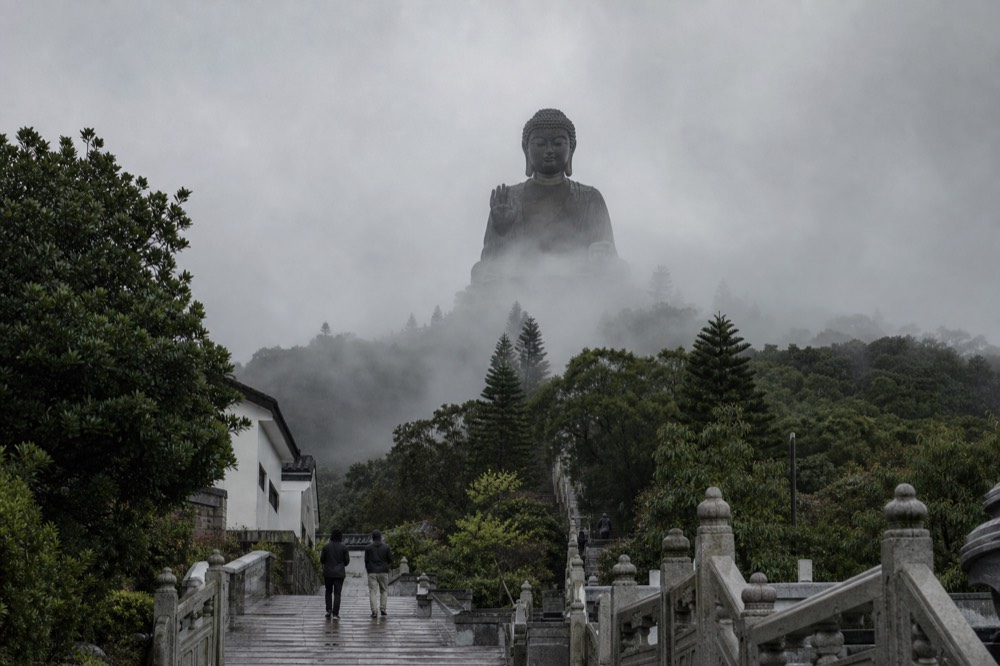
The numbers below are Observatory headquarters normals, which is the honest caveat: they are urban, near sea level. Ngong Ping sits high on Lantau and runs cooler, wetter and cloudier than the city below, so treat them as the floor of the risk, not the ceiling.
| Month | Fog days (visibility under 1,000 m) | Sunshine hours | Mean relative humidity | Rainfall |
|---|---|---|---|---|
| February | 1.10 | 101.7 | 79% | 38.9 mm |
| March | 1.47 | 100.0 | 82% | 75.3 mm |
| April | 0.83 | 113.2 | 83% | 153.0 mm |
| October | 0.00 | 197.8 | 73% | 120.3 mm |
| November | 0.00 | 172.3 | 72% | 39.3 mm |
Read the table as two different seasons. February to April is the fog season, when morning rides carry a real risk of riding through cloud. October and November are the statistical sweet spot: the year's lowest humidity, almost no fog, falling cyclone risk and the two sunniest autumn months on the calendar. If your dates are flexible at all, that is the window to aim for, and within it the first-hour rule holds without qualification.
In fog season, the timing play changes. Let the morning warm up, watch the plateau on the webcam if your ticket allows a late start, and ride late morning or after lunch, when low cloud has often burned off. Official tickets are exchangeable or refundable if the service suspends for weather, so a ticket with free cancellation is cheap insurance against a grey morning.
Is late afternoon ever the right time?
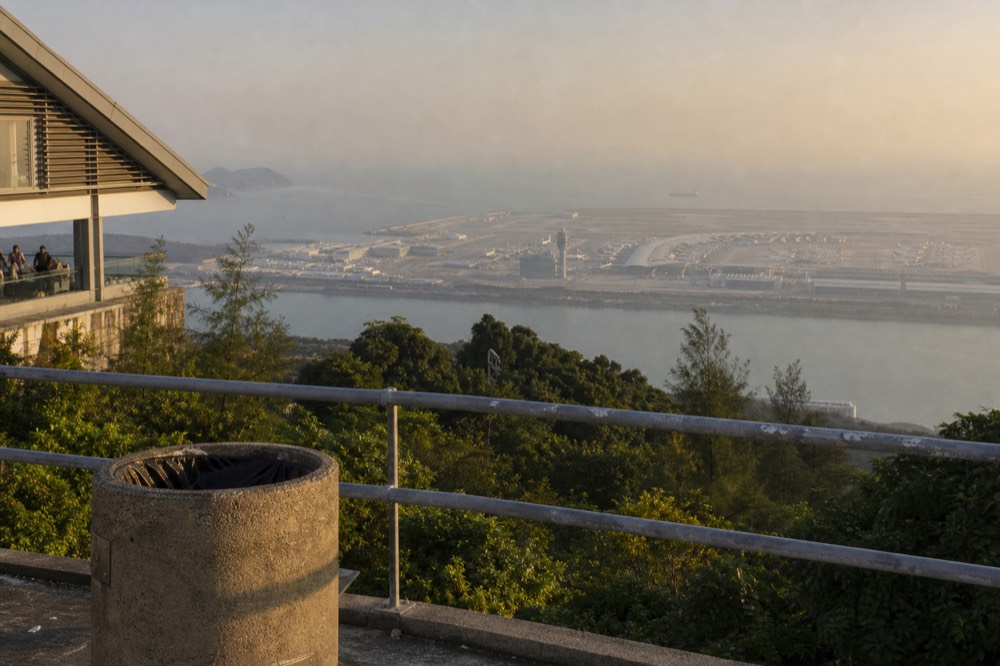
Late afternoon suits one specific visitor: someone using the cable car as a descent-only ride after hiking, or someone chasing golden light over the airport and the bridge on the way down. The trade is real: no last-boarding time is published for normal days, the return queue can stretch for hours in peak season, and the Big Buddha's 268 steps plus Po Lin Monastery need more time than a 16:00 arrival leaves.
The descent-only play is genuinely good, and hikers have worked it out. Climb to the plateau on foot, spend the day up there, then ride down when the light turns. The Standard single trip is HK$205 (checked September 2026), and the angle over Tung Chung Bay and the airport approach in late afternoon is a different ride from the morning one. The route up, for anyone considering it, is covered in hiking to the Big Buddha.
Two practical limits shape the afternoon. First, the operator publishes no last-boarding time for normal days, so a late plan has no published floor to build on; leave a real buffer before the 18:00 weekday or 18:30 weekend close (checked September 2026). Second, you cannot stay in your cabin for the return leg, everyone alights and rejoins the boarding queue, so a mid-afternoon return in peak season means queueing twice in one day.
Time budgeting at the top matters more than most first visits assume. Po Lin Monastery keeps hours of 09:00 to 18:00, and its vegetarian kitchen serves from 11:30 to 16:30 (checked September 2026), so a late arrival can cost you the meal, not just the views. The operator itself recommends allowing three to four hours for the village and food. A 16:00 arrival gives you the statue and little else.
| Arrival window | What you get | What you risk |
|---|---|---|
| First hour after opening | Shortest boarding lines, clearest morning air | Cooler temperatures at the top; monastery kitchen not yet serving |
| Late morning | Warming air, kitchen opens at 11:30 | Standard queues near their reported peak |
| Midday | Most flexible weather window in fog season | The longest reported waits, one to three hours |
| Mid afternoon | Softer light, thinning crowds at the top | Return-queue overlap; less time for the Buddha and monastery |
| Final two hours | Quiet village, golden light on the descent | No published last-boarding time; tight margin for error |
What can shut the cable car no matter when you go?
Two things close the cable car no matter when you go: scheduled maintenance and severe weather. The line is shut 8 to 18 September 2026 (checked September 2026), one of several closures a year. The 2006 design specification suspends the ride at Typhoon Signal No. 8 or above, black rainstorm, lightning, or winds of 90 km/h sustained and 135 km/h gusting. Bus 23 is the road fallback (checked September 2026).
No time of day survives a closure, so the calendar matters as much as the clock. The 2026 shutdown schedule below comes from the operator's own press releases (checked September 2026), and the pattern is consistent across years: one long overhaul of ten to twenty days, plus three or four short closures.
| 2026 closure | Detail |
|---|---|
| January | Service resumed 23 January at 10:00 |
| 3 to 5 March | Three-day shutdown |
| May | Service resumed 21 May at 10:00 |
| June | Service resumed 22 June at 10:00 |
| 8 to 18 September | The long annual overhaul; Ngong Ping Village stays open |
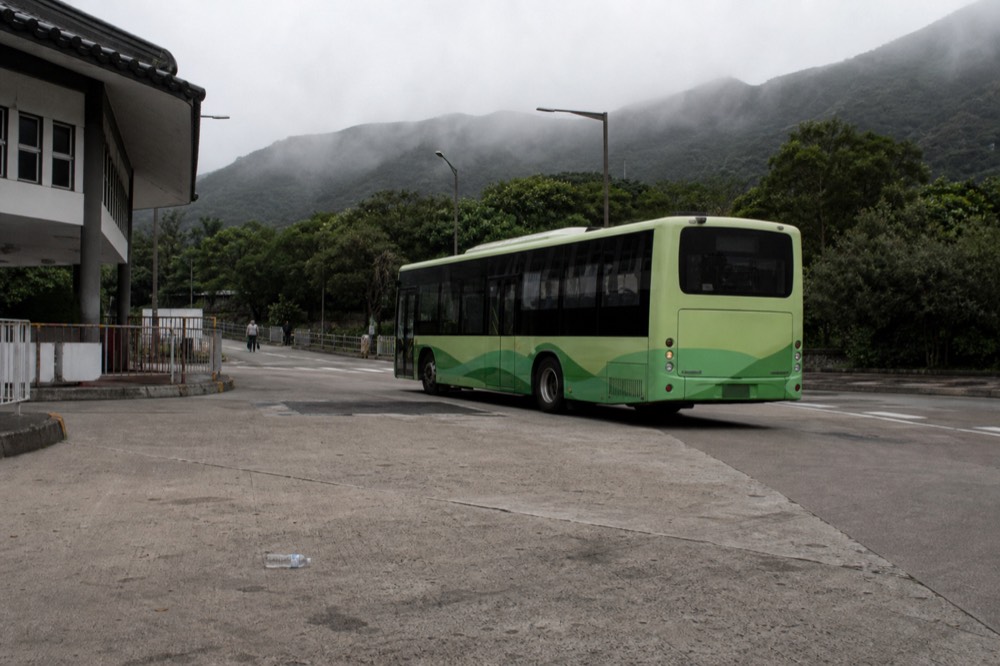
During every one of these, Ngong Ping Village and the indoor attractions, including the Cable Car Discovery Centre, stay open, and New Lantao Bus 23 runs the winding Tung Chung Road to the plateau. Note the bus fare structure carefully, because it is a real planning trap: HK$20.40 on a normal day and HK$37.00 on a Sunday or public holiday (checked September 2026), nearly double on exactly the days people need the fallback. The road itself is winding enough that motion-sickness-prone passengers should sit forward and look ahead.
The weather side has a precise, checkable history. The suspension thresholds above come from a 2006 Legislative Council reply describing the system's design specification: 90 km/h persistent wind, defined as a 30-second average, or 135 km/h gusts, defined over one second. The operator publishes no numeric threshold on its current site, so treat those figures as design history, not live policy. The same reply carries the number most guides miss: Observatory data collected at Ngong Ping found those wind conditions existed on an average of 7 days a year, totalling 23 hours, within cable car operating hours.
The seasonal shape of that risk mirrors the fog calendar in reverse. Tropical cyclone signals average 15.87 days a year, concentrated June to October and peaking in August at 4.17 days, while fog is a February-to-April phenomenon. Summer afternoons carry storm risk; spring mornings carry cloud risk; the October-November shoulder carries the least of either.
One more closure belongs on this list even though it is not the cable car. The Wisdom Path, the 38 Heart Sutra columns at the foot of Lantau Peak, has been closed since 5 June 2025, per the Tourism Commission's own project page, with works due to finish in the last quarter of 2026. Plenty of older guides still list it as an open stop on the plateau loop. Do not plan the morning around it.
Should you let a tour handle the timing?
If your window is tight or your date falls in a crowded period, a guided tour buys timing discipline: the VIP priority product boards the cable car ahead of standard ticket holders across a seven-hour day covering the Big Buddha and Tai O, from $100.76 (checked September 2026). Independent riders with a plain ticket keep full control of the clock and pay from $21.15. The honest rule: tours solve queue and logistics problems, not weather problems.
The VIP product is the clearest expression of the queue logic. It is rated 4.5 across 362 reviews, runs seven hours and costs from $100.76 (checked September 2026), pairing priority boarding with a guided loop through the Buddha and Tai O. For a visitor with one day on Lantau and a date inside Golden Week or the summer peak, paying someone to absorb the queue risk is a rational trade, not a luxury.
The other guided formats trade priority for coverage or price. A five-hour tour with the Tai O boat excursion runs from $67.6, rated 4.7 across 652 reviews; a six-hour fishing-village tour runs from $70.15, rated 4.8 across 490 reviews; and a budget five-hour private-coach version runs from $45.92, rated 4.8 across 61 reviews (all checked September 2026). What none of them can do is change the cloud. If the plateau is in fog, the priority line is shorter and the view is still white.
| Product | Duration | From (USD) | Rating | Reviews |
|---|---|---|---|---|
| Cable car ticket only, Standard Cabin | 25 minutes each way | $21.15 | 4.7 | 61,490 |
| Budget tour, private coach | 5 hours | $45.92 (checked September 2026) | 4.8 | 61 |
| Guided 5-hour tour, Tai O boat | 5 hours | $67.6 | 4.7 | 652 |
| 6-hour guided tour, fishing village | 6 hours | $70.15 (checked September 2026) | 4.8 | 490 |
| VIP priority boarding, 7-hour tour | 7 hours | $100.76 | 4.5 | 362 |
All figures in the table above are the operator-side listing figures current this month (checked September 2026). The pattern is simple: the plain ticket is the default, and every step up the ladder buys back time or comfort, never a better sky.
So the short version of a good day reads like this. Arrive at Tung Chung by 08:15 on a weekend or 09:30 on a weekday, ride in the first hour, climb the 268 steps while the plaza is still quiet, eat in the monastery kitchen when it opens at 11:30, and come down either before the mid-afternoon return peak or in the last golden hour, with a real buffer before close. In February, March or April, push the whole plan two or three hours later and keep the ticket cancellable. That is the entire method, and every figure in it is sourced above.
The short answers: arrive for opening on weekends and in peak season, ride in the first hour on quiet weekdays, push the plan later between February and April, and always check the maintenance calendar before you commit to a date. Every figure below is drawn from the operator's published hours and the Observatory's own climate record (checked September 2026).
Common questions about the best time to visit Ngong Ping
What Time of Day Is Best to Visit Ngong Ping?
The first hour after opening: 10:00 to 11:00 on a weekday, 09:00 to 10:00 on a weekend or public holiday (checked September 2026). Queues are shortest, the plateau air is usually clearest, and the rest of the day stays flexible for the Buddha, the monastery and lunch.
What time does the Ngong Ping cable car open?
10:00 on weekdays and 09:00 on Saturdays, Sundays and public holidays, closing at 18:00 and 18:30 respectively (checked September 2026). Hours can vary in festive seasons, and the operator posts special announcements at the top of its site.
How long are the queues at Ngong Ping?
Recent visitor reports put Standard Cabin waits at one to three hours at peak, including on some weekdays. A pre-bought e-ticket skips the ticket counter but not the boarding line; Crystal and Crystal+ cabins have a separate, much shorter boarding queue.
Is fog a problem in the morning?
It depends on the month. Hong Kong averages 3.70 fog days a year and 3.40 of them fall in February, March and April. In that season, a late-morning or midday ride is the safer bet; from May onwards, and especially in October and November, mornings are statistically the clearest.
Can I ride the cable car in the late afternoon?
Yes, but with two caveats covered above: no last-boarding time is published for normal days, and you must alight and rejoin the boarding queue for the return leg, so allow a generous buffer before the 18:00 or 18:30 close (checked September 2026).
Does the cable car close for maintenance?
Several times a year, not once. The long 2026 overhaul runs 8 to 18 September (checked September 2026), on top of shorter January, March, May and June closures, and Ngong Ping Village stays open throughout, with bus 23 as the road alternative.