Why Is Tian Tan Buddha So Popular?
The real reasons behind the Tian Tan Buddha's popularity: its monumental scale, incredible engineering, and its position at the top of the Ngong Ping 360 cable car ride. Over 1.5 million visitors a year come to see this 34-metre bronze statue.
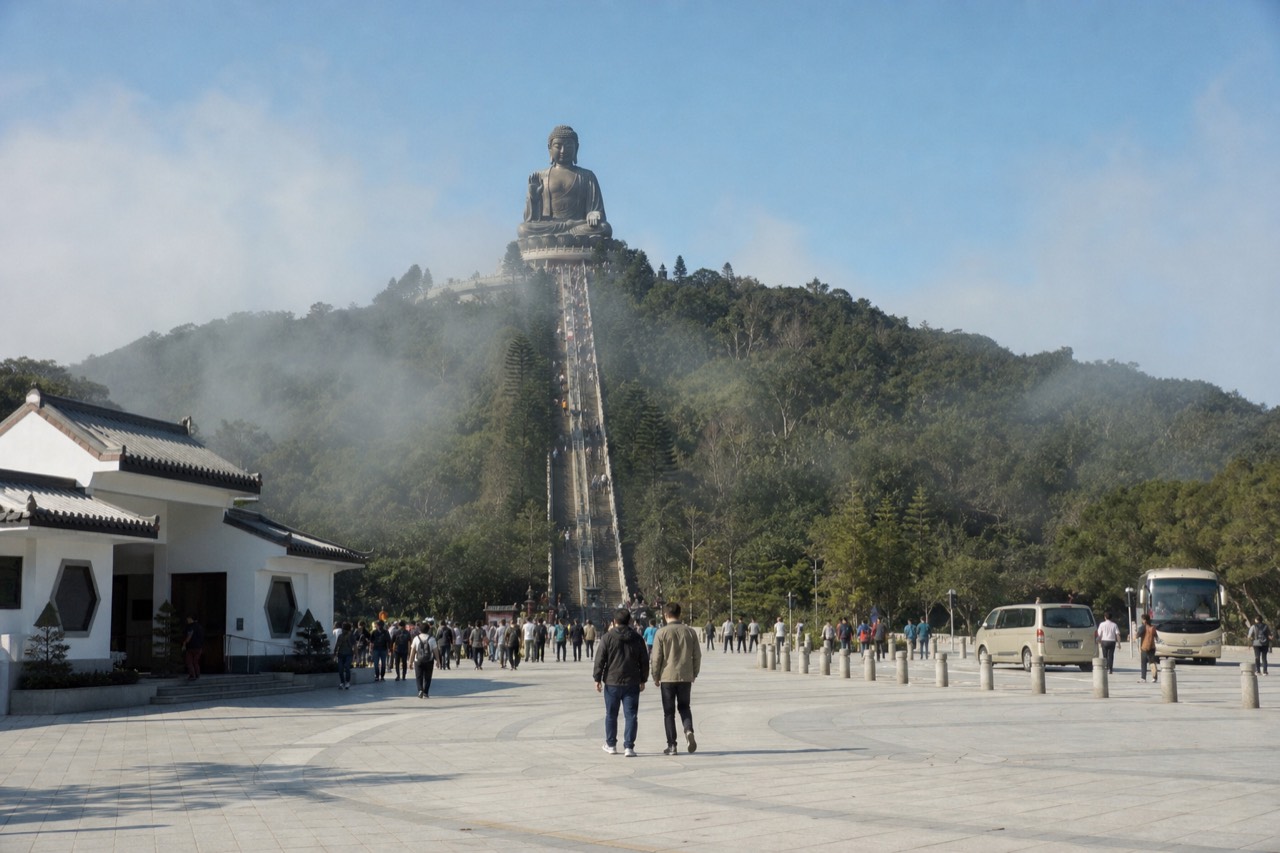
The Tian Tan Buddha, the seated bronze giant on Lantau Island, is not just Hong Kong's most recognisable religious monument. It is a modern engineering landmark, a product of aerospace testing, and the endpoint of one of Asia's longest bi-cable ropeways. Those three facts, more than any spiritual narrative, explain why the statue consistently draws crowds that rival the city's best-known theme parks. In 2024 the Ngong Ping 360 operator reported 1.56 million guests, an average of 4,843 a day (checked September 2026), and the Buddha itself, free to climb, anchors that entire visitor economy.
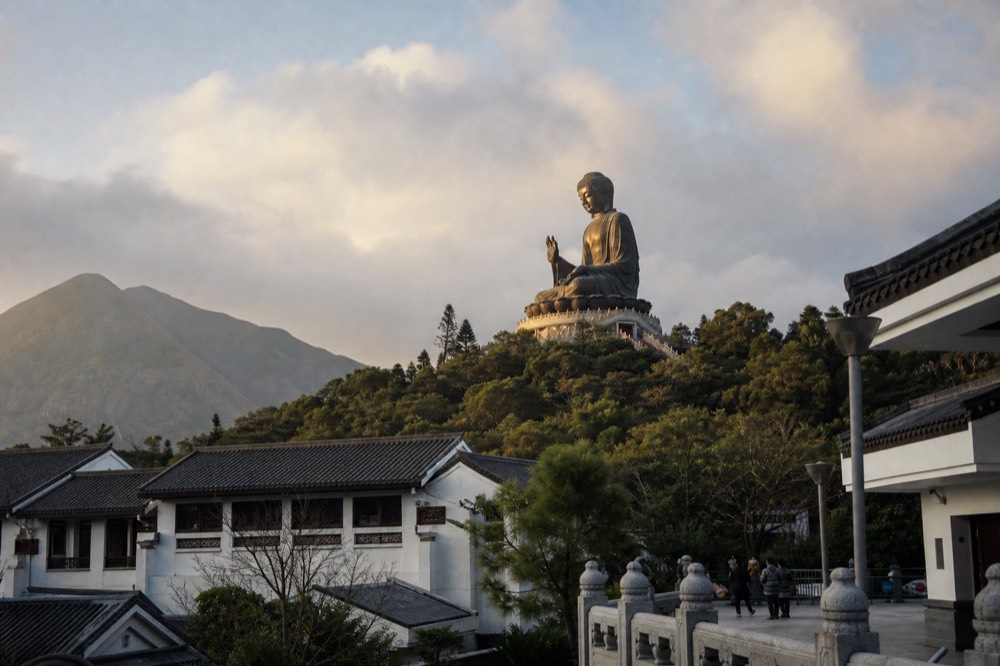
Why Is Tian Tan Buddha So Popular?
The Tian Tan Buddha is popular because it combines three rare qualities in a single site: a 34-metre bronze statue built with aerospace engineering rigour, a dramatic 5.7-kilometre cable car ride that delivers visitors straight to its base, and a free, climbable monument that feels both monumental and accessible.
The statue sits on the Ngong Ping plateau, visible for kilometres across the South China Sea on a clear day. Its 268 steps rise from the Po Lin Monastery plaza, and climbing them is free. That combination of a high-profile location, no admission barrier, and a physical challenge that takes ten to fifteen minutes makes it a natural bucket-list item. But the numbers behind its construction are what turn a large Buddha into a genuine engineering curiosity. For a detailed guide to the statue and its surroundings, see our Big Buddha guide.
The Big Buddha was cast in 202 separate bronze sections at the Nanjing Chengguang Machinery Plant, a facility better known for aerospace components. Each section is 10 to 13 millimetres thick, cast to a tolerance of under 3 millimetres. The face was poured as a single piece measuring 4.3 by 5.8 metres and weighing five metric tonnes, a casting feat that required a lorry sandwiched between two cranes just to get it up Lantau's winding roads. The entire statue was wind-tunnel tested at the Beijing Institute of Aerodynamics, the same facility used for satellites and rockets, so it could withstand typhoon-force gusts. That engineering provenance, confirmed by the Po Lin Monastery's own records, is a genuine differentiator: most large religious statues are not subjected to unidirectional and multidirectional wind-tunnel trials.
The second driver of popularity is the cable car. The Ngong Ping 360 is a 5.7-kilometre bi-cable detachable gondola system, the longest of its type in Asia. It takes about 25 minutes each way, crossing Tung Chung Bay, the airport, the Hong Kong–Zhuhai–Macau Bridge, and North Lantau Country Park before depositing passengers at Ngong Ping Village, a ten-minute walk from the Buddha (see Airport to Big Buddha). For many visitors the ride is the primary draw, and the Buddha is the reward at the top. The operator's own 2024 figures bear this out: cable car revenue hit a record HK$413 million, up 30 percent on 2023, and the Crystal+ cabins, with glass floors and 80-percent-transparency side walls, exceeded 90 percent utilisation during peak periods (checked September 2026). The cable car is not merely a transport link; it is the attraction that makes the Buddha's remote hilltop setting feel spectacular rather than inconvenient.
| Statistic | Figure |
|---|---|
| Total height (including lotus throne and base) | 34 metres |
| Body height | 26.4 metres |
| Weight | 250 tonnes of bronze |
| Number of bronze pieces | 202 |
| Face casting | Single piece, 4.3 m × 5.8 m, 5 tonnes |
| Steps to the statue | 268 |
| Year inaugurated | 1993 |
| Wind-tunnel testing facility | Beijing Institute of Aerodynamics (satellite/rocket facility) |
The third factor is the sheer volume of visitors. Ngong Ping 360 Limited, a subsidiary of the MTR Corporation, reported 1.56 million guests in 2024, a 13 percent increase on the previous year (checked September 2026). The Buddha itself is free, so precise headcounts for the statue alone are not published, but the cable car is the dominant access route, and the two are inextricably linked. Even during the annual maintenance closure, when the cable car stops and visitors must take the New Lantao Bus 23 up the mountain, Ngong Ping Village stays open and the Buddha remains accessible. The closure for 2026 runs from 8 to 18 September, but the statue will still be there, and the bus fare is HK$20.40 on a weekday or HK$37.00 on Sundays and public holidays (checked September 2026). That resilience, the fact that the site keeps functioning even when its headline ride is offline, speaks to the Buddha's drawing power independent of the cable car.
How big is the Tian Tan Buddha and what makes its construction remarkable?
The Tian Tan Buddha stands 34 metres tall from its lotus throne and base, weighs 250 tonnes, and is assembled from 202 separate bronze sections cast to a tolerance of under 3 millimetres. Its face is a single 5-tonne casting, and the entire statue was wind-tunnel tested in a Beijing aerospace facility. The construction took 12 years and involved a plaster model redrafted eight times.
The statue's physical presence is the first thing that strikes any visitor, but the backstory is what makes it memorable. The Po Lin Monastery began planning the Buddha in the years before construction started in 1981, with land granted by the Hong Kong Government in 1974 at a nominal premium. A formal construction committee was established on 26 December 1981, and a 1:5 scale plaster model, about five metres tall, was completed by Ms Hou Jinhui of the Guangzhou Institute of Fine Arts in February 1984 after eight redrafts. The model was shipped to Nanjing in September 1986, and casting began at the Chengguang Machinery Plant, a facility of the China Astronautics Science and Technology Consultant Corporation.
The 202 bronze pieces, each 10 to 13 millimetres thick, were welded together on site. The face, cast as a single piece measuring 4.3 by 5.8 metres and weighing five metric tonnes, was the most challenging element to transport. Getting it up Lantau's winding Tung Chung Road required a large lorry positioned between two cranes. The final bronze piece was placed on 13 October 1989, and the statue was inaugurated on 29 December 1993. The face was modelled on the Vairocana Buddha of the Longmen Caves, and the robes on the Sakyamuni of Cave 360 at Dunhuang, giving the statue a deliberate artistic lineage that connects it to classical Chinese Buddhist sculpture.
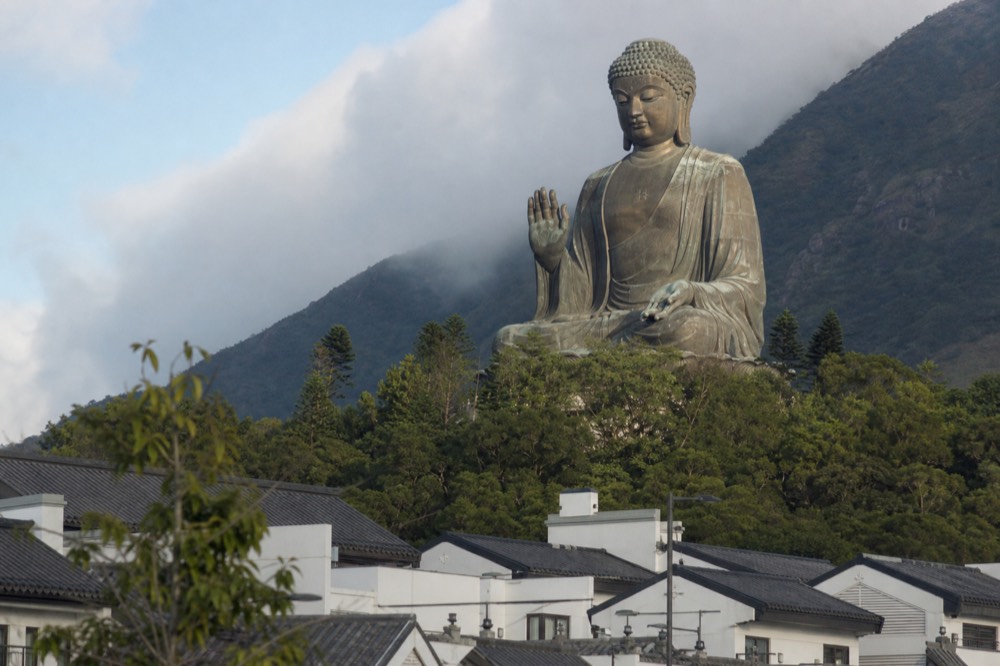
The wind-tunnel testing is perhaps the most surprising detail. The Beijing Institute of Aerodynamics, whose primary work involves satellites and rockets, tested the statue under both unidirectional and multidirectional wind loads, assessing the whole structure and individual components. This was not a ceremonial gesture; Lantau is exposed to typhoons, and the statue needed to survive gusts that can exceed 135 kilometres per hour. The design thresholds, published in a 2006 Hong Kong Legislative Council reply, specify sustained winds of 90 kilometres per hour and gusts of 135 kilometres per hour as the suspension criteria for the cable car, and the Buddha was engineered to similar extremes.
The statue's dimensions are only part of its appeal. The 268 steps to the base are free to climb, and the ascent, while strenuous in summer heat, takes most people ten to fifteen minutes. The Buddha sits atop Mount Muk Yue, facing north towards Beijing, with the right hand raised in the mudra of imparting fearlessness and the left hand resting in the lap, fulfilling wishes. The platform at the top offers a panoramic view of the Ngong Ping plateau, the South China Sea, and, on a clear day, the Hong Kong–Zhuhai–Macau Bridge and the airport. That view, combined with the physical effort of the climb, creates a sense of arrival that a drive-up monument cannot match.
| Construction milestone | Date |
|---|---|
| Land granted by Hong Kong Government | 1974 |
| Construction committee established | 26 December 1981 |
| 1:5 plaster model completed (after 8 redrafts) | February 1984 |
| Model shipped to Nanjing for casting | 26 September 1986 |
| Last bronze piece placed (topping ceremony) | 13 October 1989 |
| Inaugural ceremony | 29 December 1993 |
| Ngong Ping 360 cable car opened | 18 September 2006 |
How does the Ngong Ping 360 cable car contribute to the Buddha's popularity?
The Ngong Ping 360 cable car turns the journey into a 25-minute scenic flight over Tung Chung Bay, the airport, and North Lantau Country Park, making the Buddha's remote hilltop location feel like a reward rather than a trek. The ride itself is a headline attraction, with 108 cabins, glass-bottom Crystal options, and a 60-degree turn at the Airport Island Angle Station.
Before the cable car opened on 18 September 2006, reaching the Big Buddha meant a bus ride up the winding Tung Chung Road, a journey that could take over an hour and left many visitors motion-sick. The Ngong Ping 360 cut that to 25 minutes and added a visual spectacle that no bus can offer. The route passes over Tung Chung Bay, with its Shan Tau wetlands, a Site of Special Scientific Interest, then swings past Hong Kong International Airport, where visitors can watch planes take off and land from above. The Hong Kong–Zhuhai–Macau Bridge, a 50-kilometre sea crossing, stretches across the water. At the Airport Island Angle Station the cable car executes a full 60-degree turn before climbing into North Lantau Country Park, with Nei Lak Shan, Hong Kong's sixth-tallest peak at 751 metres, rising to the left. The final approach reveals the Buddha itself, seated on the plateau, growing larger with every metre.
The cable car's three cabin types give visitors a choice that directly affects queue times and views. Standard Cabins, with solid floors and panoramic windows, hold up to 17 passengers and depart continuously. Crystal Cabins, with a full-width glass bottom made of three layers of tempered glass totalling about 4.84 centimetres thick, carry 10 passengers and have their own, much shorter boarding line. Crystal+ cabins, introduced in 2022, add full-height laminated-glass side walls with over 80 percent transparency, also for 10 passengers, and depart every 7 to 10 minutes. Visitor reports from late 2025 and early 2026 consistently describe Standard Cabin waits of one to three hours, even on non-holiday weekdays, while Crystal and Crystal+ queues are often around ten minutes. The price premium for a Crystal Cabin, roughly HK$70 (checked September 2026) more than Standard for a round trip, is effectively a queue-jump as much as a view upgrade.
| Cabin type | Round-trip adult fare (HKD) | Approx. USD | Max guests | Queue experience (visitor reports) |
|---|---|---|---|---|
| Standard Cabin | HK$295 (checked September 2026) | ≈ $38 | 17 | 1–3 hours common |
| Crystal Cabin | HK$365 (checked September 2026) | ≈ $47 | 10 | ~10 minutes typical |
| Crystal+ | HK$545 (checked September 2026) | ≈ $70 | 10 | ~10 minutes typical |
| Combo (one-way Crystal, one-way Standard) | HK$330 (checked September 2026) | ≈ $42 | varies | Mixed |
| Private Crystal Cabin (round trip, up to 10 pax) | HK$4,800 (checked September 2026) | ≈ $612 | 10 | Immediate |
The cable car is not just a transport link; it is the economic engine of the entire Ngong Ping plateau. The operator, Hong Kong Ngong Ping Cable Car, is a subsidiary of the MTR Corporation, and its 2024 revenue of HK$413 million (checked September 2026) reflects the ride's status as a primary attraction. The guest mix in 2024 was 37 percent short-haul markets, 29 percent Mainland China, 20 percent Hong Kong residents, and 14 percent long-haul, with long-haul daily guests up 84 percent year on year. The cable car's reliability, quoted by the operator at 99.96 percent, means it rarely breaks down, but it does close for scheduled maintenance several times a year. The longest closure in 2026 is 8 to 18 September, but there were also shorter closures in January, March, May, and June. During these periods the New Lantao Bus 23 provides access for HK$20.40 on weekdays or HK$37.00 on Sundays and public holidays (checked September 2026), and the Buddha remains open. For more on reaching the Buddha, see our transport guide.
For visitors who want to combine the Buddha with other Lantau sights, guided tours offer a structured alternative to independent travel. A five-hour tour that includes the cable car, Tai O fishing village, and the Big Buddha costs from HK$67.6 (checked September 2026) and handles all logistics, including the bus transfer from Ngong Ping to Tai O. A six-hour option adds a stop at a local fishing village beyond Tai O and costs from HK$70.15 (checked September 2026). These tours are popular with first-time visitors who want to see multiple sites without managing bus timetables, and they typically include the cable car ticket, so the queue-skipping benefit of a pre-booked ticket still applies.
How many people visit the Big Buddha each year?
The Ngong Ping 360 cable car, the primary access route, carried 1.56 million guests in 2024, a 13 percent increase on 2023 and a record for the operator. That translates to an average of 4,843 visitors a day. The Buddha itself is free and does not have a turnstile, so precise statue-only figures are not published, but the cable car's numbers are the best proxy, and they place the site among Hong Kong's most heavily visited attractions.
The 2024 figure, published in the operator's February 2025 press release, marks a full recovery from the pandemic and then some. Revenue hit HK$413 million (checked September 2026), up 30 percent on 2023 and 32 percent above the pre-pandemic 2019 level. The guest origin breakdown shows the site's broad appeal: short-haul markets contributed 37 percent of visitors, Mainland China 29 percent, Hong Kong residents 20 percent, and long-haul markets 14 percent. Long-haul daily guests grew 84 percent year on year, indicating that the Buddha and cable car are firmly back on international itineraries.
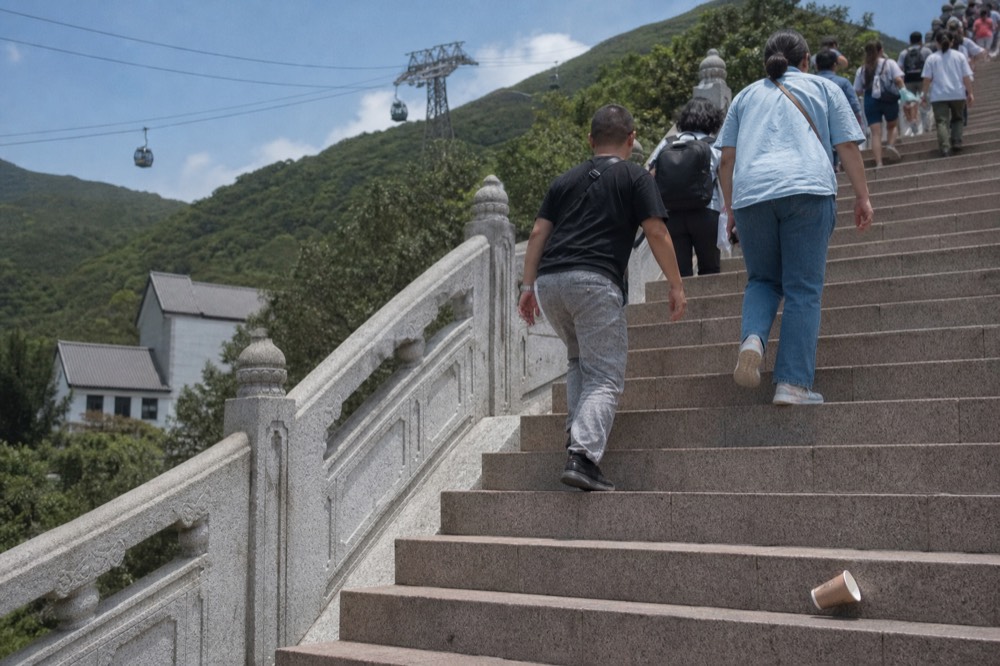
Peak periods are predictable. The operator reported that Crystal+ cabins exceeded 90 percent utilisation on average during summer, Golden Week, and Christmas in 2024. Mainland China's National Day Golden Week, 1 to 7 October 2026, and the Labour Day holiday, 1 to 5 May 2026, are particularly busy, as are Hong Kong's own public holidays. The Birthday of the Buddha, which falls on 13 May in 2027, is the single busiest day of the year at Po Lin Monastery. Weekends and public holidays also see the cable car open an hour earlier, at 09:00 instead of 10:00, and close at 18:30 instead of 18:00, a schedule adjustment that reflects higher demand.
| Year | Cable car guests | Revenue (HKD) | Notes |
|---|---|---|---|
| 2024 | 1.56 million (checked September 2026) | HK$413 million | Record revenue; +30% on 2023 |
The cable car's maintenance closures do reduce visitor numbers temporarily, but the site never fully shuts down. During the 8 to 18 September 2026 closure, the cable car is suspended, but Ngong Ping Village and its indoor attractions, including the Cable Car Discovery Centre and Motion 360, remain open. The New Lantao Bus 23 continues to run, and the Buddha is still free to climb. The operator posts notices at 21 MTR stations and runs announcements on the Tung Chung line to warn visitors, a level of communication that reflects how many people plan their trips around the cable car.
What else is there to see at Ngong Ping beyond the Buddha?
Ngong Ping offers a working Buddhist monastery, a themed village with paid attractions, and easy onward access to Tai O fishing village, making the plateau a half-day or full-day destination in its own right. The Po Lin Monastery, founded in 1906, sits directly beside the Buddha and runs a vegetarian kitchen. Ngong Ping Village has a Cable Car Discovery Centre and a Motion 360 theatre.
The Po Lin Monastery, originally called "the Big Thatched Hut" and officially named in 1924, is a working religious site with a daily rhythm that predates the cable car by a century. Its Main Shrine Hall, Grand Hall of Ten Thousand Buddhas, and meditation halls are open to visitors from 09:00 to 18:00, and the vegetarian kitchen serves a fixed communal meal from 11:30 to 16:30. The monastery does not publish the meal price online, and third-party reports vary, so visitors should check at the kitchen. A snack shop next to the kitchen sells the monastery's own bean curd dessert and mango glutinous rice dumplings, the latter made in small batches. The souvenir shop is in the Hall of Merits on the first floor of the Buddha's base platform.
Ngong Ping Village, a 1.5-hectare site adjacent to the cable car terminal, was built as a themed commercial area and includes several paid attractions. The Cable Car Discovery Centre explains the ropeway's engineering and history. Motion 360 is a 4D/5D theatre with motion seats and effects. Both can be added to any cable car ticket for HK$20 each (checked September 2026), or HK$40 for two, under a long-running upgrade offer. The village also has a Ngong Ping Nature Centre and a Fengyun Pavilion of Chinese Dynasty The Three Kingdoms, but the former "Walking with Buddha" attraction appears to have been replaced and now survives only as a souvenir shop name. Standalone admission prices for the village attractions are not published by the operator, so the HK$20 (checked September 2026) upgrade is the clearest pricing benchmark.
The Wisdom Path, a free attraction of 38 timber columns inscribed with the Heart Sutra and arranged in a figure-of-eight, has been closed since 5 June 2025 for refurbishment. The Hong Kong Tourism Commission expects the works to finish in the last quarter of 2026, with a gradual reopening. A viewing platform on a nearby section of the Lantau Trail remains open. This closure is not widely publicised, and many generic guides still list the Wisdom Path as open, so visitors planning a trip in 2026 should check the latest status before setting out.
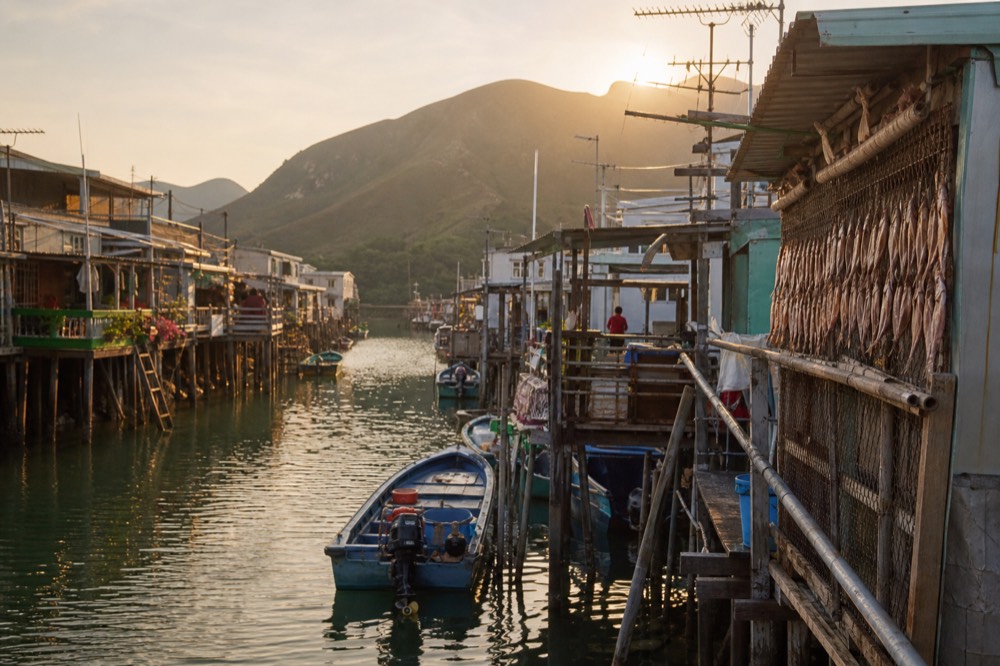
Tai O, a 20-minute bus ride from Ngong Ping on New Lantao Bus 21, costs HK$7.90 on a normal day or HK$19.20 on Sundays and public holidays (checked September 2026). The village is known for its stilt houses, dried seafood stalls, and a 20-minute boat excursion that passes the stilt houses, General's Rock, and the Tai O Heritage Hotel, a former police station. The Dragon Boat Water Parade, held during the Dragon Boat Festival, was inscribed on China's third national list of intangible cultural heritage in 2011. Tai O can be visited as a half-day add-on to the Buddha, and several guided tours combine both in a single day.
| Attraction | Status (September 2026) | Cost | Notes |
|---|---|---|---|
| Tian Tan Buddha | Open | Free to climb steps | 268 steps; interior exhibition hall may have separate fee |
| Po Lin Monastery | Open, 09:00–18:00 | Free | Vegetarian kitchen 11:30–16:30; meal price not published |
| Wisdom Path | Closed since 5 June 2025 | Free when open | Refurbishment due Q4 2026; viewing platform nearby remains open |
| Ngong Ping Village attractions (Cable Car Discovery Centre, Motion 360) | Open | HK$20 each (checked September 2026) with cable car ticket upgrade | Standalone prices not published |
| Tai O fishing village | Open | Free to walk; boat excursion ~20 min | Bus 21 from Ngong Ping, HK$7.90 weekday / HK$19.20 Sunday (checked September 2026) |
For visitors who want a more structured day, a guided tour that bundles the cable car, the Buddha, and Tai O into a single booking removes the need to juggle bus timetables and queue for separate tickets. The six-hour option, which adds a fishing village stop beyond Tai O, costs from HK$70.15 (checked September 2026) and includes the cable car ride. A budget-friendly alternative uses a private coach instead of the cable car and costs from HK$45.92 (checked September 2026), covering the same sites but trading the aerial views for a road journey. Both are bookable on the operator's live listing.
Common questions about the Tian Tan Buddha
Why Is Tian Tan Buddha So Popular?
The statue's popularity comes from its 34-metre scale, its 250-tonne bronze construction that involved aerospace wind-tunnel testing, and its location at the top of the Ngong Ping 360 cable car, a 5.7-kilometre scenic ride that draws 1.56 million visitors a year. The Buddha is free to climb, and its 268 steps offer a tangible challenge with a panoramic reward, making it a rare combination of engineering spectacle, cultural landmark, and accessible adventure.
How many steps are there to the Big Buddha?
There are 268 steps from the Po Lin Monastery plaza to the base of the Tian Tan Buddha. The climb is free and takes most visitors ten to fifteen minutes, though it can be strenuous in summer heat. The steps are wide and well-maintained, with landings for rest stops.
Is the Big Buddha free to visit?
Yes, climbing the 268 exterior steps to the Buddha's base is free. The interior exhibition hall inside the base may have a separate admission fee, but the statue itself and the surrounding plaza are open to all. The Po Lin Monastery grounds are also free to enter.
How long does it take to visit the Big Buddha?
Most visitors spend 30 to 60 minutes at the Buddha itself, including the climb and time at the top. Combined with the cable car ride, which takes about 25 minutes each way, and a walk through Ngong Ping Village and Po Lin Monastery, a half-day is a realistic minimum. Adding Tai O extends the trip to a full day.
What is the best way to get to the Big Buddha?
The Ngong Ping 360 cable car is the most popular route, offering a 25-minute scenic ride from Tung Chung. Standard round-trip fares start at HK$295 (checked September 2026). The alternative is New Lantao Bus 23 from Tung Chung, which costs HK$20.40 on weekdays or HK$37.00 on Sundays and public holidays (checked September 2026) and takes longer on winding roads.
Is the Wisdom Path open?
No. The Wisdom Path has been closed since 5 June 2025 for refurbishment. The Hong Kong Tourism Commission expects the works to finish in the last quarter of 2026, with a gradual reopening. A viewing platform on a nearby section of the Lantau Trail remains open. Check the latest status before visiting.